
Title
Wiegand & Snowden Scarificator
Author
Wiegand & Snowden
Image
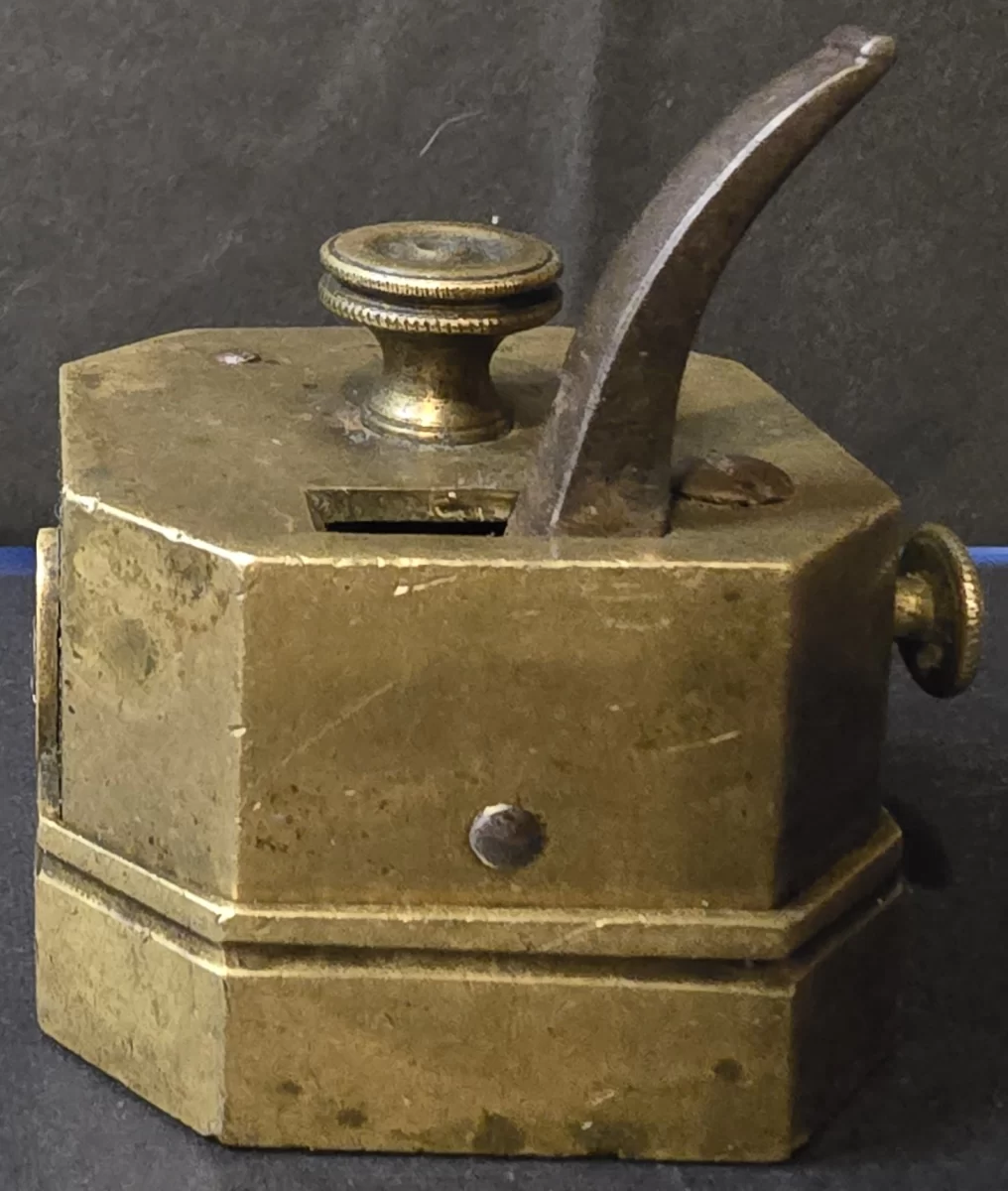
Description
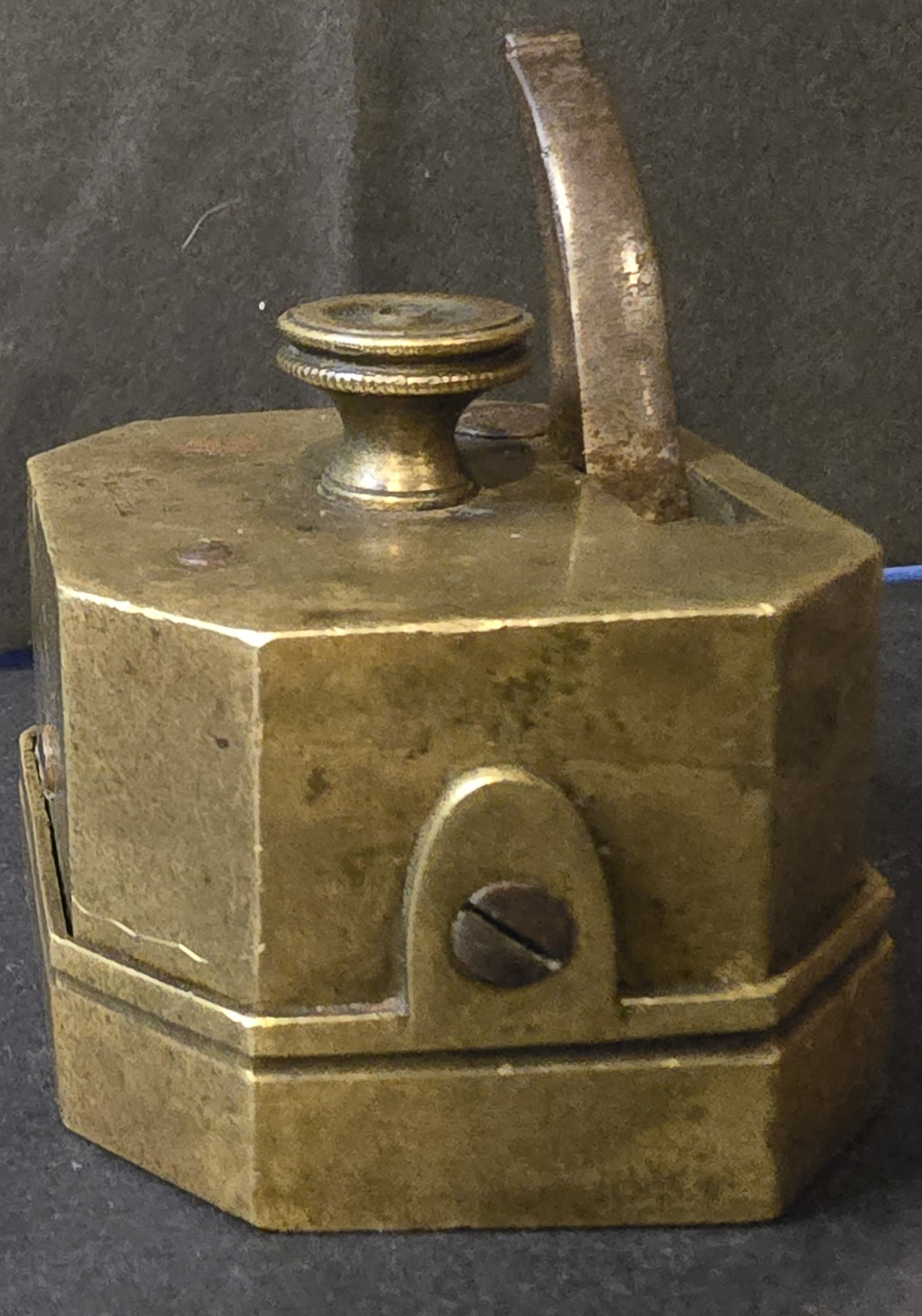
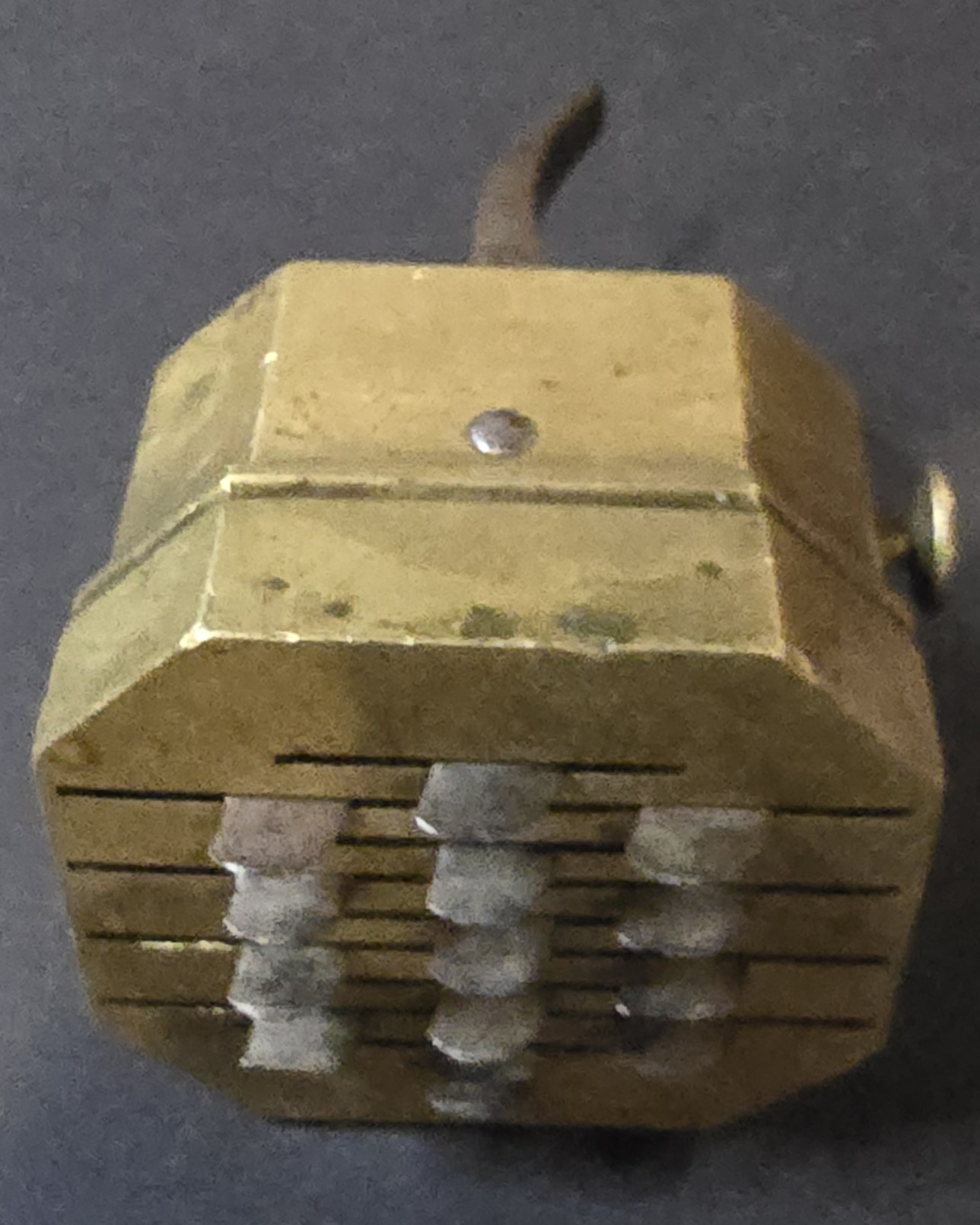
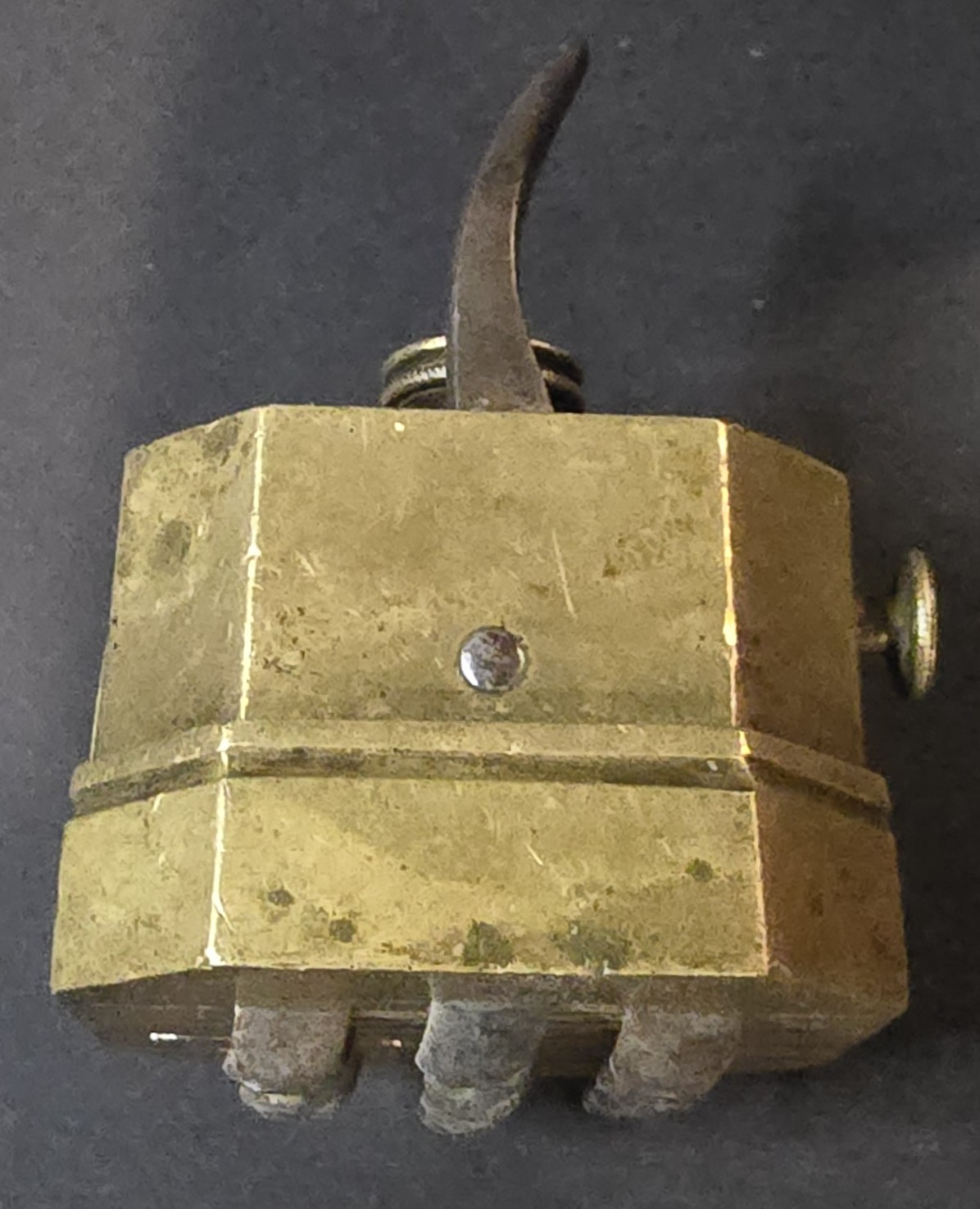
This is a Wiegand & Snowden scarificator, a late-19th-century mechanical bloodletting instrument used to produce multiple controlled skin incisions for therapeutic bleeding.
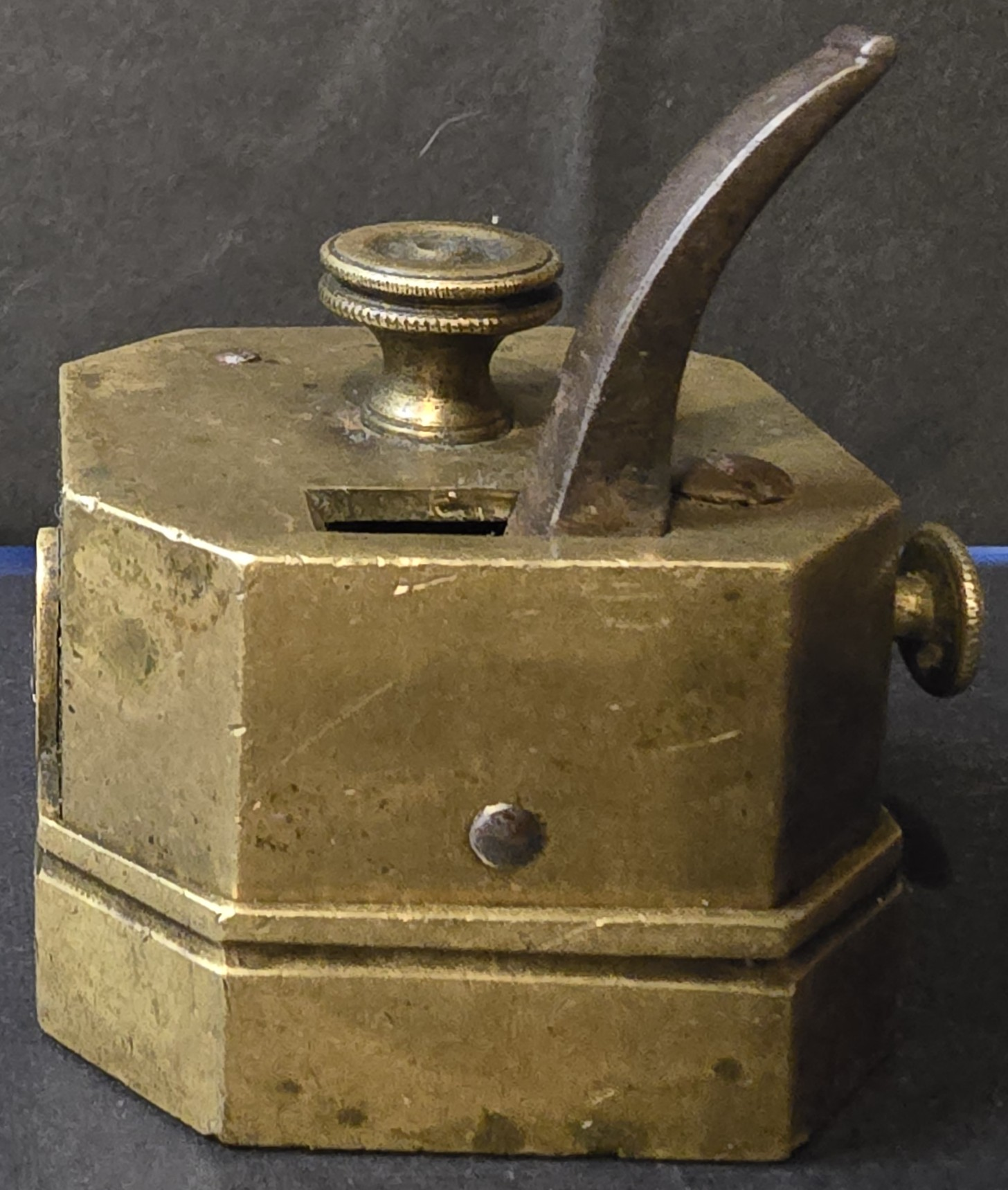
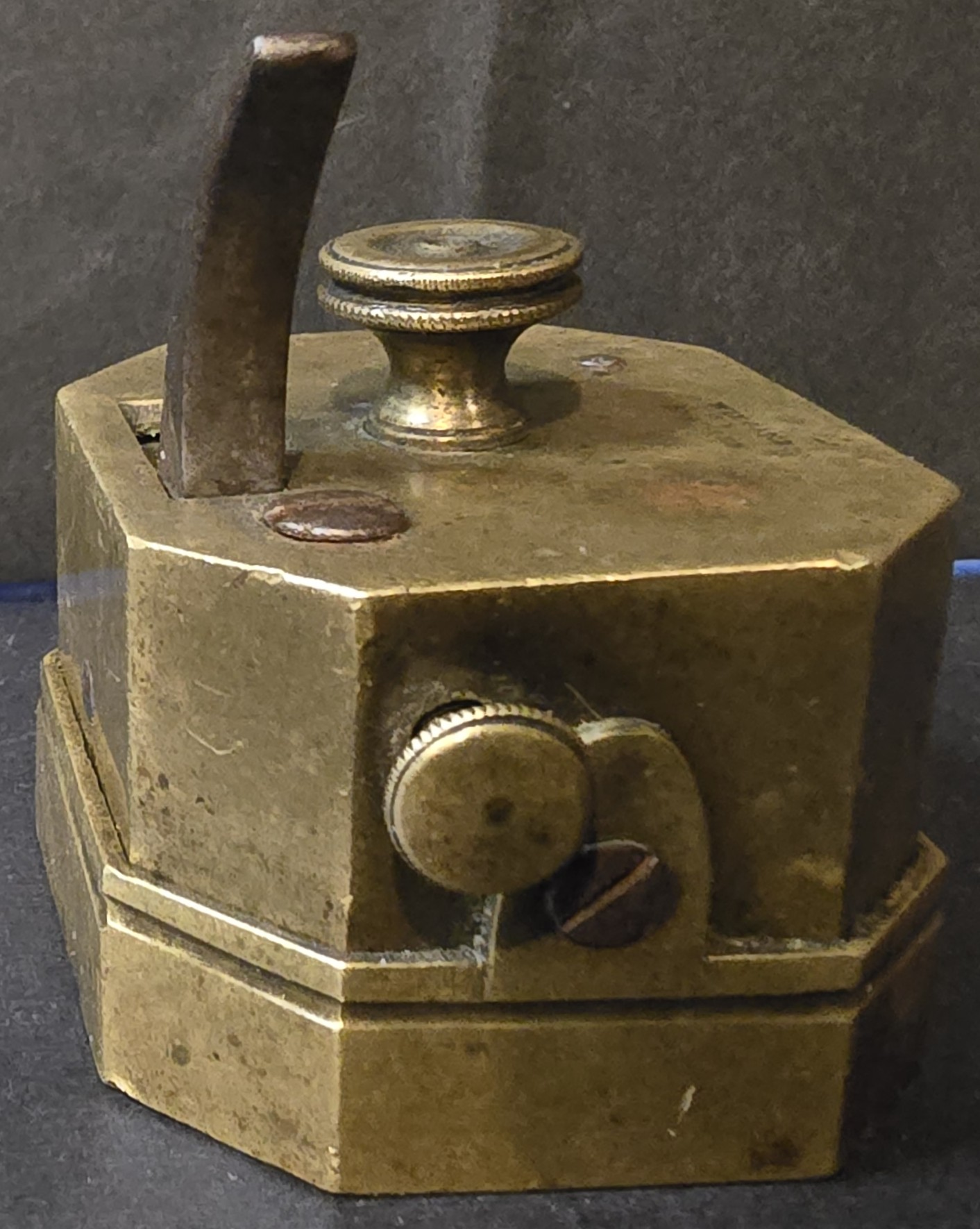
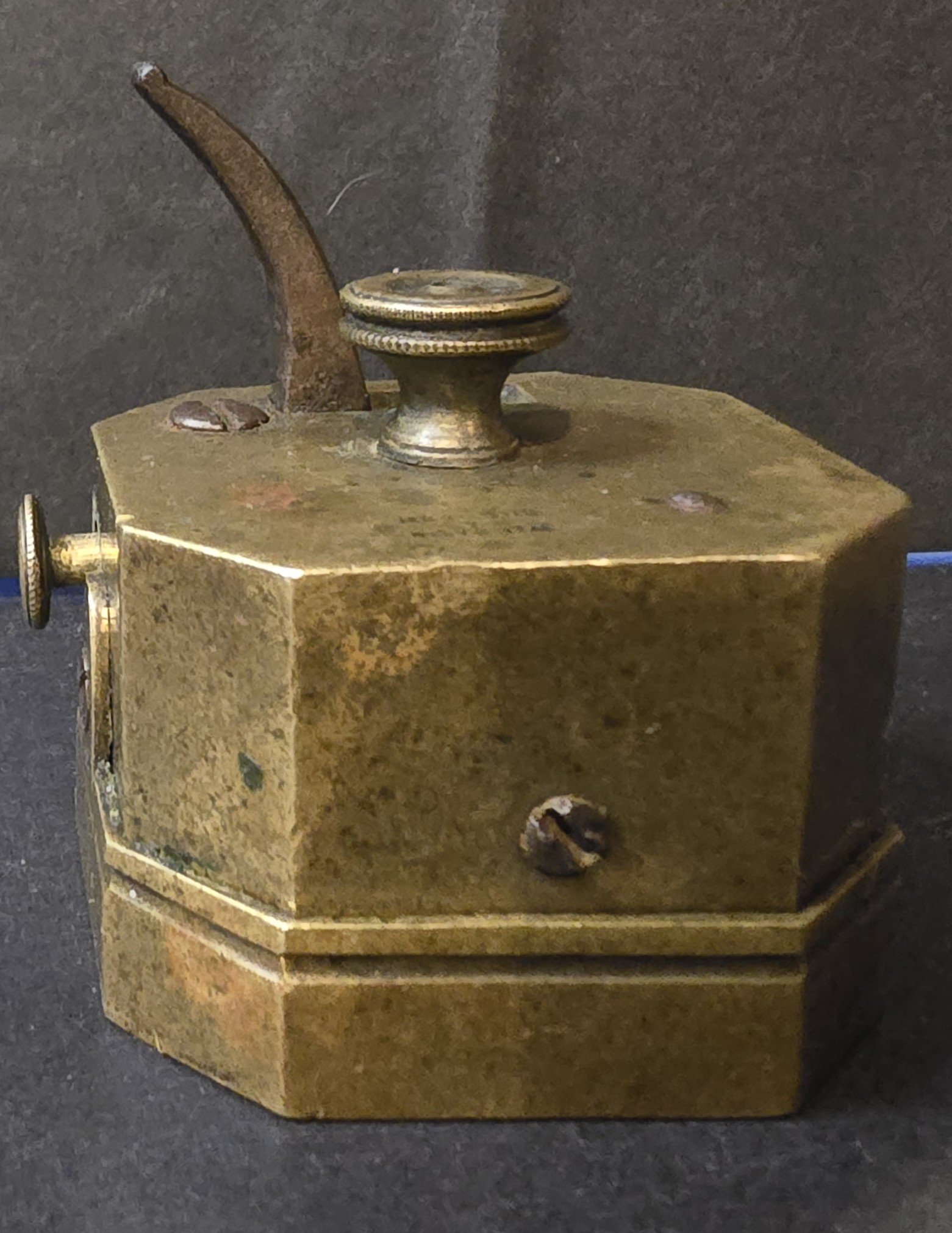
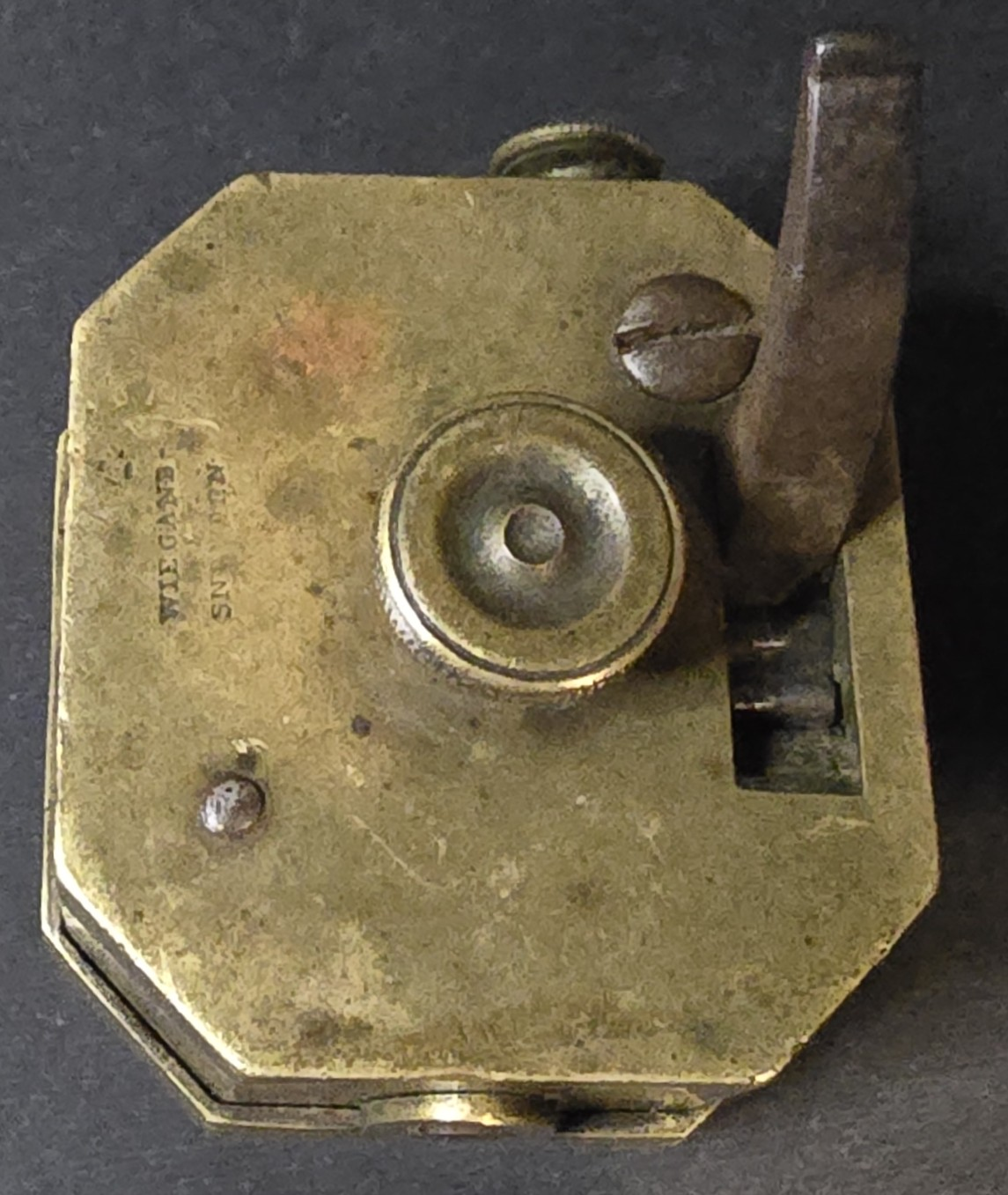
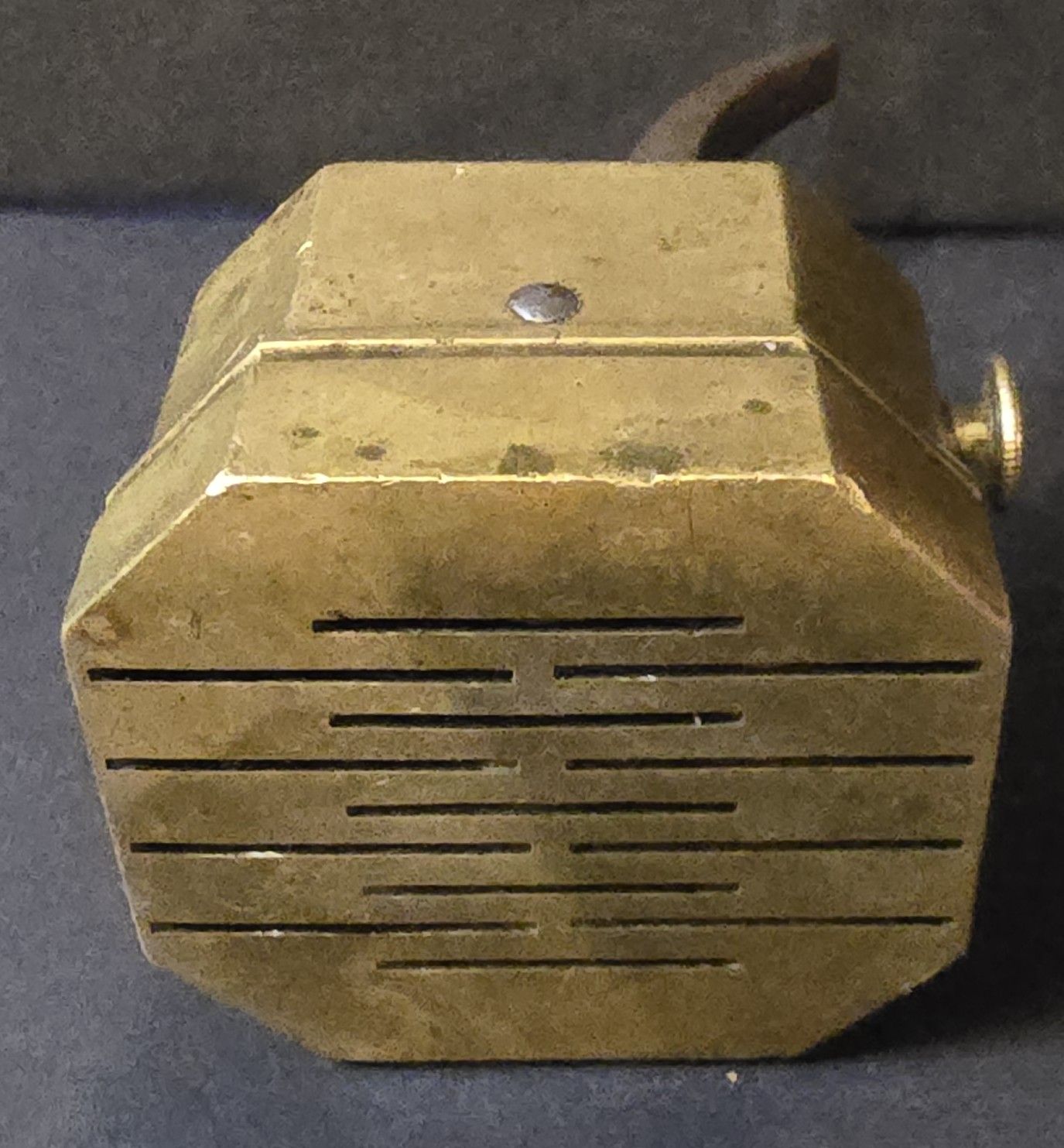
The device features a heavy octagonal brass housing, a curved external spring lever, a top-mounted release/adjustment button, and a vented body. When armed and triggered, an internal array of blades rapidly extended and retracted through the base openings, producing uniform superficial cuts. The design allowed physicians to control depth, speed, and consistency—an attempt to make bloodletting more precise and repeatable.
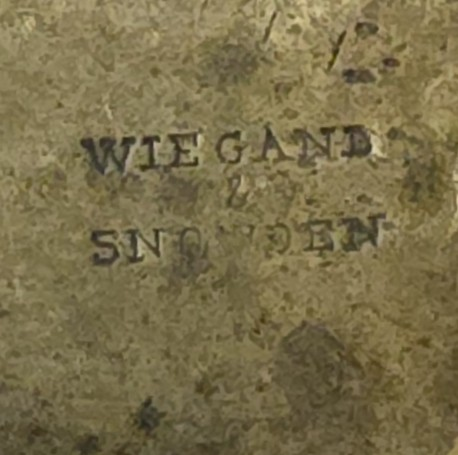
The maker’s stamp “WIEGAND & SNOWDEN” is visible on the body, confirming manufacture by the Philadelphia-based medical instrument firm active in the late 1800s.
Condition
Good. Solid brass body with intact lever mechanism. Age-appropriate oxidation and patina present. No evidence of modern polishing or restoration. Blade mechanism untested but housing remains complete and structurally sound.
Gallery
Historical context
Scarification was a standard medical practice well into the 19th century, used for bloodletting, cupping preparation, and treatment of conditions believed to involve “congestion” or imbalance of humors. By the late 1800s, mechanical scarificators replaced hand lancets, offering speed, uniformity, and reduced operator variability.
Wiegand & Snowden were known for producing durable, professional-grade instruments intended for physician offices, hospitals, and surgical theaters. Devices like this represent the industrialization of pre-modern therapeutics, where craftsmanship met doctrine—right before bloodletting finally fell out of favor.
Curious Facts, Ephemera, and Trivia
Scarificators were often paired with cupping glasses, the cuts encouraging blood flow under vacuum.
Multi-blade designs reduced pain perception by acting faster than manual lancets.
Physicians adjusted blade depth based on patient constitution, age, and diagnosis.
By the early 20th century, scarificators were already becoming obsolete.
Excerpt
“The operation must be rapid, decisive, and uniform, lest unnecessary suffering be inflicted.”
— 19th-century surgical guidance on scarification
Why it is in the Cabinet
This is a textbook example of serious medicine doing serious things with serious hardware. No quackery, no marketing nonsense — just a physician, a doctrine, and a brass box full of blades. It captures the moment when medicine was confident, mechanical, and occasionally very wrong.
Support Dr. Bebout’s Cabinet of Medical Curiosities
If you enjoy the history, the oddities, and the effort, help keep this cabinet open. Every little bit helps preserve and share the strange wonders of medicine's past.
Buy Me a Ko-fi ☕ Buy Me a Coffee ☕ Tip via PayPal 💵