
Title
Fisher M-Scope Mineralight (Ultra-Violet Inspection Lamp)
Author
Fisher Research Laboratory, Palo Alto, California, U.S.A.
Image
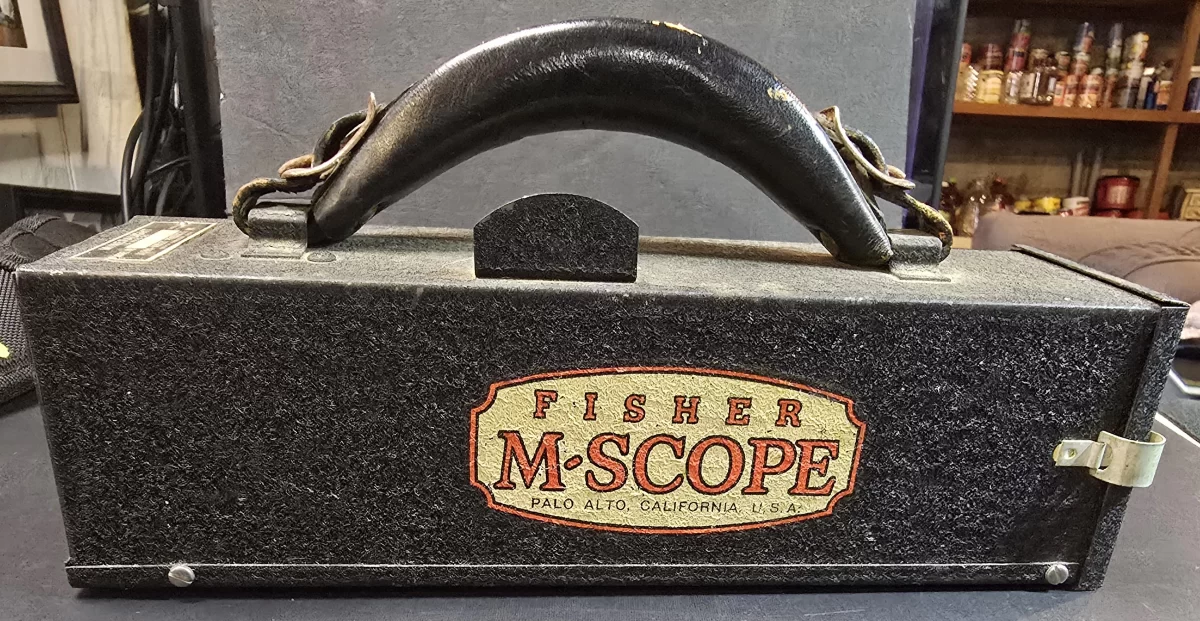
Description
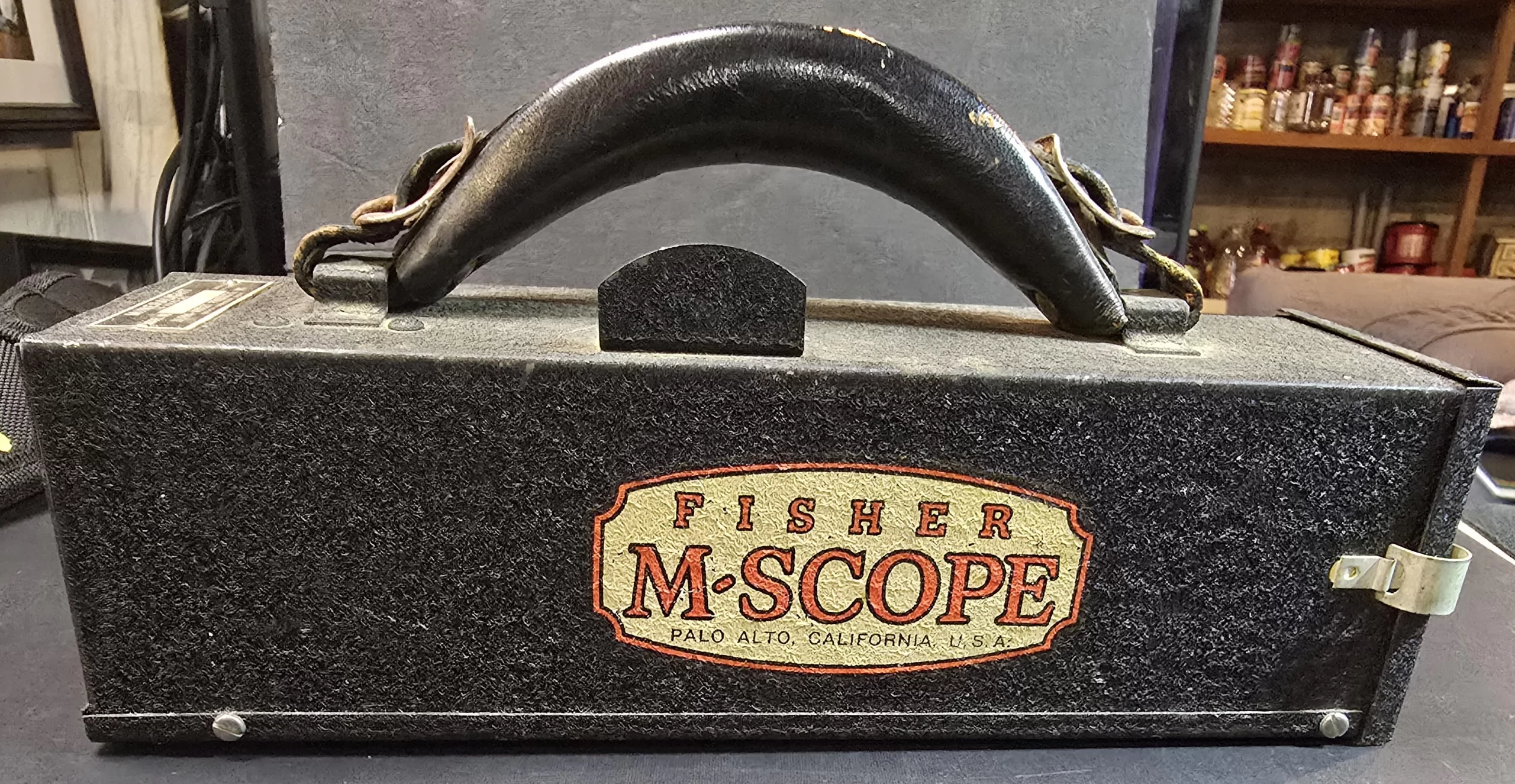
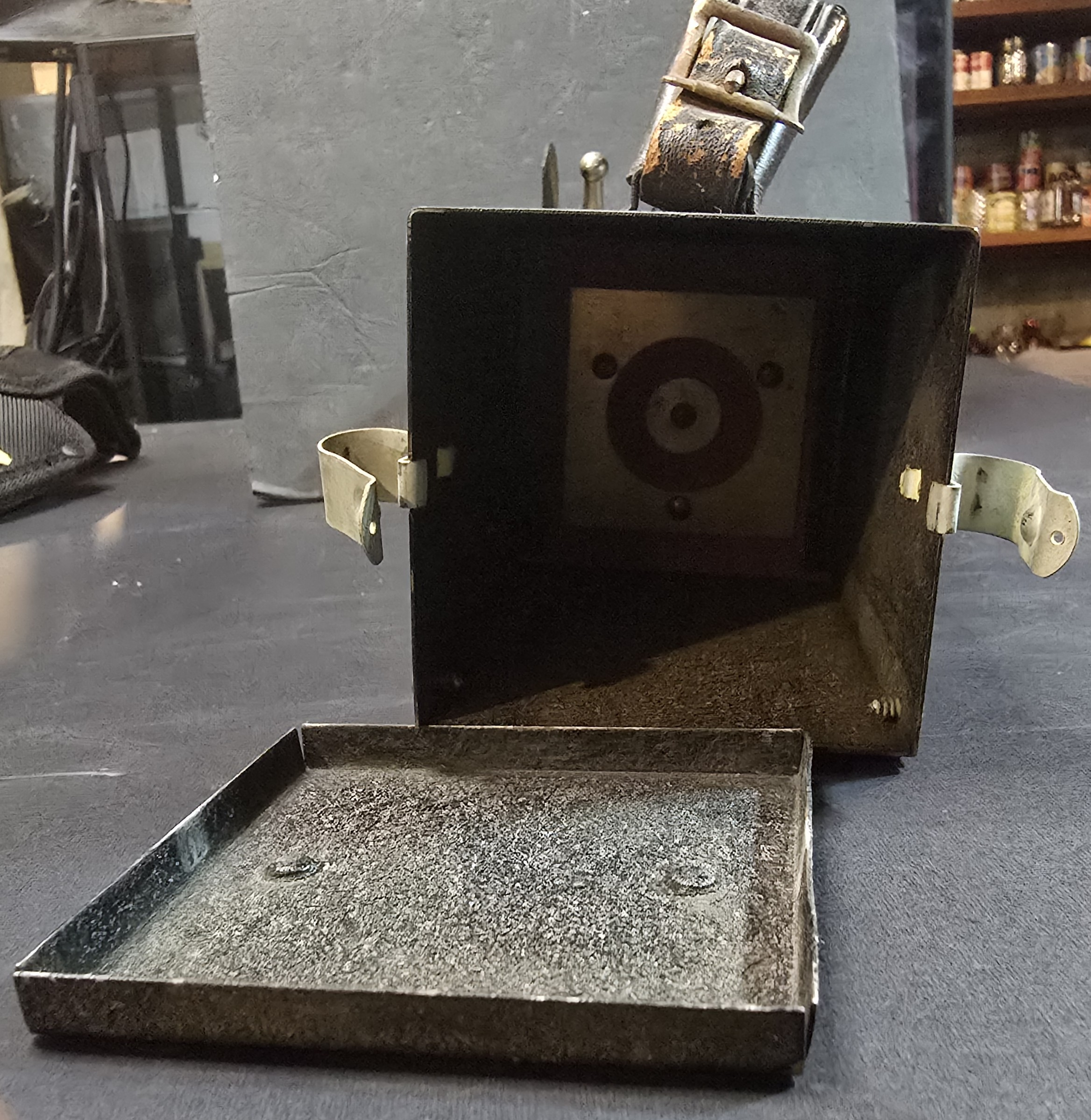
This is an original Fisher M-Scope Mineralight, a portable ultraviolet inspection lamp housed in its factory metal carrying case. The unit was produced by Fisher Research Laboratory of Palo Alto, California—best known today for metal detectors, but historically involved in scientific and industrial detection instruments.
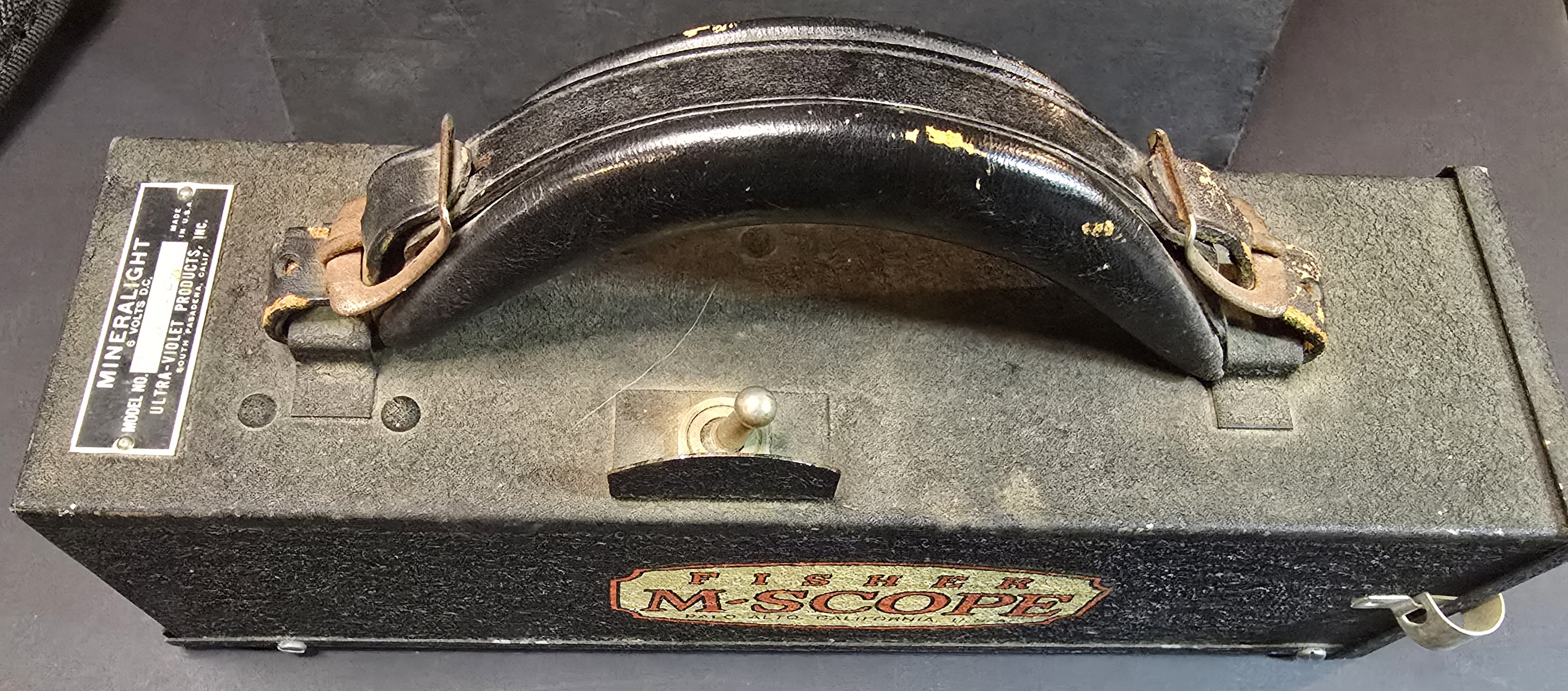
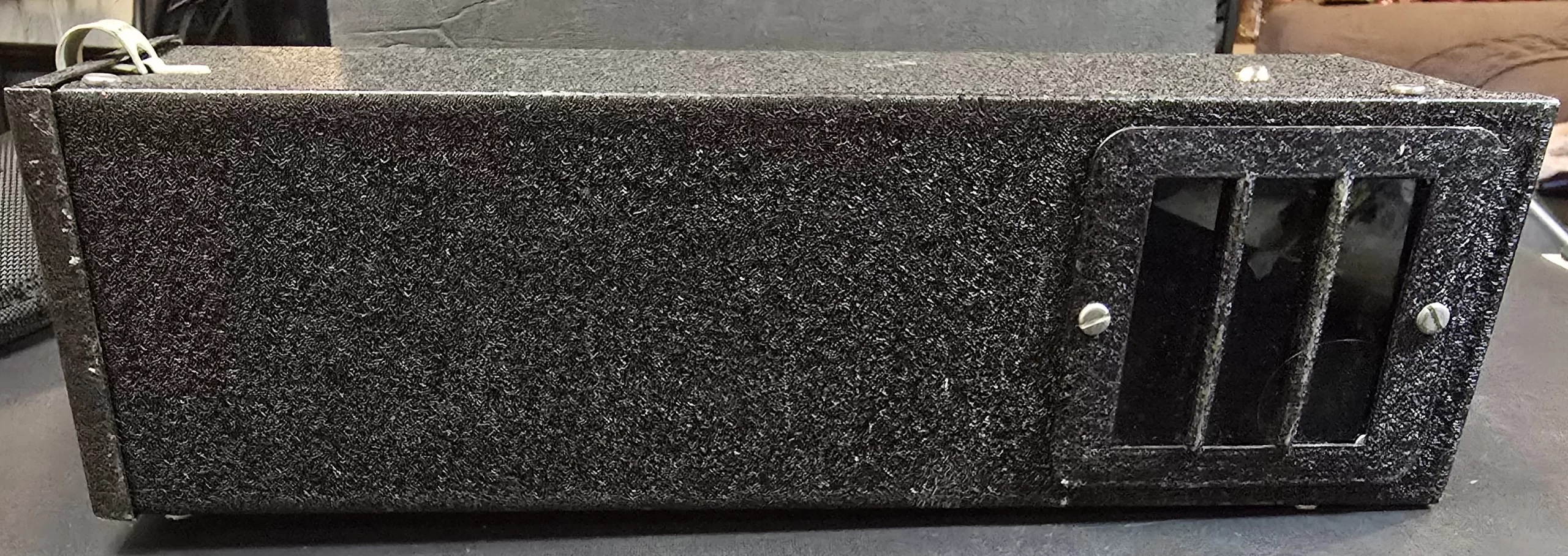
The rectangular case is finished in a textured dark gray coating and fitted with a heavy leather carrying handle secured by metal brackets. A front-mounted toggle switch controls power to the ultraviolet lamp housed internally behind a protective aperture. Ventilation slots are present on the side panel to dissipate heat during operation. The case opens via side clasps, revealing the interior lamp assembly and reflector.
Mineralight units such as this were used for mineral identification, forensic inspection, laboratory analysis, industrial quality control, and medical/scientific examination, relying on fluorescence under ultraviolet light to reveal properties invisible to the naked eye.
Condition
Original case and hardware intact with expected age-related wear, surface scuffs, and patina. Leather handle shows cracking and finish loss consistent with age. Labels remain legible. Interior components appear complete; lamp present. Untested.
Gallery
Historical context
Ultraviolet inspection lamps became increasingly important in the early 20th century as fluorescence was recognized as a diagnostic and analytical tool. By the 1930s and 1940s, UV lamps were widely adopted in geology, medicine, forensics, and industrial inspection, allowing examiners to detect mineral composition, counterfeit materials, biological residues, and surface treatments.
Fisher Research Laboratory, founded in 1931 by Gerhard Fischer, was at the forefront of detection technology. While the company is now synonymous with metal detectors, early products like the M-Scope Mineralight reflect a broader engagement with applied physics and scientific instrumentation during a period when portable analytical tools were rapidly evolving.
Curious Facts, Ephemera, and Trivia
“Mineralight” became a near-generic term for UV inspection lamps, much like “Xerox” for copiers.
UV lamps like this were used in early forensic work, including document examination and bodily fluid detection long before modern forensic kits existed.
Fisher’s Palo Alto location placed it squarely in the pre-Silicon Valley scientific corridor, decades before the tech boom.
Many Mineralight units were repurposed post-WWII for hobbyist mineral collecting, which is why complete industrial examples are increasingly scarce.
Excerpt
“Certain substances, when exposed to ultraviolet radiation, emit visible light of characteristic color, enabling rapid identification not otherwise possible.”
Why it is in the Cabinet
This piece represents the intersection of science, medicine, and early detection technology—a reminder that much of modern diagnostic practice began with simple physical principles applied in clever, portable ways. It is also an excellent example of Fisher’s lesser-known early work beyond metal detection, anchoring the Cabinet firmly in the practical history of applied medical and scientific tools.
Support Dr. Bebout’s Cabinet of Medical Curiosities
If you enjoy the history, the oddities, and the effort, help keep this cabinet open. Every little bit helps preserve and share the strange wonders of medicine's past.
Buy Me a Ko-fi ☕ Buy Me a Coffee ☕ Tip via PayPal 💵