
Title
Amyl Nitrite “Glaseptic” Ampoules (Nitrito de Amilo)
Author
Parke, Davis & Company
Image
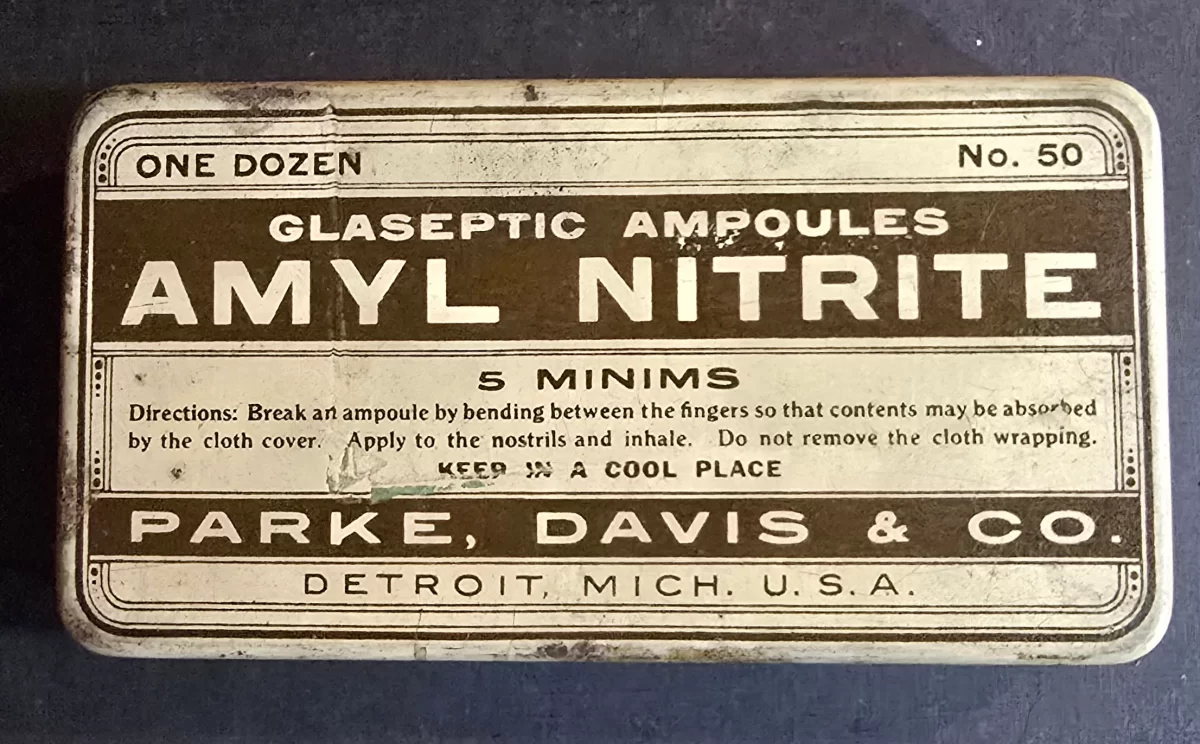
Description
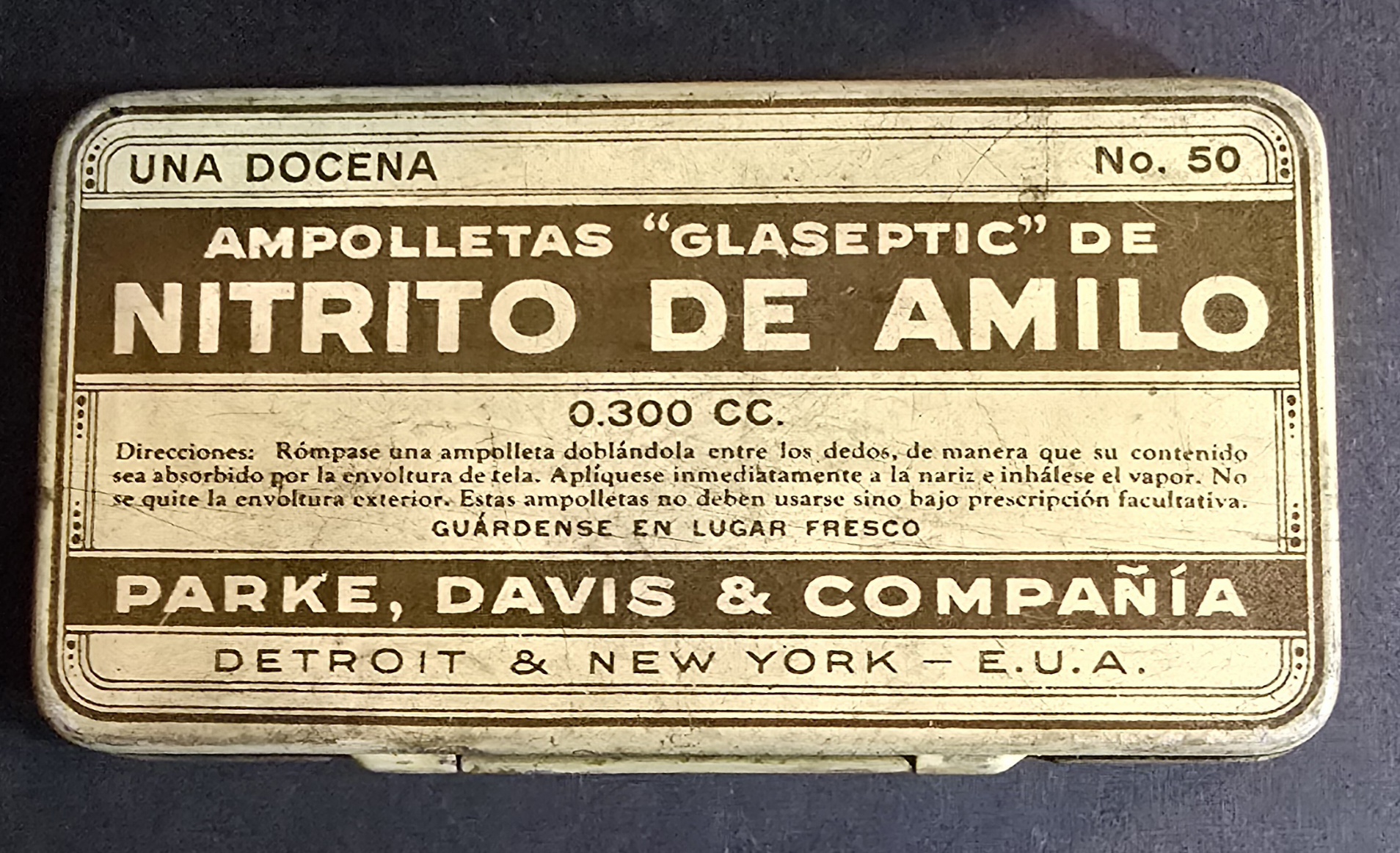
This is an original Parke, Davis & Company metal tin containing “Glaseptic” amyl nitrite ampoules, marketed in both English and Spanish for international distribution. The tin was originally issued with one dozen sealed glass ampoules, each wrapped in cloth and containing 5 minims (0.300 cc) of amyl nitrite. The ampoules were designed to be snapped between the fingers, allowing the volatile liquid to soak into the cloth for immediate inhalation.
Amyl nitrite was widely used from the late 19th into the early 20th century as a rapid-acting vasodilator, particularly for the relief of angina pectoris, circulatory collapse, and syncope. Its effects were nearly instantaneous, making it a mainstay of emergency cardiovascular treatment before the development of modern nitrates and injectable therapies. The “Glaseptic” branding reflects Parke Davis’s sealed ampoule system, intended to preserve potency and minimize contamination.
The bilingual labeling (“Ampolletas ‘Glaseptic’ de Nitrito de Amilo”) reflects Parke Davis’s extensive Latin American and international pharmaceutical trade during the early 20th century.
Condition
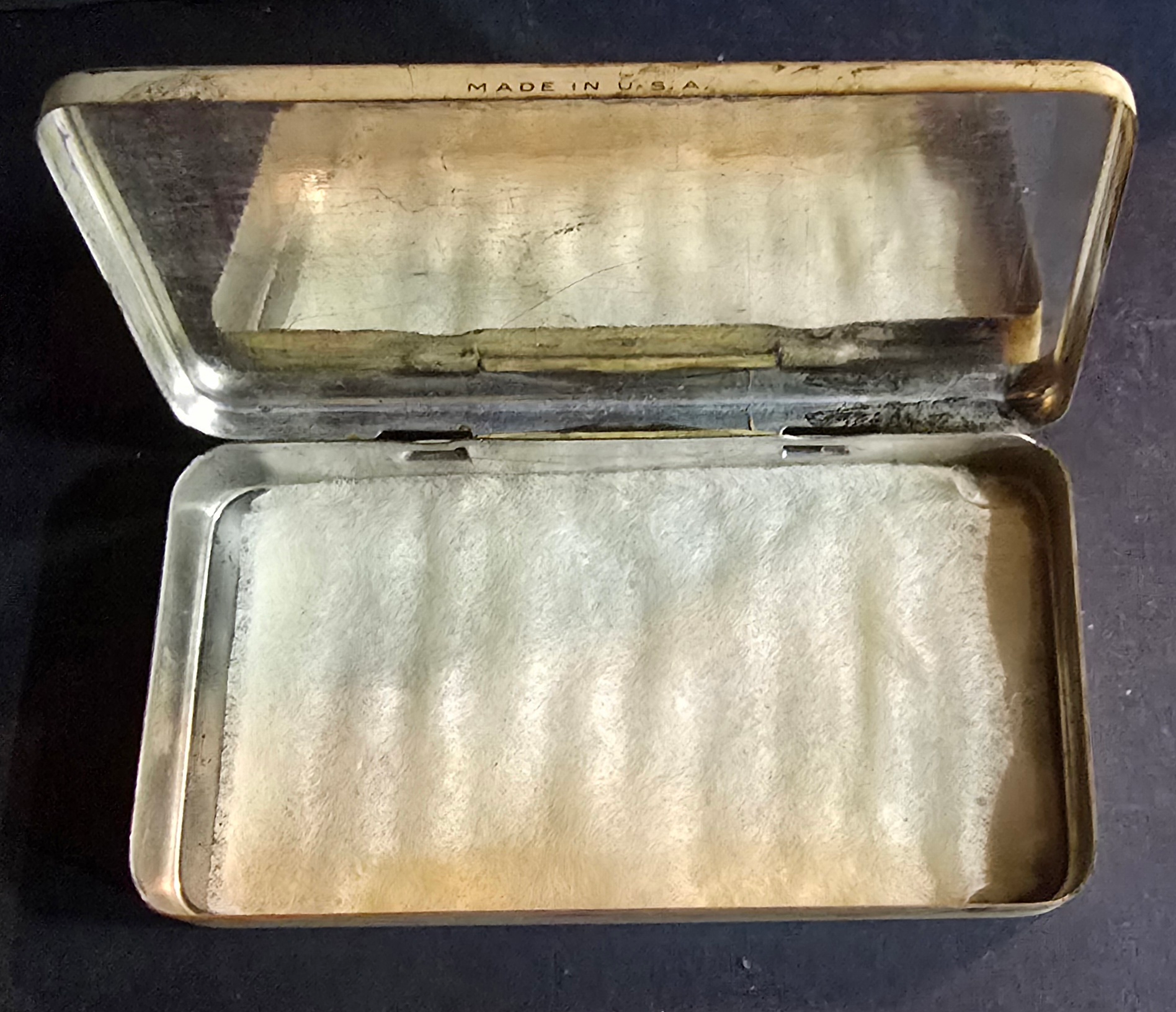
Original metal tin with intact bilingual labeling; surface wear and patina consistent with age; interior cloth padding present; ampoules no longer present.
Gallery


Historical context
Amyl nitrite entered medical practice in the mid-1800s and quickly became a standard emergency agent for chest pain and circulatory distress. Parke, Davis & Co. was among the most influential pharmaceutical manufacturers of the era, known for standardized dosing, global distribution, and early adoption of sealed ampoule delivery systems. By the early 20th century, amyl nitrite products such as this were increasingly regulated due to their potent physiologic effects and later non-medical misuse.
Curious Facts, Ephemera, and Trivia
Each ampoule contained a single inhaled dose, never intended for repeated use.
The cloth wrapping prevented both skin contact and injury from broken glass.
Patients frequently experienced flushing, headache, and lightheadedness within seconds.
Amyl nitrite predates nitroglycerin as a practical anti-anginal agent in routine use.
Parke Davis often issued identical products with multilingual labels rather than redesigning packaging.
Excerpt
“Break an ampoule by bending between the fingers… Apply to the nostrils and inhale. Do not remove the cloth wrapping.”
Why it is in the Cabinet
This item represents early emergency cardiology reduced to pocket size—a fast, dramatic pharmaceutical intervention from an era before monitoring, IV access, or modern cardiac drugs. It also reflects Parke Davis’s role in transforming medicine from local compounding to standardized global pharmaceutical manufacturing.
Support Dr. Bebout’s Cabinet of Medical Curiosities
If you enjoy the history, the oddities, and the effort, help keep this cabinet open. Every little bit helps preserve and share the strange wonders of medicine's past.
Buy Me a Ko-fi ☕ Buy Me a Coffee ☕ Tip via PayPal 💵