
Title
The Surgeon’s Vade Mecum
Author
Robert Druitt, M.R.C.S.
Image
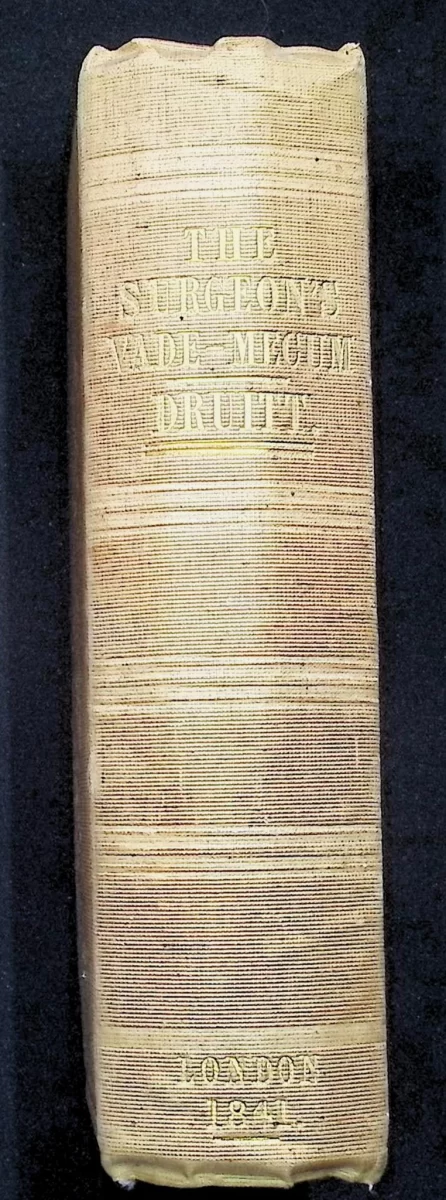
Description
The Surgeon’s Vade Mecum is a compact yet comprehensive 19th-century surgical manual intended for daily reference by practicing surgeons and advanced medical students. First published in the early Victorian era, the work distills contemporary surgical knowledge into a portable format, covering trauma, inflammation, constitutional disease, operative principles, and post-injury systemic effects.
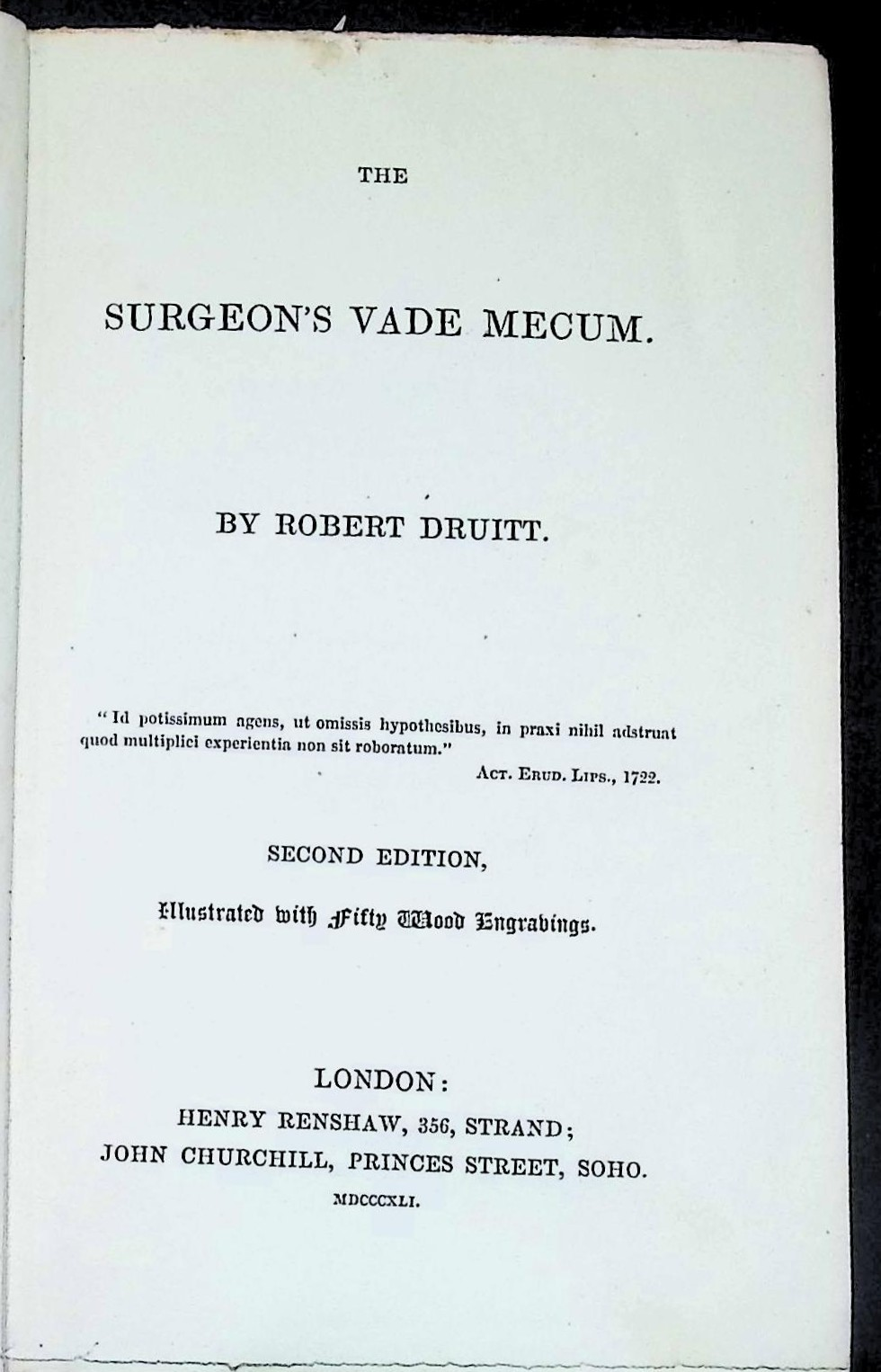
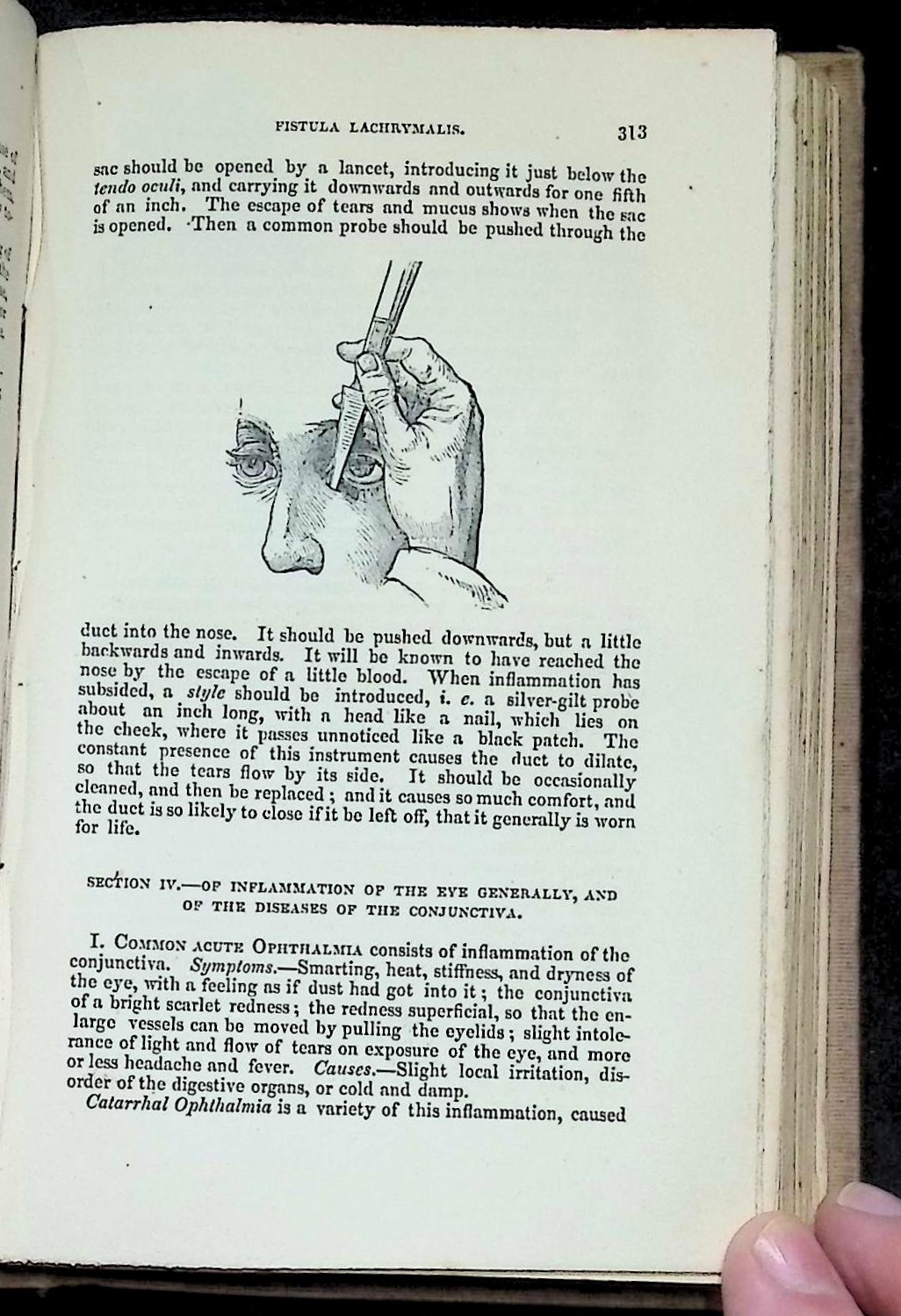
This copy is the Second Edition (1841), illustrated with fifty wood engravings. The text reflects pre-anesthetic, pre-antiseptic surgery, emphasizing clinical observation, anatomy, and pragmatic bedside decision-making. Topics range from collapse and prostration following injury, scrofula (“King’s Evil”), ophthalmic disease, fistulae, and detailed operative techniques—many illustrated with stark clarity.
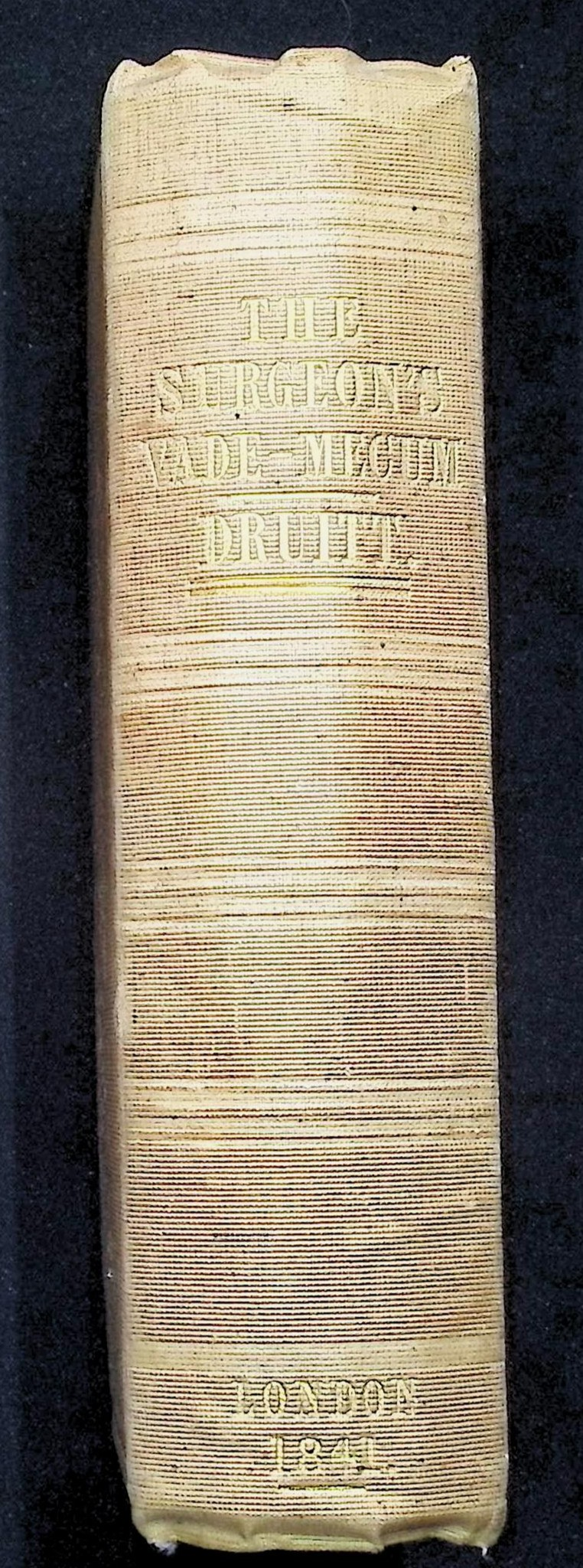
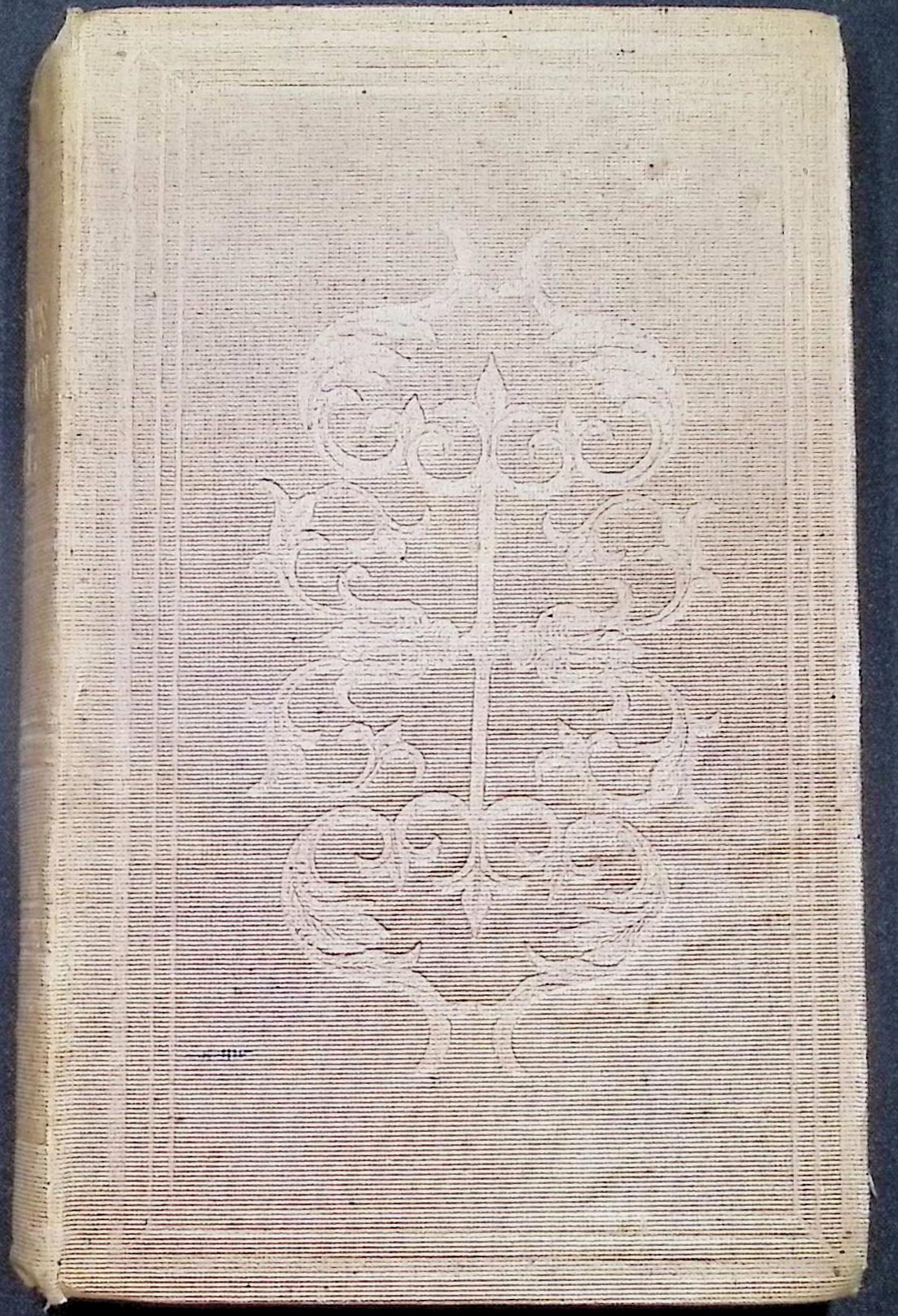
The volume is bound in original cloth with blind-stamped ornamentation and gilt spine titling, characteristic of mid-19th-century London medical publishing.
Condition
Original cloth binding with visible edge wear and spine softening; pages clean and legible with expected age toning; binding intact and stable.
Gallery
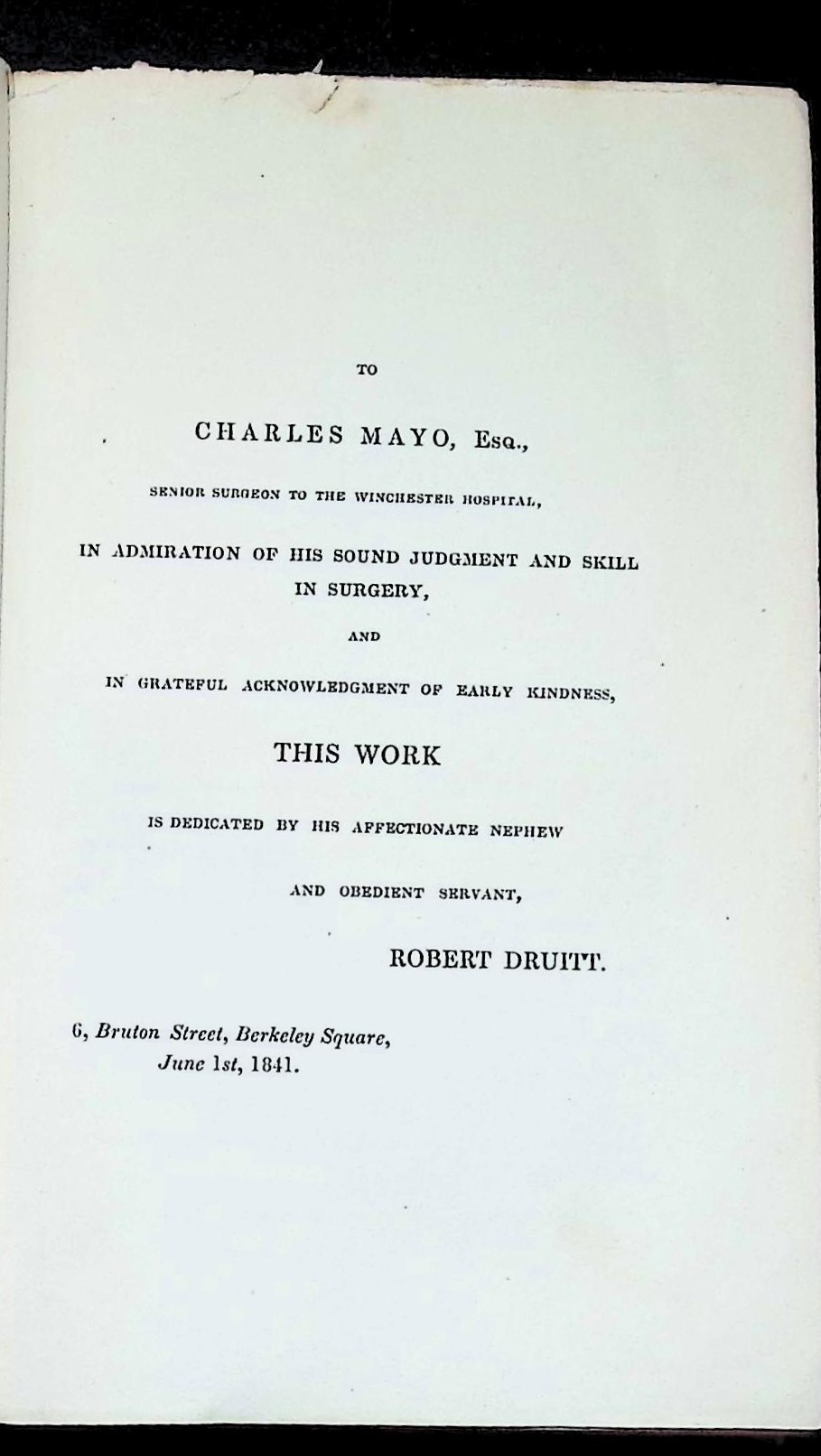
Historical context
Robert Druitt (1814–1883) was a British surgeon and medical writer whose works became standard references on both sides of the Atlantic. The Surgeon’s Vade Mecum was especially valued for its practicality—designed not as a theoretical treatise, but as a working manual for surgeons managing trauma, infection, and chronic disease in an era before germ theory. Its popularity reflects the transitional period of surgery just before anesthesia and antisepsis radically altered operative practice.
Curious Facts, Ephemera, and Trivia
“Vade mecum” translates to “go with me”—a literal pocket companion for surgeons.
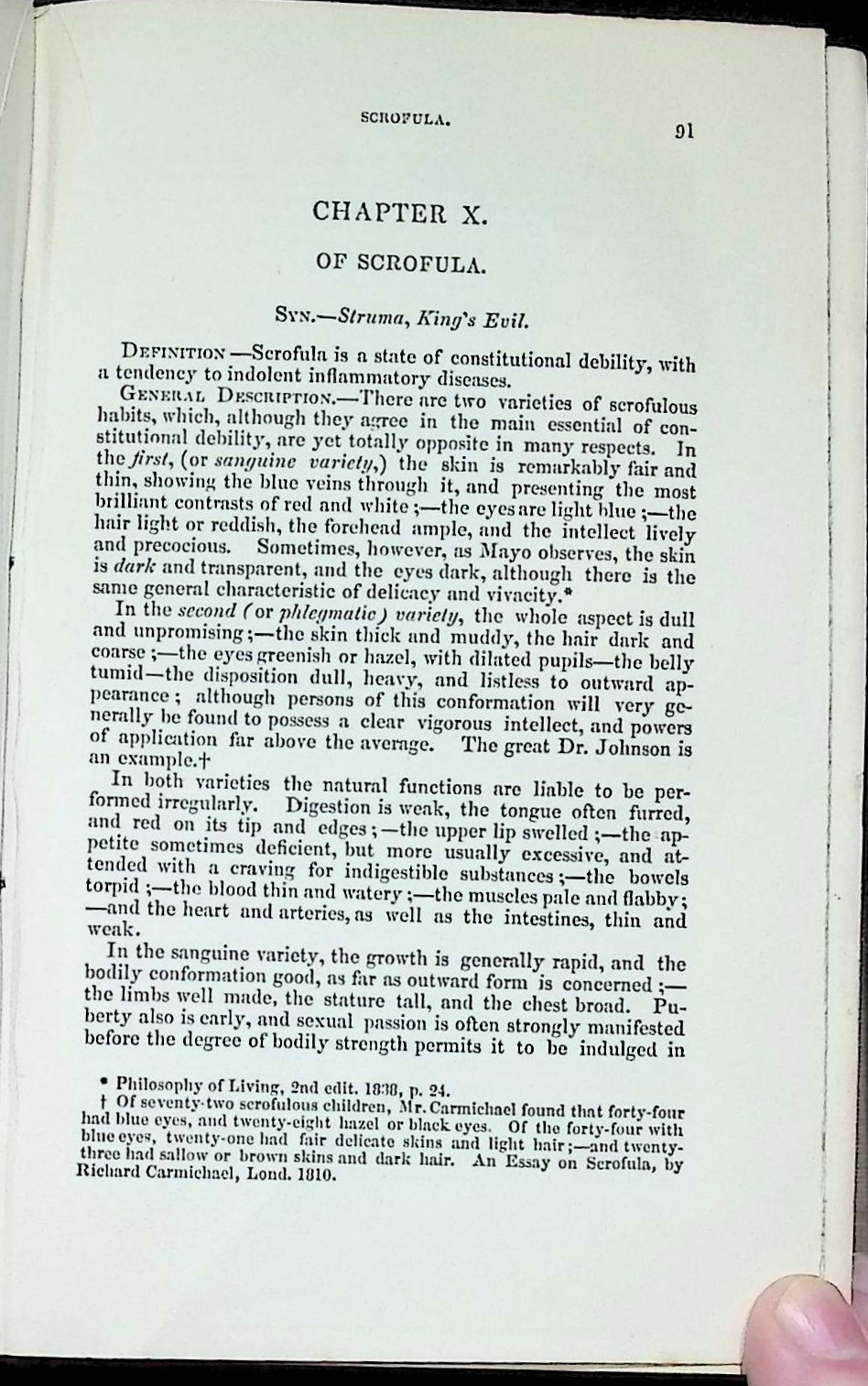
The book discusses scrofula (tuberculous lymphadenitis) as a constitutional disease, still echoing medieval concepts such as “King’s Evil.”
Several sections describe long-term implantation of instruments (such as lacrimal probes) worn for life to maintain patency—an approach unimaginable today.
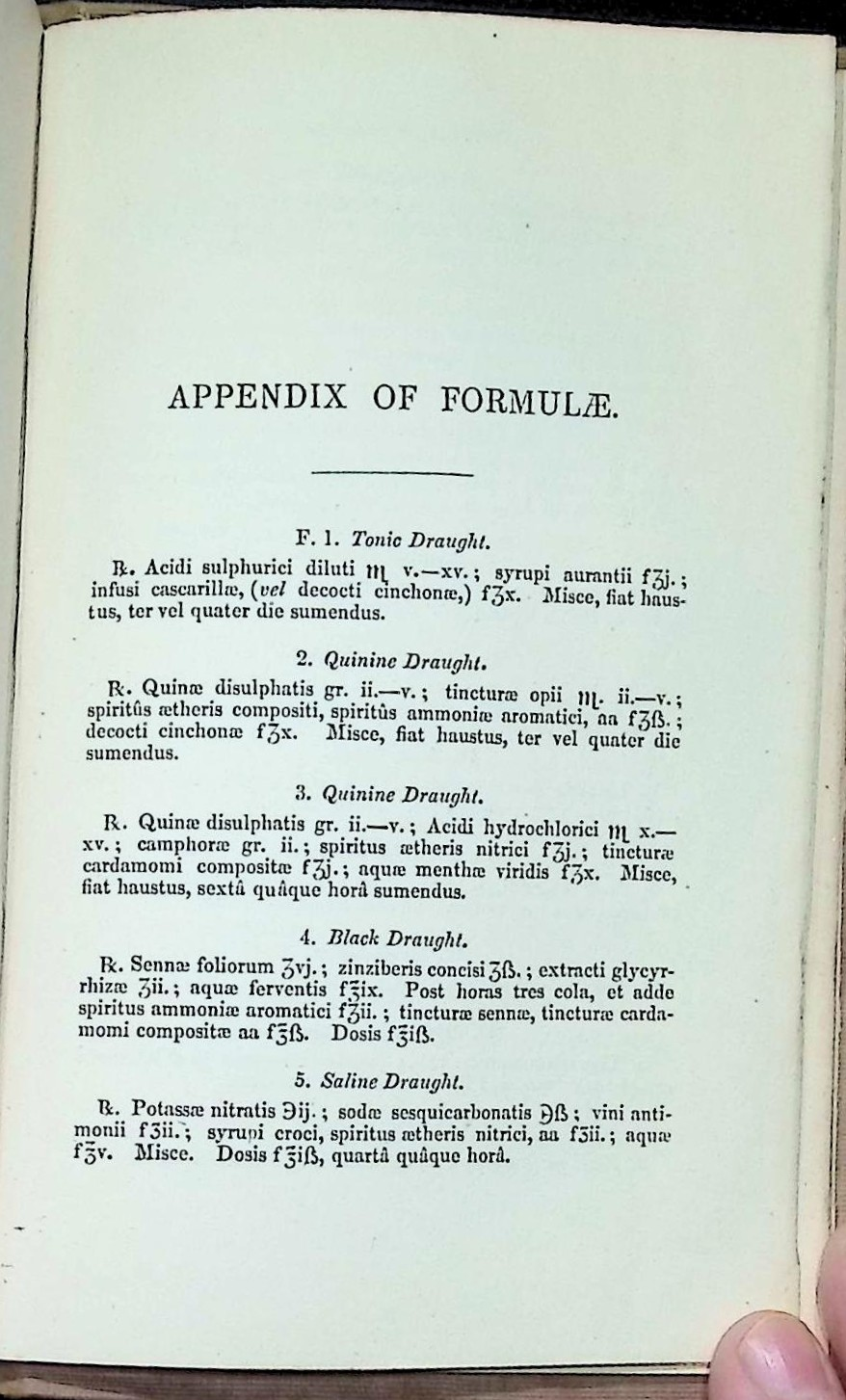
Formulae in the appendix include quinine, opium tincture, acids, and aromatic spirits—pharmacy and surgery still deeply intertwined.
Excerpt
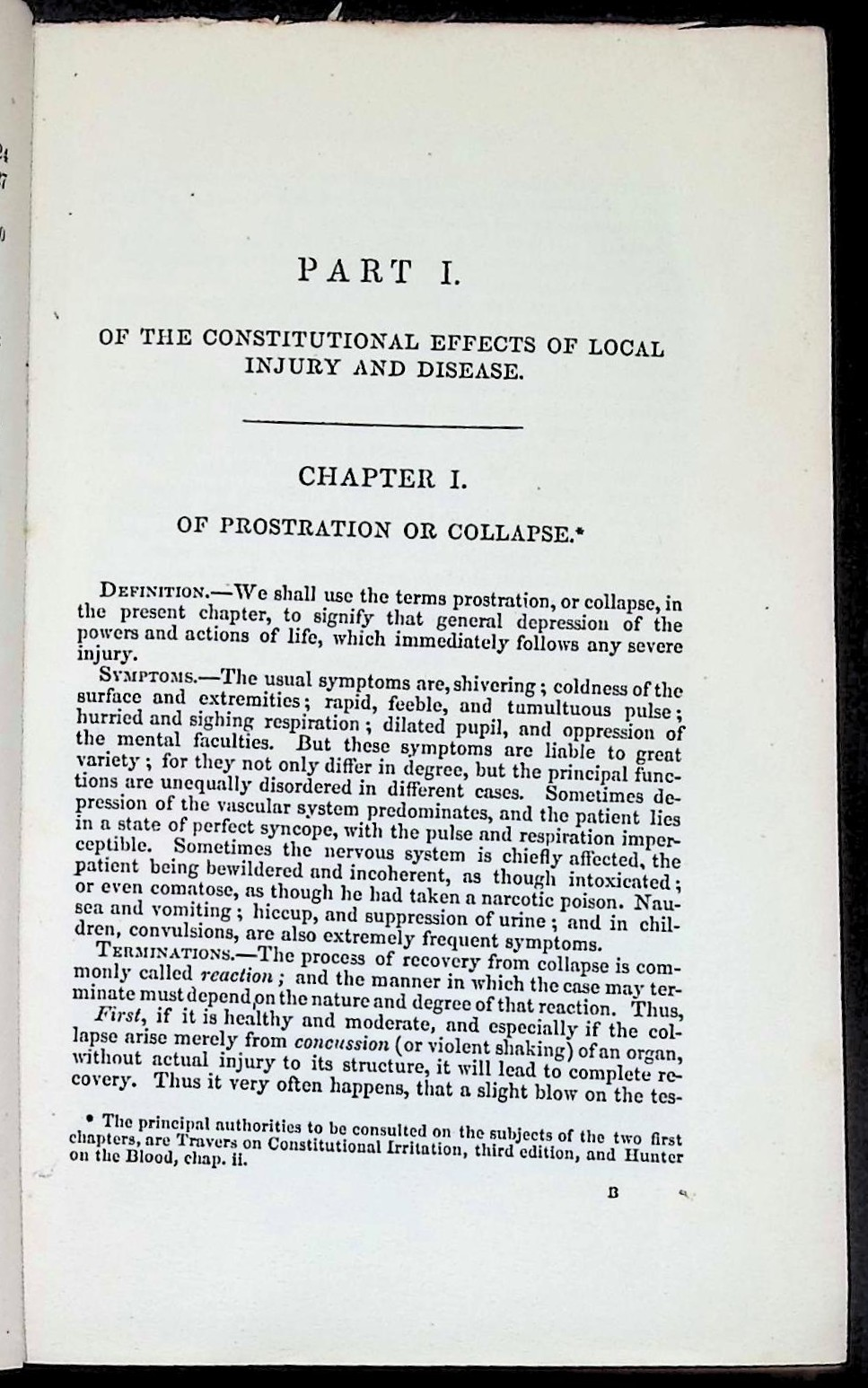
“We shall use the terms prostration, or collapse… to signify that general depression of the powers and actions of life, which immediately follows any severe injury.”
Why it is in the Cabinet
This volume represents working surgery before modern medicine intervened—a surgeon’s world governed by anatomy, judgment, and endurance rather than technology. It is not theoretical history; it is field medicine in print. As a physician and collector, this book earns its place by showing how much of modern clinical thinking was forged under brutal constraints—and how much depended on the surgeon’s nerve.
Support Dr. Bebout’s Cabinet of Medical Curiosities
If you enjoy the history, the oddities, and the effort, help keep this cabinet open. Every little bit helps preserve and share the strange wonders of medicine's past.
Buy Me a Ko-fi ☕ Buy Me a Coffee ☕ Tip via PayPal 💵