
Title
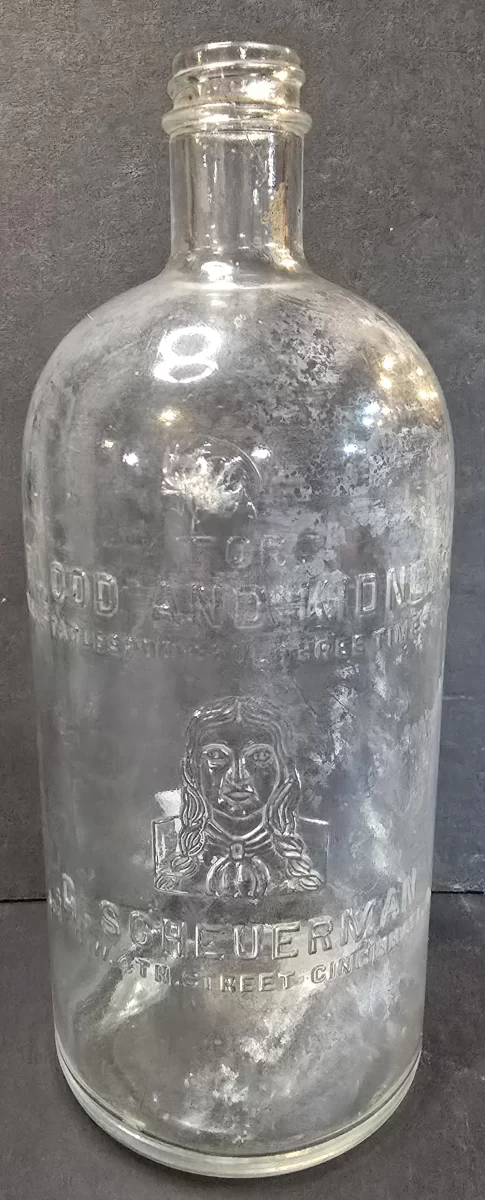
R. Scheuerman Blood and Kidney Remedy Bottle
Author
Maker / Proprietor: R. Scheuerman, Cincinnati, Ohio.
Image
Description
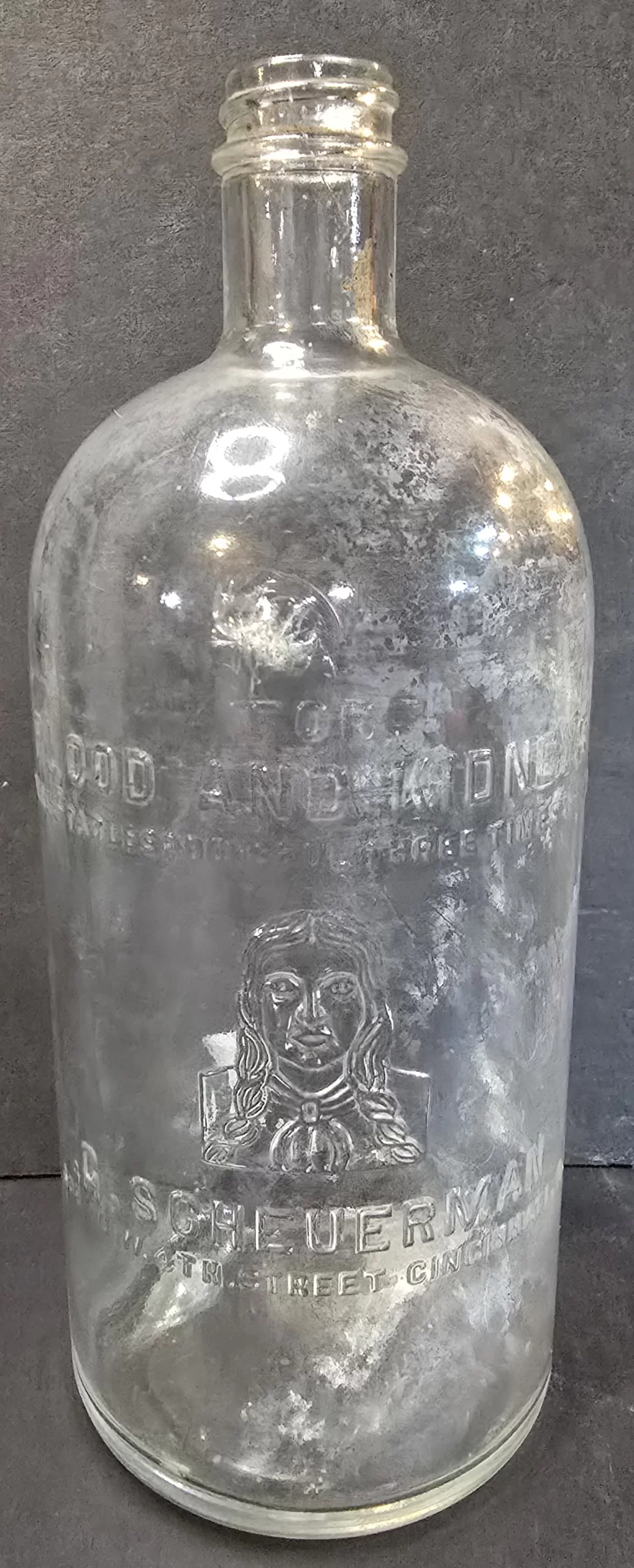
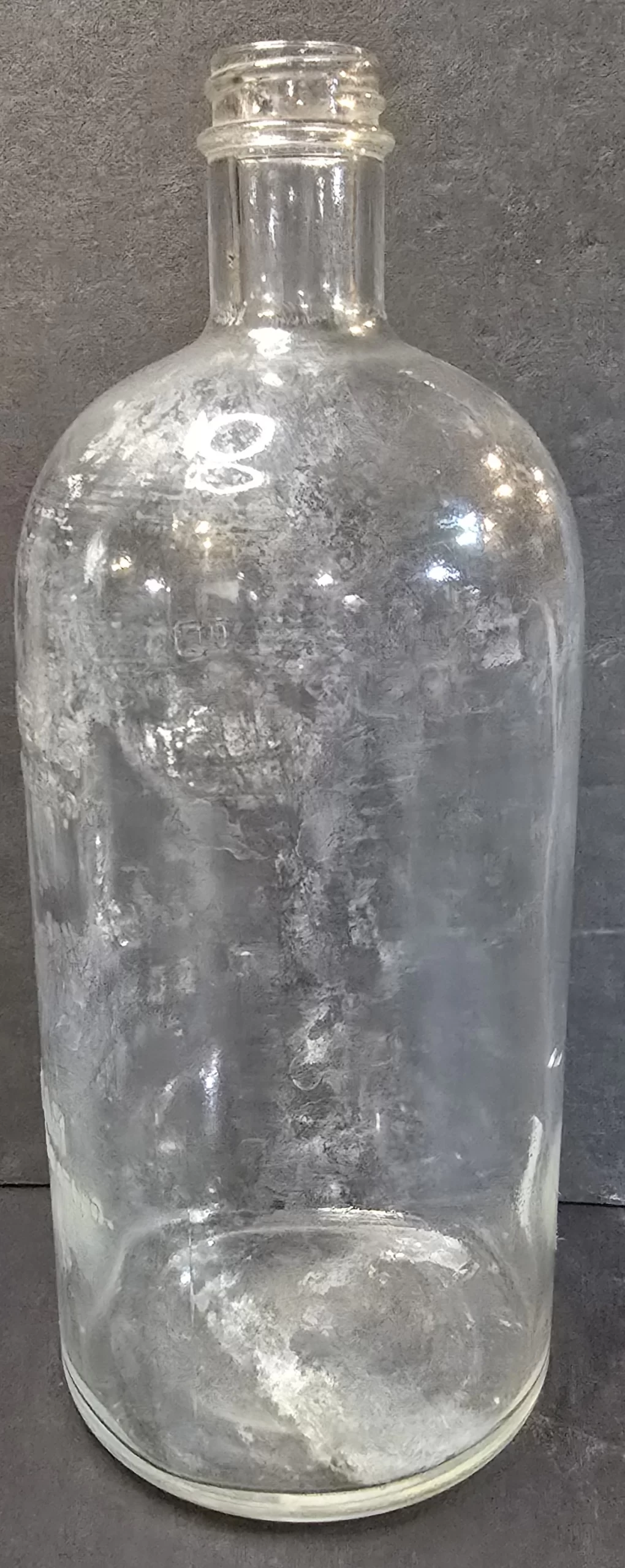
Large clear glass patent-medicine bottle for R. Scheuerman’s Blood and Kidney Remedy, produced in Cincinnati, Ohio, late 19th to early 20th century. The bottle is machine-made with a tooled/finish lip and heavy shoulder, designed to hold a generous dose of “cure-all” optimism.
The front is boldly embossed:
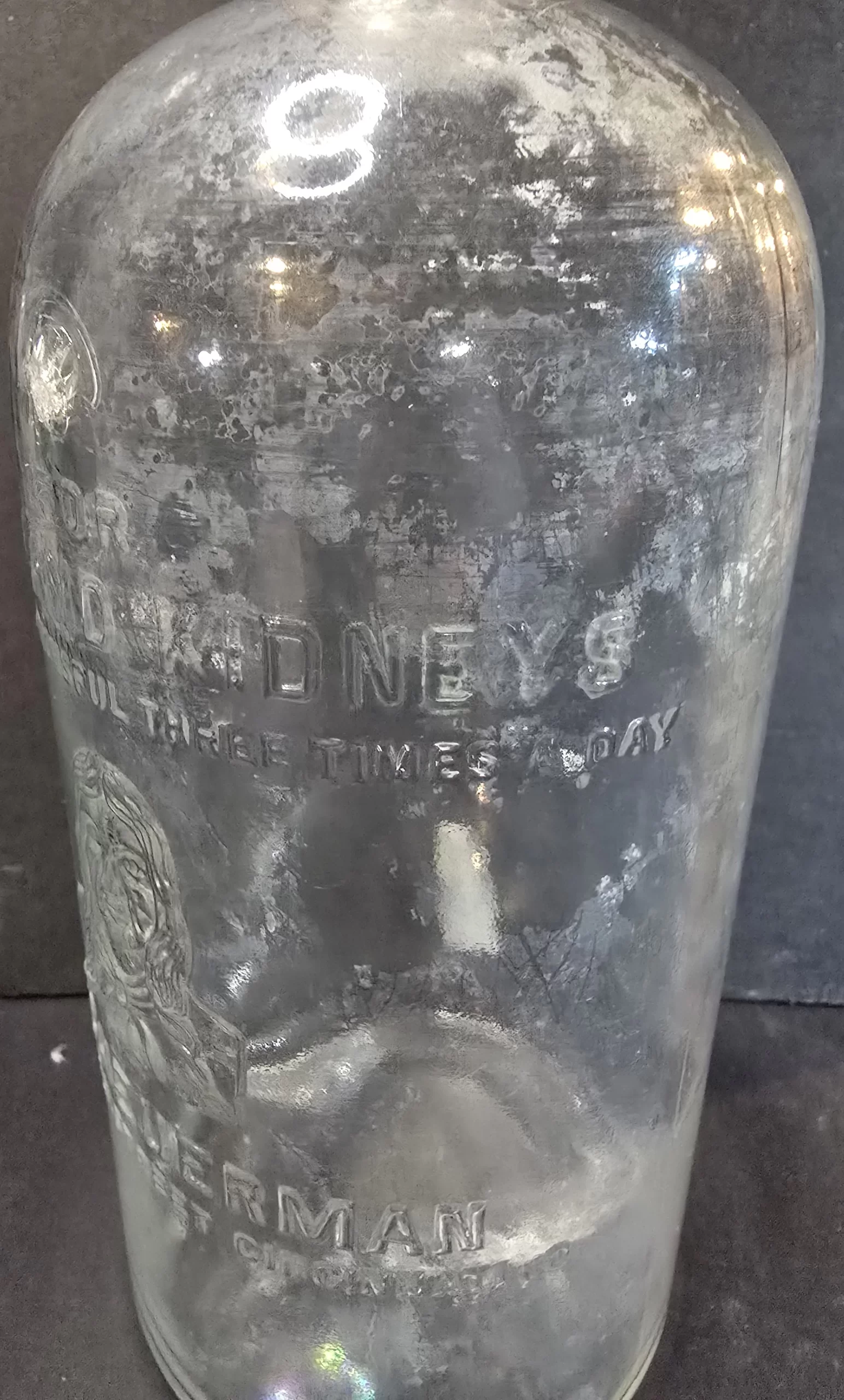
FOR BLOOD AND KIDNEYS (arched across the shoulder)
A central portrait bust of a long-haired man in a framed panel
Below the portrait: R. SCHEUERMAN
Lower panel: 14TH STREET, CINCINNATI
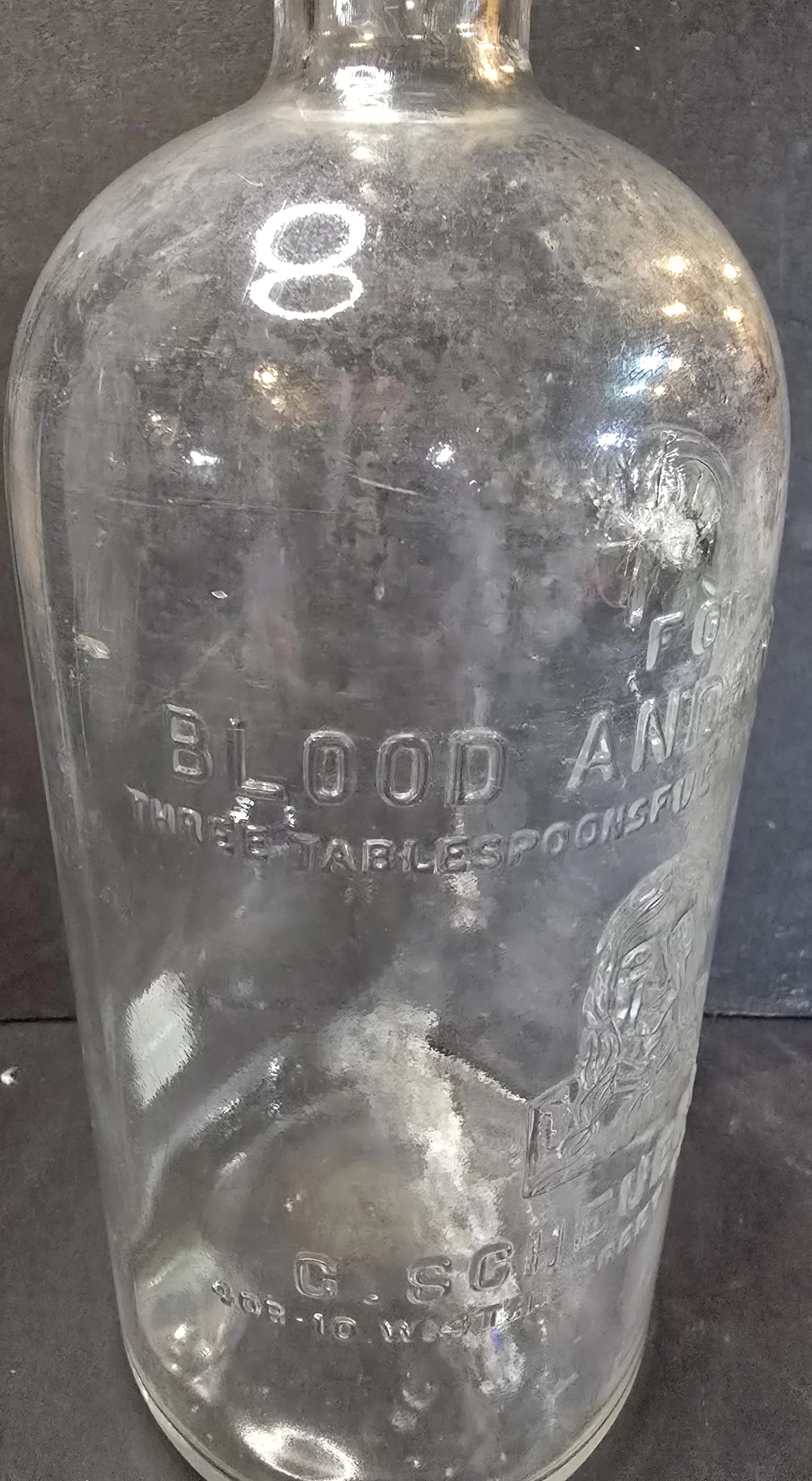
Around the text band is the wonderfully awkward dosing line promising that “Three Tablespoons full should be taken three times a day,” turning kidney disease into something you schedule between meals.
This is a display-size bottle that would have stood out on a pharmacy shelf or in a small-town “drug and notions” store, doing most of its sales work through the embossing before anyone even asked what was inside.
Condition
Heavy internal haze and mineral staining consistent with long-term storage; exterior surfaces show light scuffing. Central chip noted on front shoulder. Embossing and portrait remain strong and fully legible.
Gallery
Historical context
“Blood purifiers” and “kidney remedies” were a booming market in the late 1800s and early 1900s. Before modern lab work and evidence-based nephrology, vague complaints like back pain, fatigue, swelling, skin eruptions, and “bad blood” were often bundled together and blamed on the kidneys.
Manufacturers like R. Scheuerman of Cincinnati stepped into that anxiety gap with bottled solutions promising to cleanse the blood, stimulate sluggish kidneys, and generally reset the system. These mixtures were usually combinations of herbal diuretics, laxatives, alcohol, and a confident label.
Cincinnati was a hotbed for patent medicines, with numerous small firms producing proprietary tonics and remedies. A large embossed bottle like this one would often be displayed in the pharmacy window as a permanent advertisement for the smaller bottles actually sold over the counter.
Curious Facts, Ephemera, and Trivia
“Blood and kidney” tonics were the Swiss Army knife of quack medicine: marketed for rheumatism, skin eruptions, “female weakness,” “male decline,” and whatever else you could plausibly blame on your internal plumbing.
The anonymous long-haired gentleman on the front may be Scheuerman himself or just a generic heroic figure. Either way, he looks like he’s about to sell you a life insurance policy and a tonic in the same visit.
Bottles of this style help show how strongly branding mattered even in the 1890s—heavy embossing and a distinctive face made the product memorable long after the label rotted away.
Excerpt
“FOR BLOOD AND KIDNEYS.”
That’s it. That’s the whole medical claim. No ingredients, no dosage, just two organs and a lot of confidence.
Why it is in the Cabinet
This bottle earns its place in the Cabinet as a classic, unapologetic example of pre-regulation organ repair in a bottle. It captures the era when “purifying the blood” and “strengthening the kidneys” were marketed as simple, one-size-fits-all solutions to complex chronic disease.
It’s visually strong—big, embossed, and weirdly proud of its vague promises. As a teaching piece, it opens conversations about the history of nephrology, the evolution of chronic disease management, and how marketing language evolved from “trust me, it fixes everything” to the legally-mandated fine print we know today.
Support Dr. Bebout’s Cabinet of Medical Curiosities
If you enjoy the history, the oddities, and the effort, help keep this cabinet open. Every little bit helps preserve and share the strange wonders of medicine's past.
Buy Me a Ko-fi ☕ Buy Me a Coffee ☕ Tip via PayPal 💵