
Title
FOLEY’S HONEY AND TAR COMPOUND
Author
Foley & Co., Chicago, Illinois
Image
Description
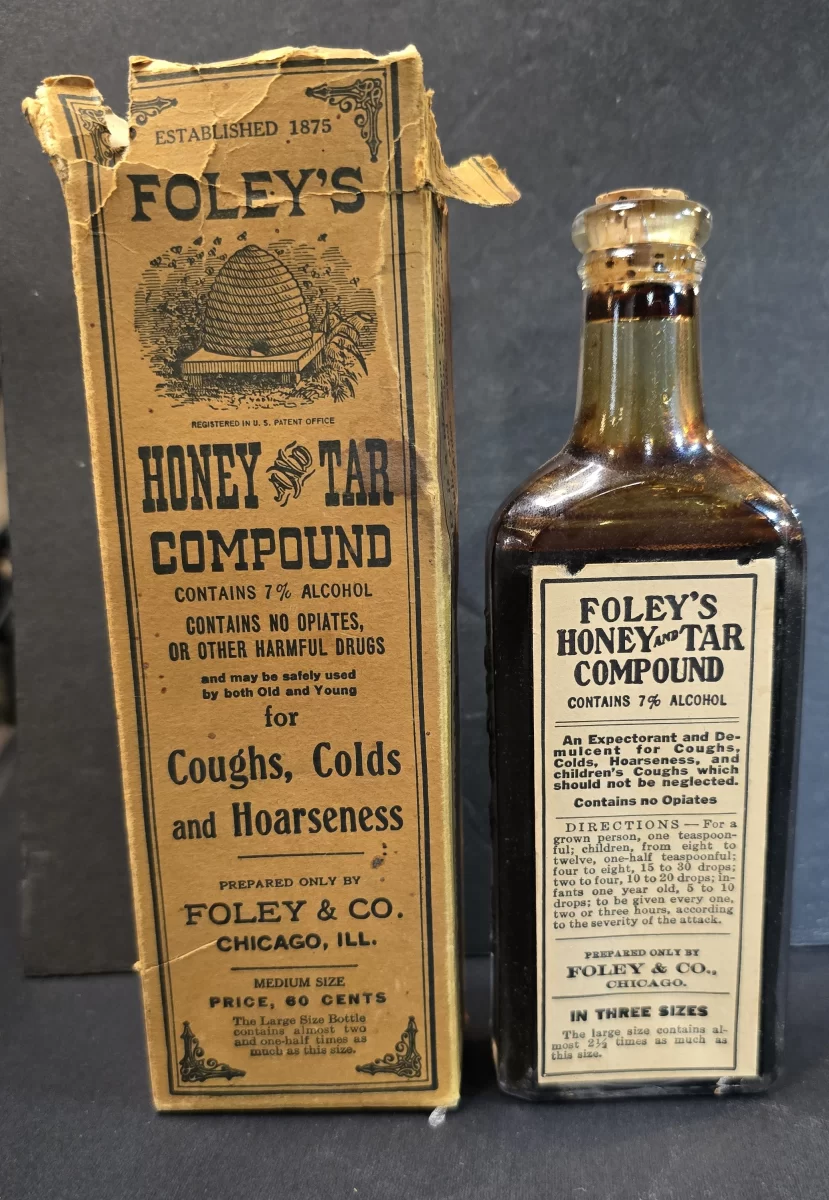
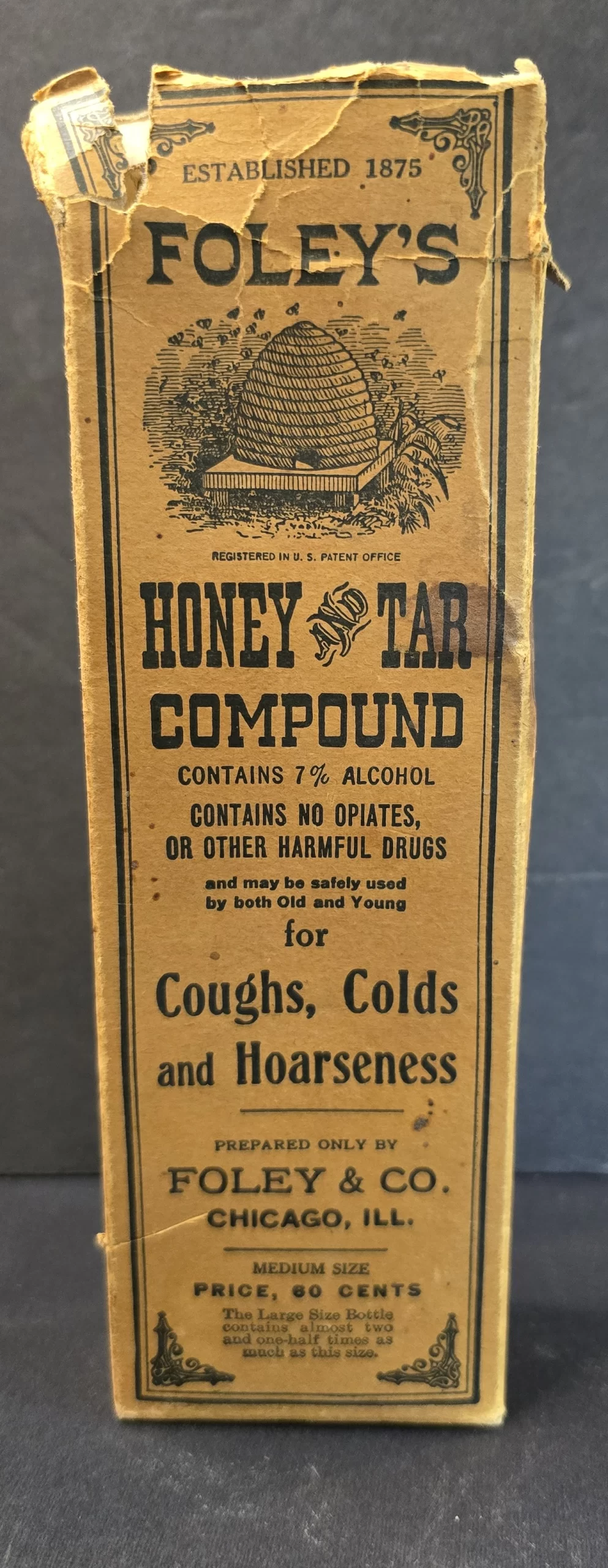
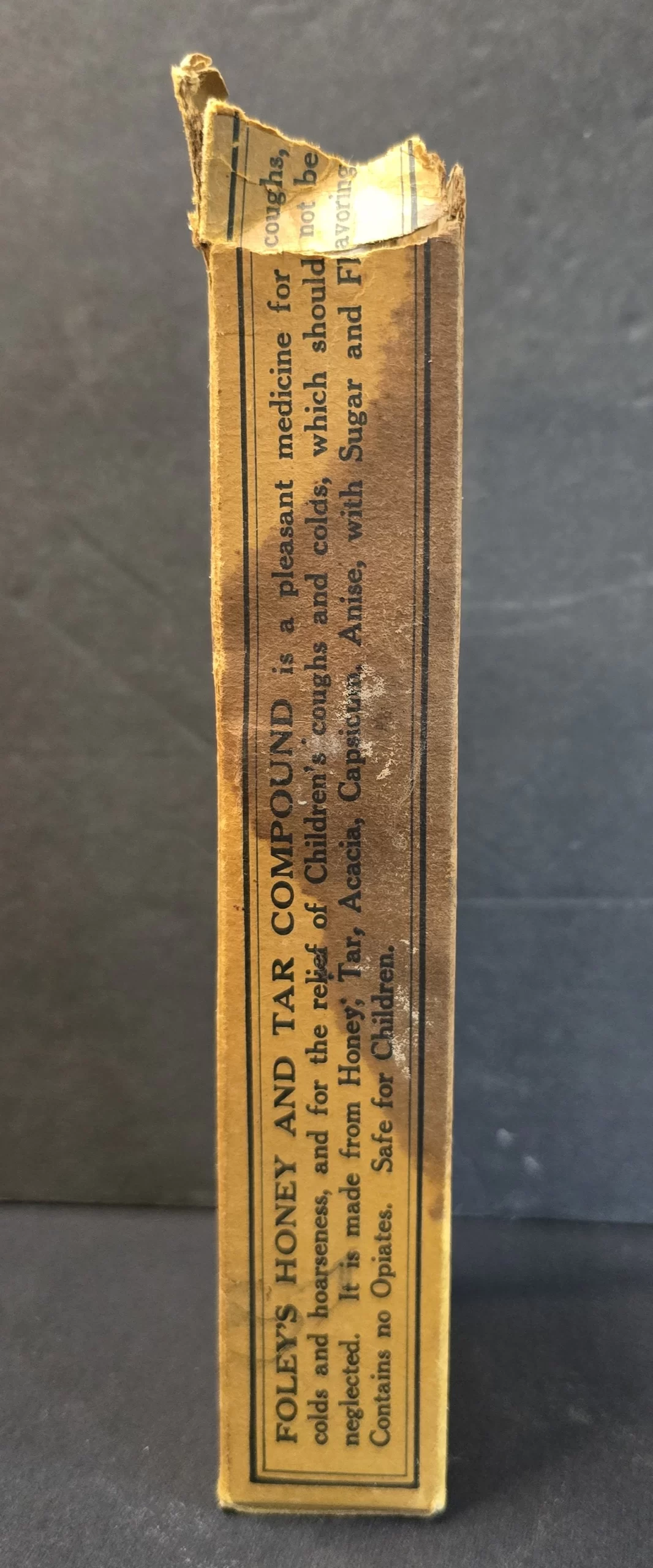
This is an original bottle and box of Foley’s Honey and Tar Compound, a widely marketed early-20th-century expectorant promoted as safe for both “Old and Young.” The remedy contained 7% alcohol, advertised no opiates, and relied on a mixture of honey, tar, acacia, anise, and sugar as its demulcent base.
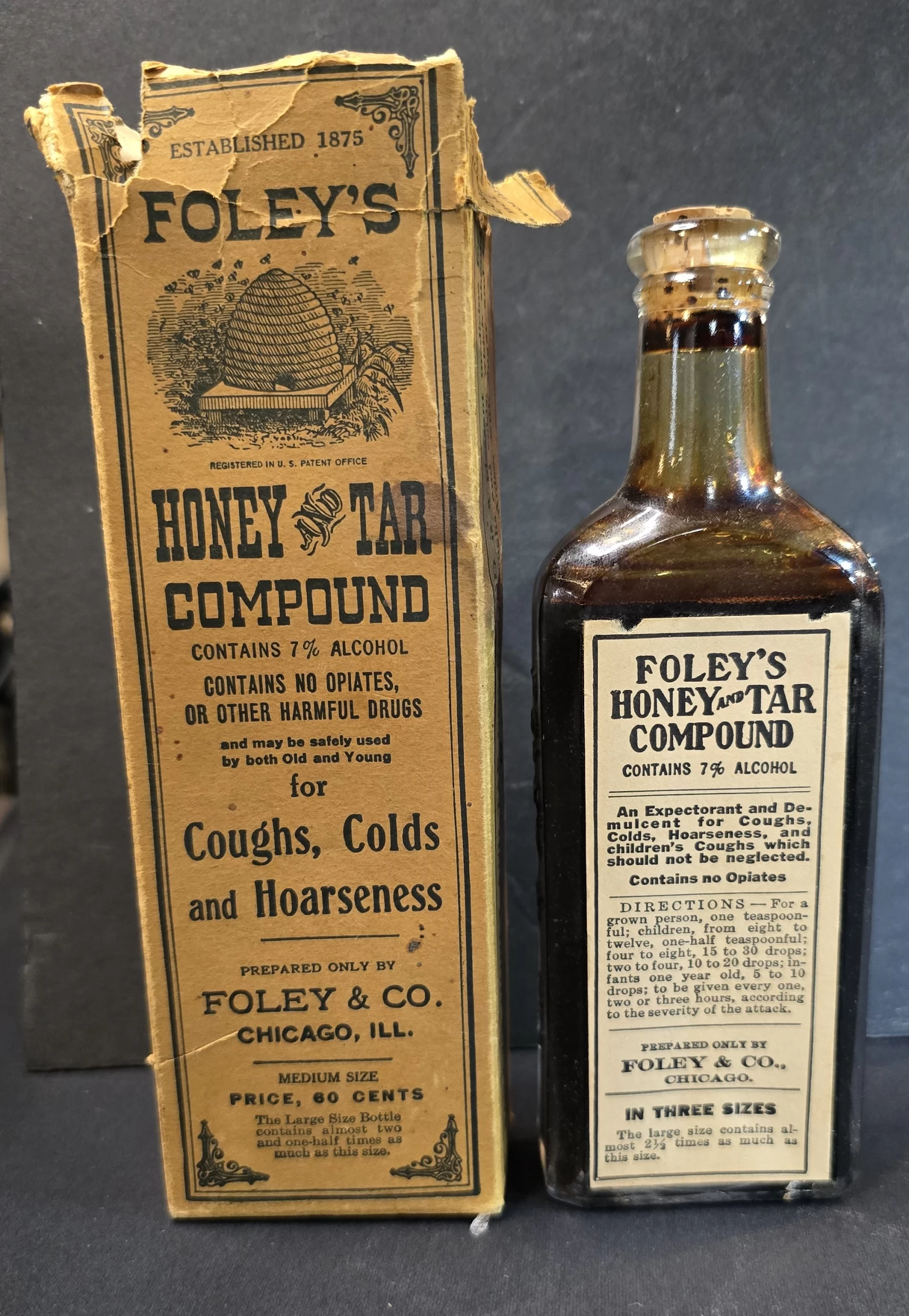
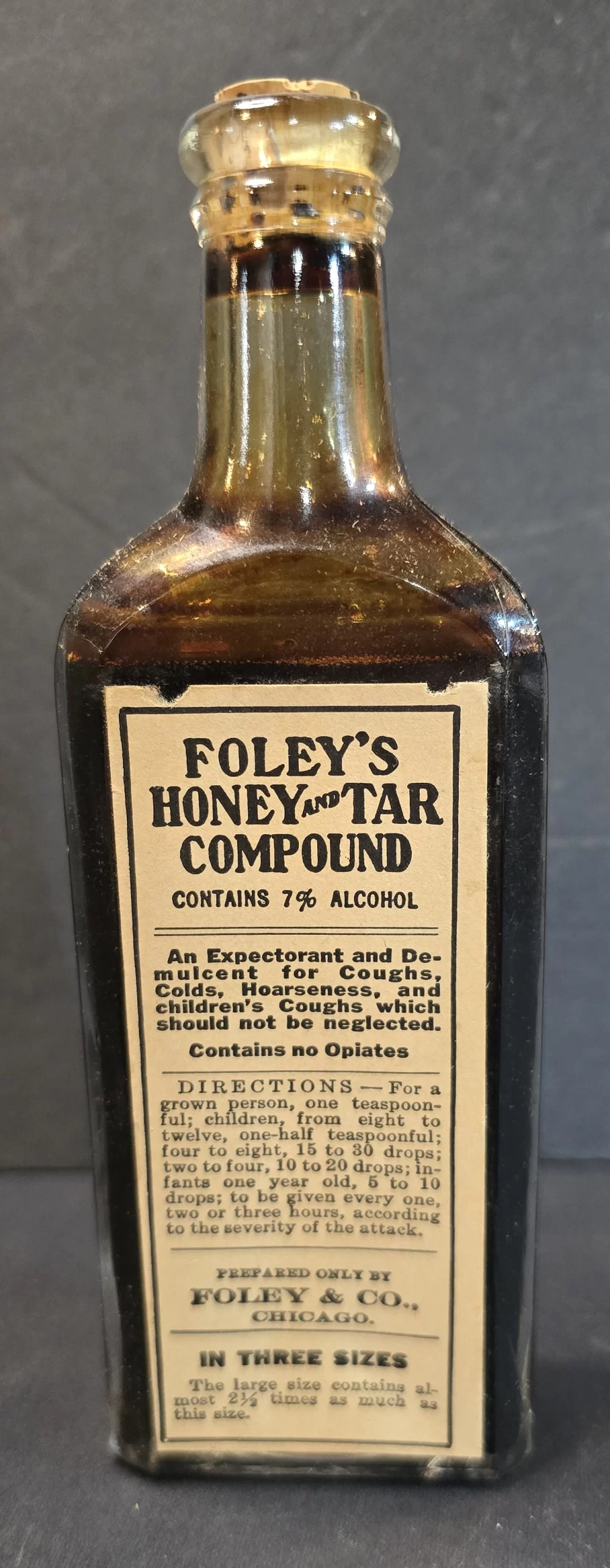
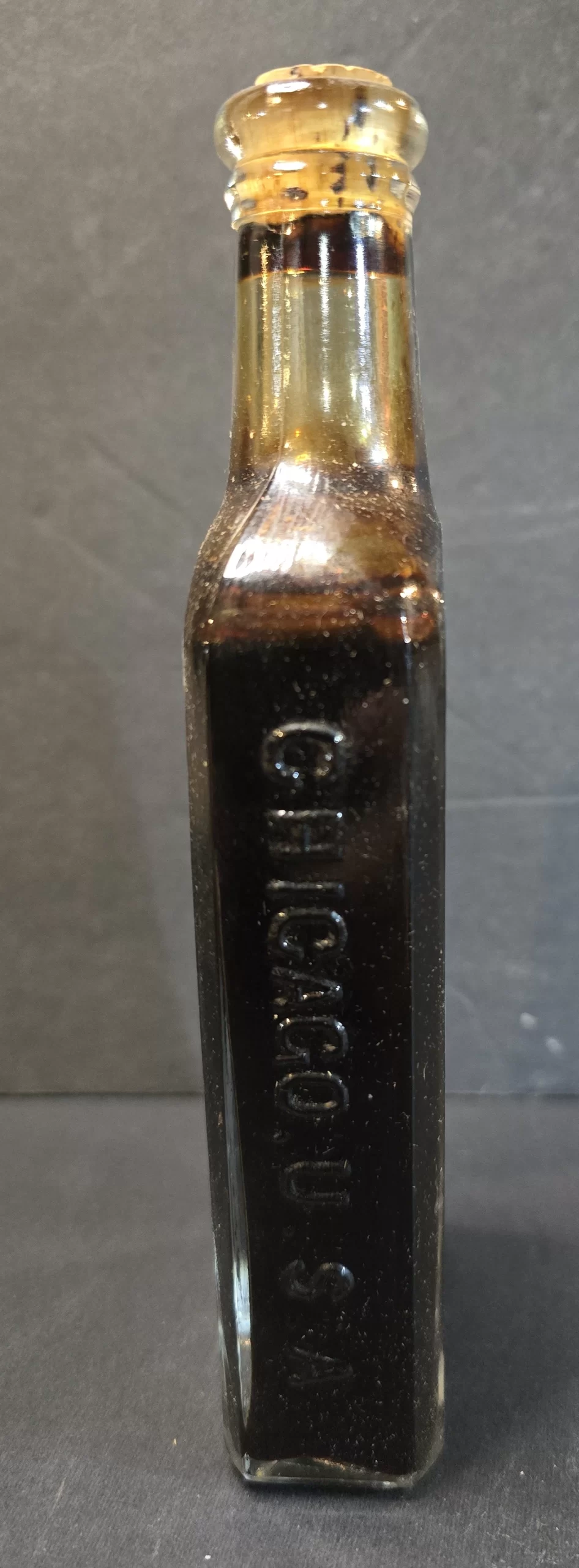
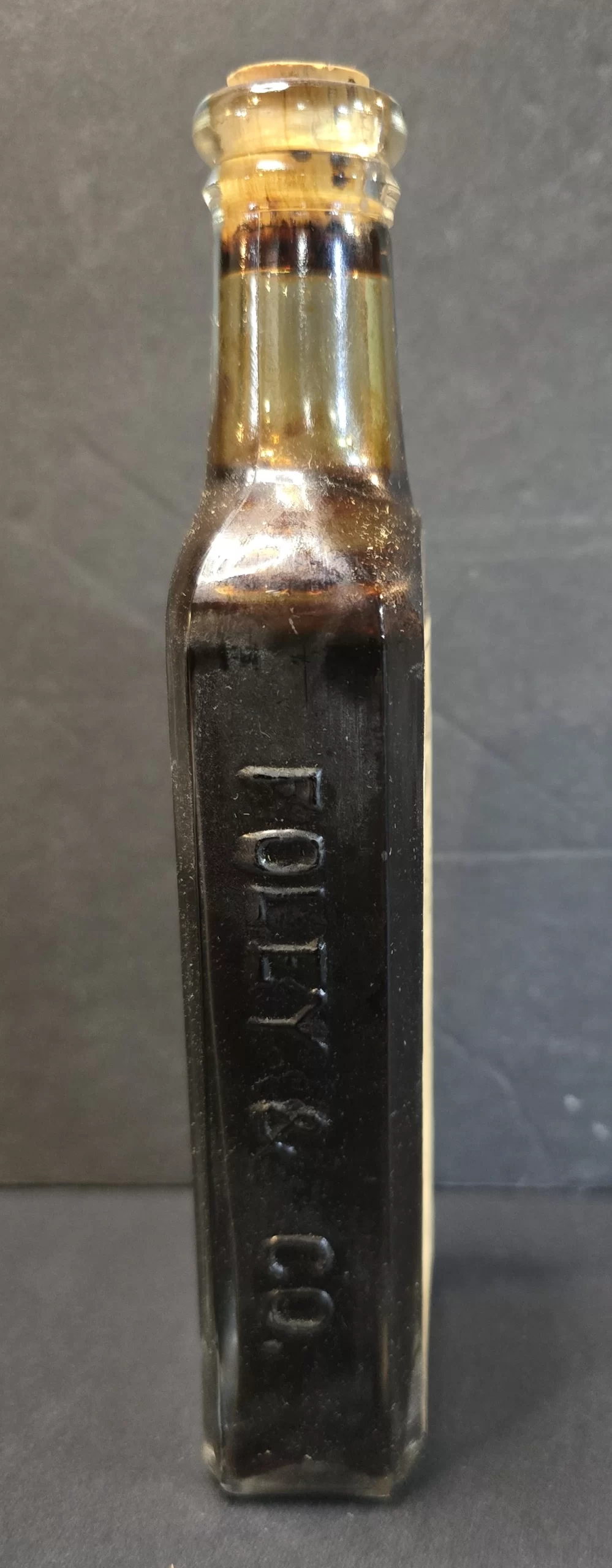
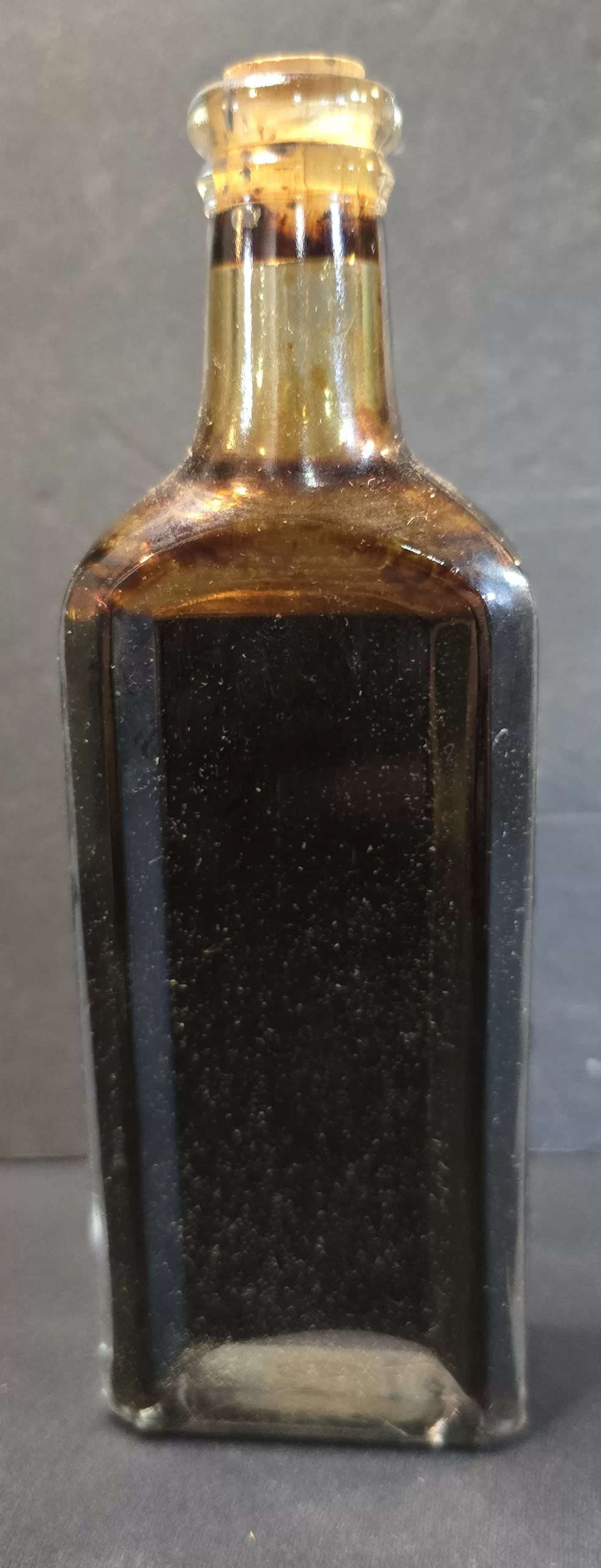
The bottle is an embossed rectangular flask with FOLEY & CO. on one panel and CHICAGO, U.S.A. on the opposite. The applied top and original cork remain present. The label gives full dosage instructions for adults, children, and infants, and emphasizes its safety and non-narcotic formula during a period when many competitors still relied on morphine, heroin, or paregoric.
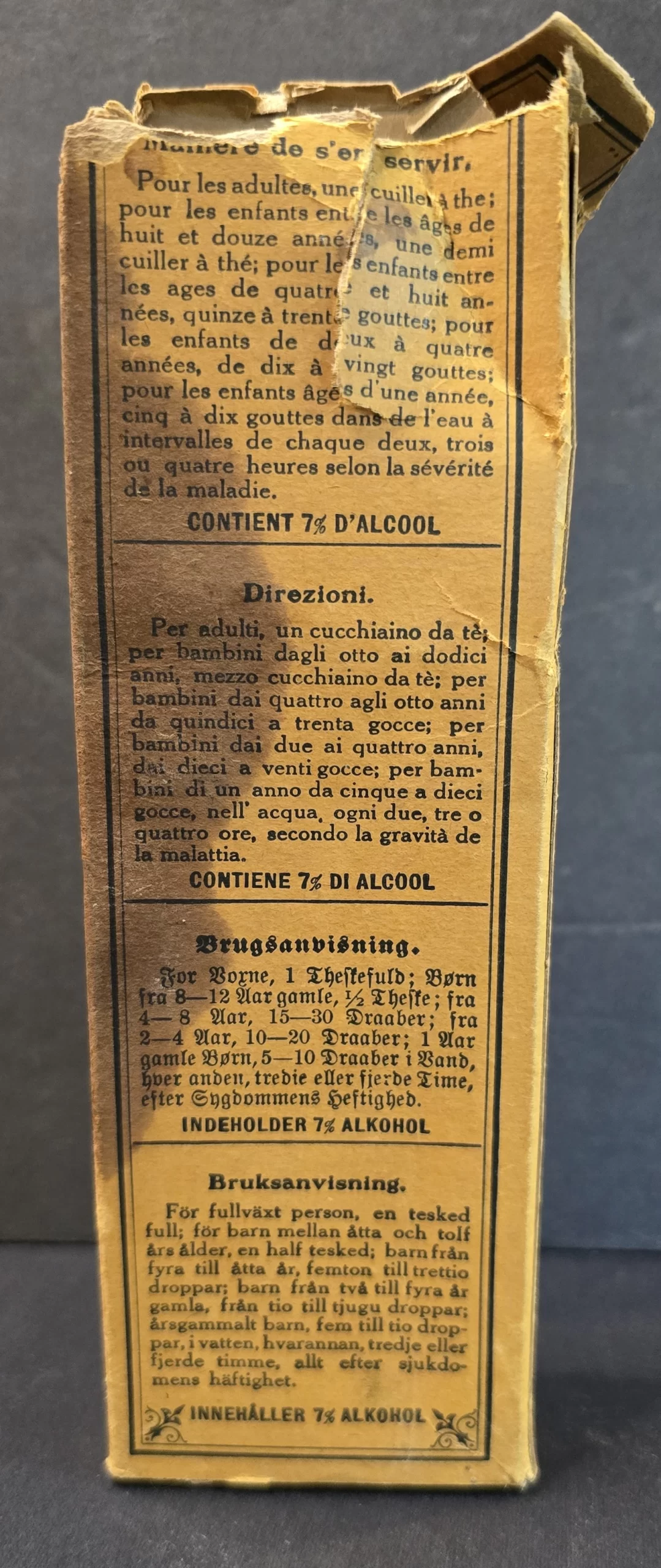
The original cardboard box is printed in four languages—English, French, Italian, and Scandinavian—reflecting Foley & Co.’s broad international distribution. The prominent beehive trademark appears on the front panel, along with price (“Medium Size: 60 Cents”), and repetition of the alcohol content.
Condition
The bottle is in excellent display condition with intact label, darkened original contents, and clear embossing.
The box shows edge wear, tearing at the top flaps, creasing, and general age-related fragility but remains fully readable on all panels.
Gallery

Historical context
Foley’s Honey and Tar was introduced in the late 19th century and became one of Foley & Co.’s major sellers. The prominent slogan “Contains No Opiates or Other Harmful Drugs” reflects the shifting regulatory environment leading up to and following the 1906 Pure Food and Drug Act, which required manufacturers to disclose and increasingly to limit narcotic ingredients.
Many families preferred Foley’s precisely because it avoided the morphine-laden cough syrups common in the era. Its combination of honey (demulcent) and tar (long used as a folk respiratory treatment) positioned it as a “safer alternative,” even though the 7% alcohol provided its own therapeutic warmth.
Curious Facts, Ephemera, and Trivia
The multilingual box indicates that Foley & Co. aggressively targeted immigrant communities and foreign export markets.
The company frequently emphasized “no opiates,” a sharp contrast to the era’s heroin-based cough remedies.
Tar-based elixirs were medical staples well into the 20th century, though the taste was famously awful—hence the need for honey, anise, and sugar.
Excerpt
“Contains 7% Alcohol. Contains no Opiates or Other Harmful Drugs and may be safely used by both Old and Young for Coughs, Colds and Hoarseness.”
Why it is in the Cabinet
This is a textbook example of early regulatory-era advertising—loudly announcing what isn’t inside as much as what is. The survival of both bottle and original multilingual box makes it a particularly strong specimen for documenting the evolution of respiratory remedies in the pre-FDA period.
Support Dr. Bebout’s Cabinet of Medical Curiosities
If you enjoy the history, the oddities, and the effort, help keep this cabinet open. Every little bit helps preserve and share the strange wonders of medicine's past.
Buy Me a Ko-fi ☕ Buy Me a Coffee ☕ Tip via PayPal 💵