
Title
Capudine “For Headache” Sample Bottle
Author
Capudine Chemical Company of Richmond, Virginia
Image
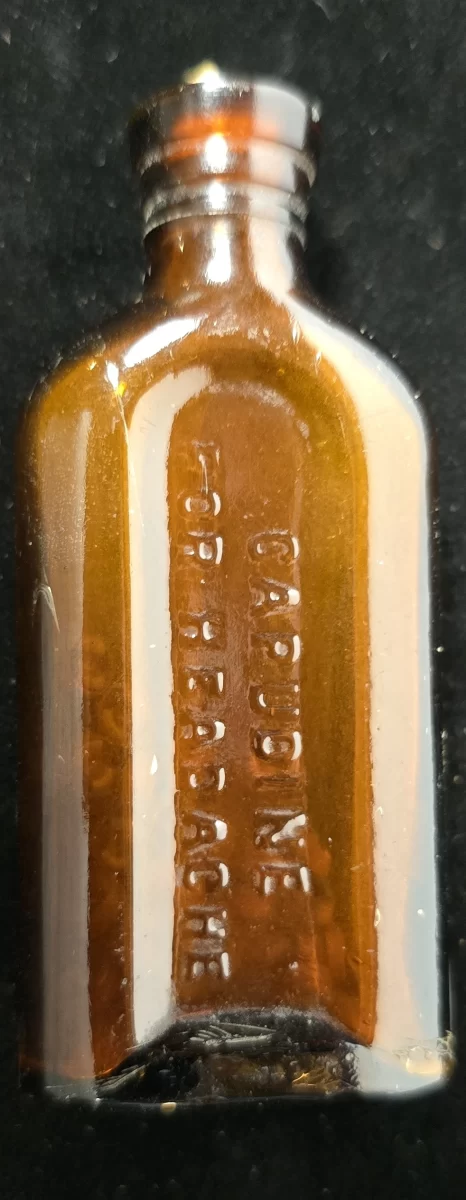
Description
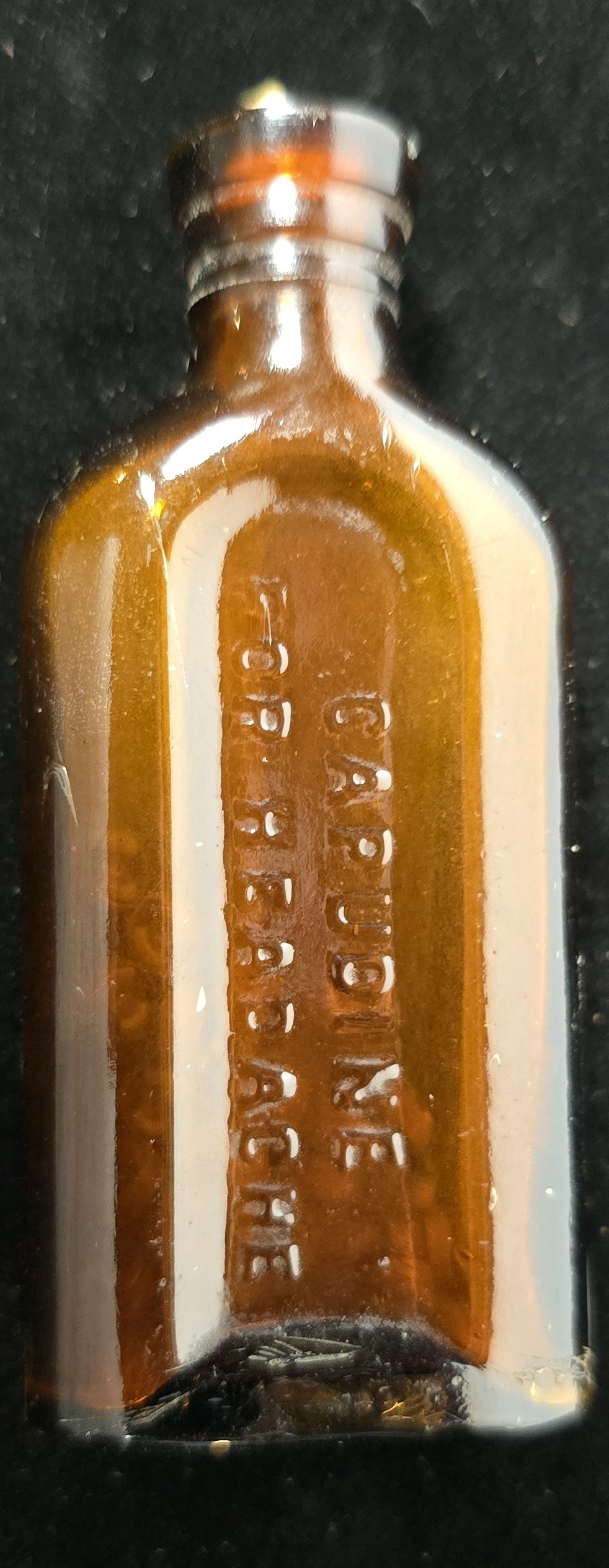
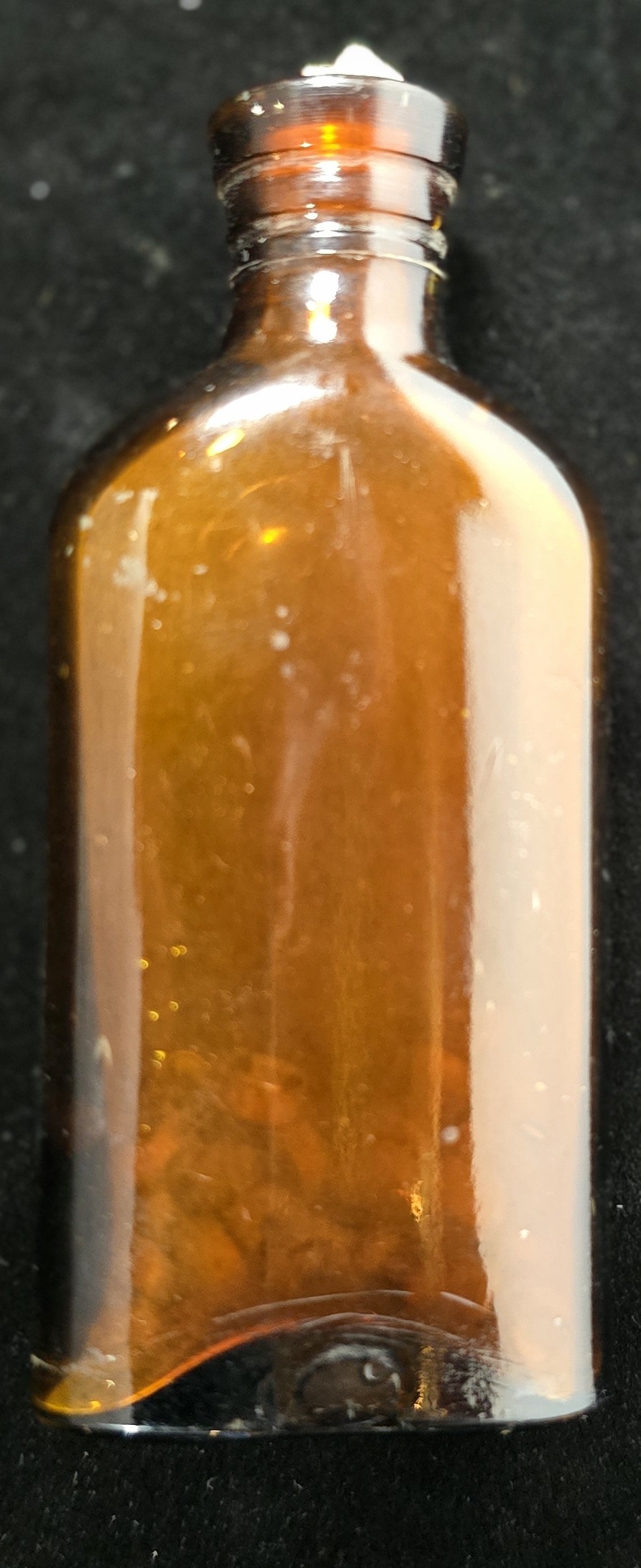
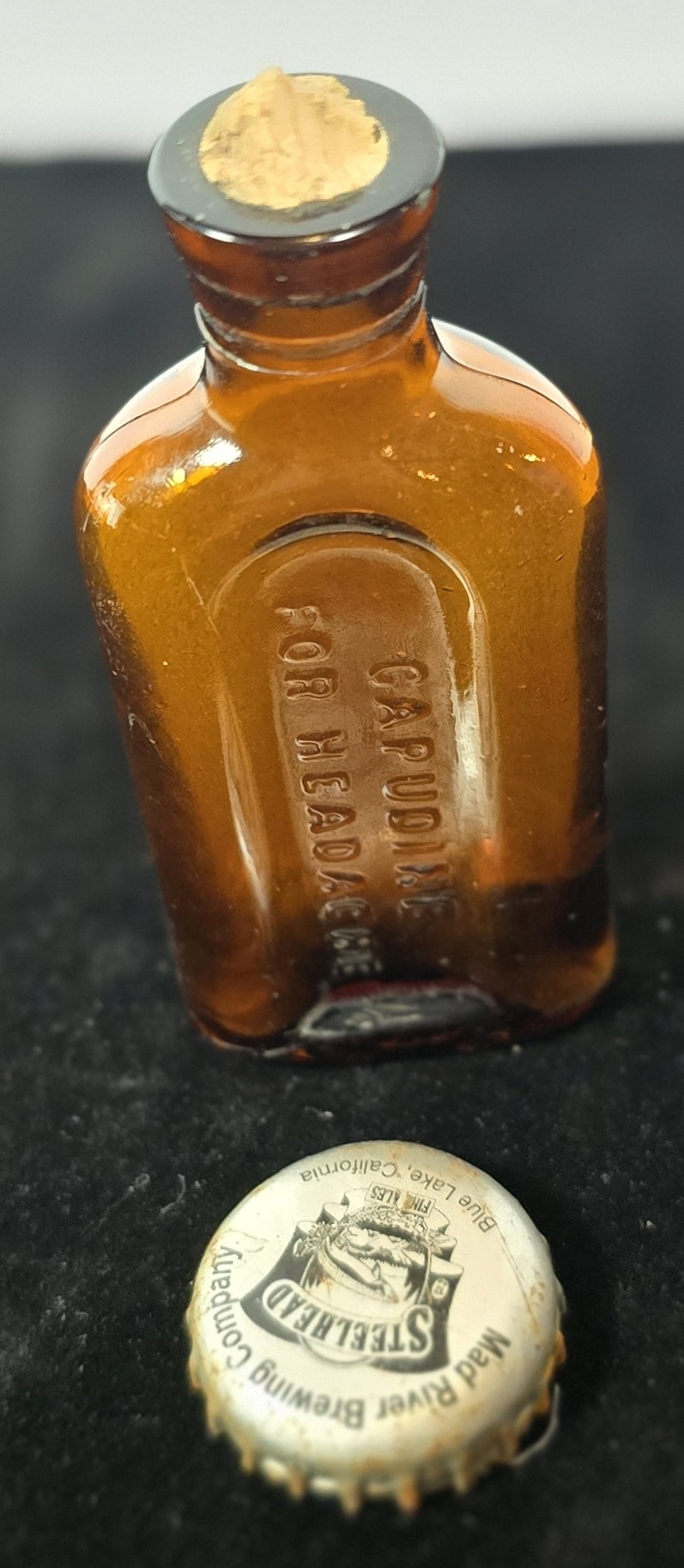
This small amber glass bottle, embossed vertically with the words “CAPUDINE FOR HEADACHE,” represents an early 20th-century dose-sized container of the widely marketed patent remedy Capudine. Produced by the Capudine Chemical Company of Richmond, Virginia, these embossed miniature bottles were typically offered as trial doses or for pocket use. The amber glass protected light-sensitive components, and the machine-made screw-thread finish places this bottle in the period when Capudine evolved from hand-blown bottles into standardized, mass-produced medicinal containers.
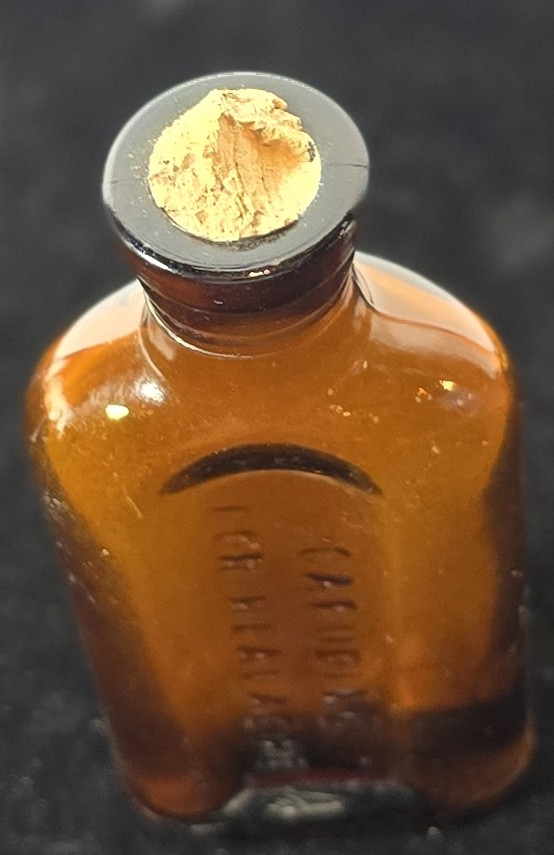
Capudine was promoted as a fast-acting remedy for headaches, neuralgia, colds, and general pain. Its formulations varied across the years but commonly included acetanilid, caffeine, alcohol, and other early analgesic agents. The dried tan residue at the mouth of this bottle is characteristic of evaporated acetanilid-containing powder or solution, an uncommon survival and a strong indicator of original medicinal contents.
Condition
Amber glass bottle intact with no chips or cracks. Embossing crisp. Light interior residue present at the lip. Minor surface wear consistent with age.
Gallery
Historical context
Capudine emerged during the competitive landscape of early 20th-century headache remedies, a period when proprietary analgesics flourished before the widespread adoption of aspirin and later acetaminophen. Acetanilid-based compounds were popular for their quick pain-relieving effects despite their well-documented toxicity risks at higher doses, including methemoglobinemia and cyanosis—issues that eventually pushed regulators to require reformulation.
Sample bottles like this one were crucial marketing tools. Drugstores and traveling salesmen distributed them widely, and their convenient size made them easy to carry in a pocket or bag. By the 1930s, embossed glass had largely been replaced by paper-labeled bottles, making these earlier embossed examples a tangible record of patent-medicine branding during a transitional pharmaceutical era.
Curious Facts, Ephemera, and Trivia
Capudine competed directly with other analgesic tonics such as Bromo-Seltzer, Nervine, and antipyretic coal-tar derivatives popular at the time.
Embossed bottles were often reused in households long after the medicine was gone, contributing to their survival today.
The company frequently advertised Capudine as “safe” and “scientific,” even as acetanilid toxicity became more widely reported.
Pocket-sized dose bottles were shipped in bulk to pharmacies, where they were displayed near the register as impulse remedies.
Excerpt
“Capudine relieves headache, neuralgia, and nervousness quickly.” — period advertising tagline.
Why it is in the Cabinet
This bottle illustrates the intersection of marketing, early analgesic chemistry, and the culture of self-treatment in the early 20th century. With its embossed lettering, miniature form, and surviving residue, it is an authentic example of a transitional-era headache remedy and a representative piece of American patent-medicine history.
Support Dr. Bebout’s Cabinet of Medical Curiosities
If you enjoy the history, the oddities, and the effort, help keep this cabinet open. Every little bit helps preserve and share the strange wonders of medicine's past.
Buy Me a Ko-fi ☕ Buy Me a Coffee ☕ Tip via PayPal 💵