
Title
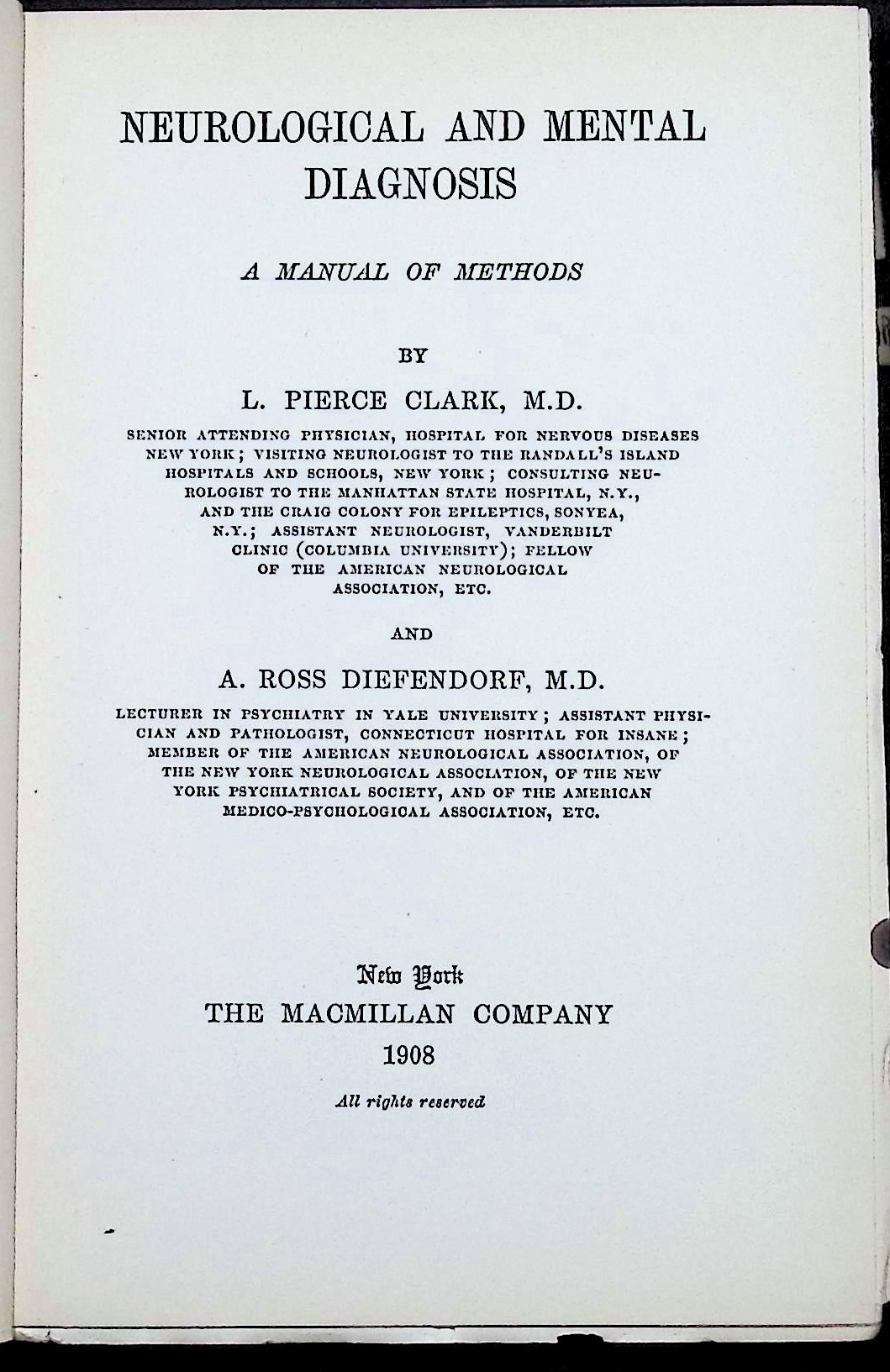
Neurological and Mental Diagnosis: A Manual of Methods
Author
L. Pierce Clark, M.D. & A. Ross Diefendorf, M.D.
The Macmillan Company, New York
Image
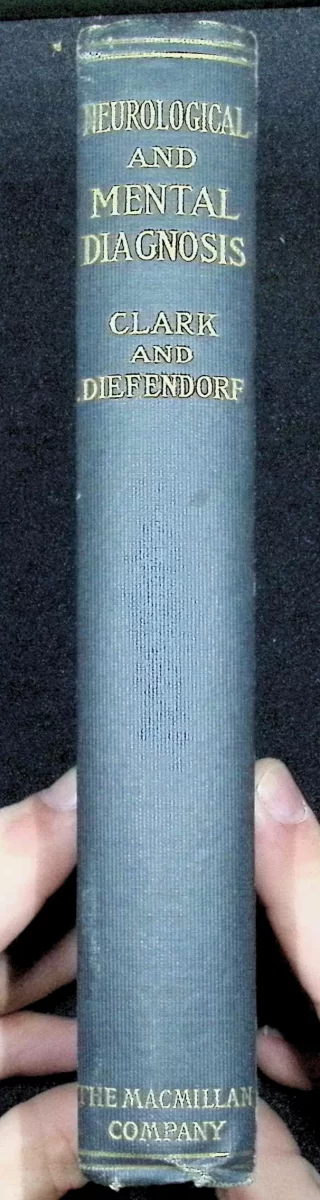
Description
This 1908 first-edition copy of Neurological and Mental Diagnosis: A Manual of Methods represents one of the earliest comprehensive clinical guides to the examination of patients with neurological and psychiatric disorders. Written by L. Pierce Clark and A. Ross Diefendorf—both towering figures in early American neurology and psychiatry—the manual codifies the formal bedside techniques that shaped neuropsychiatric evaluation in the pre-imaging era.
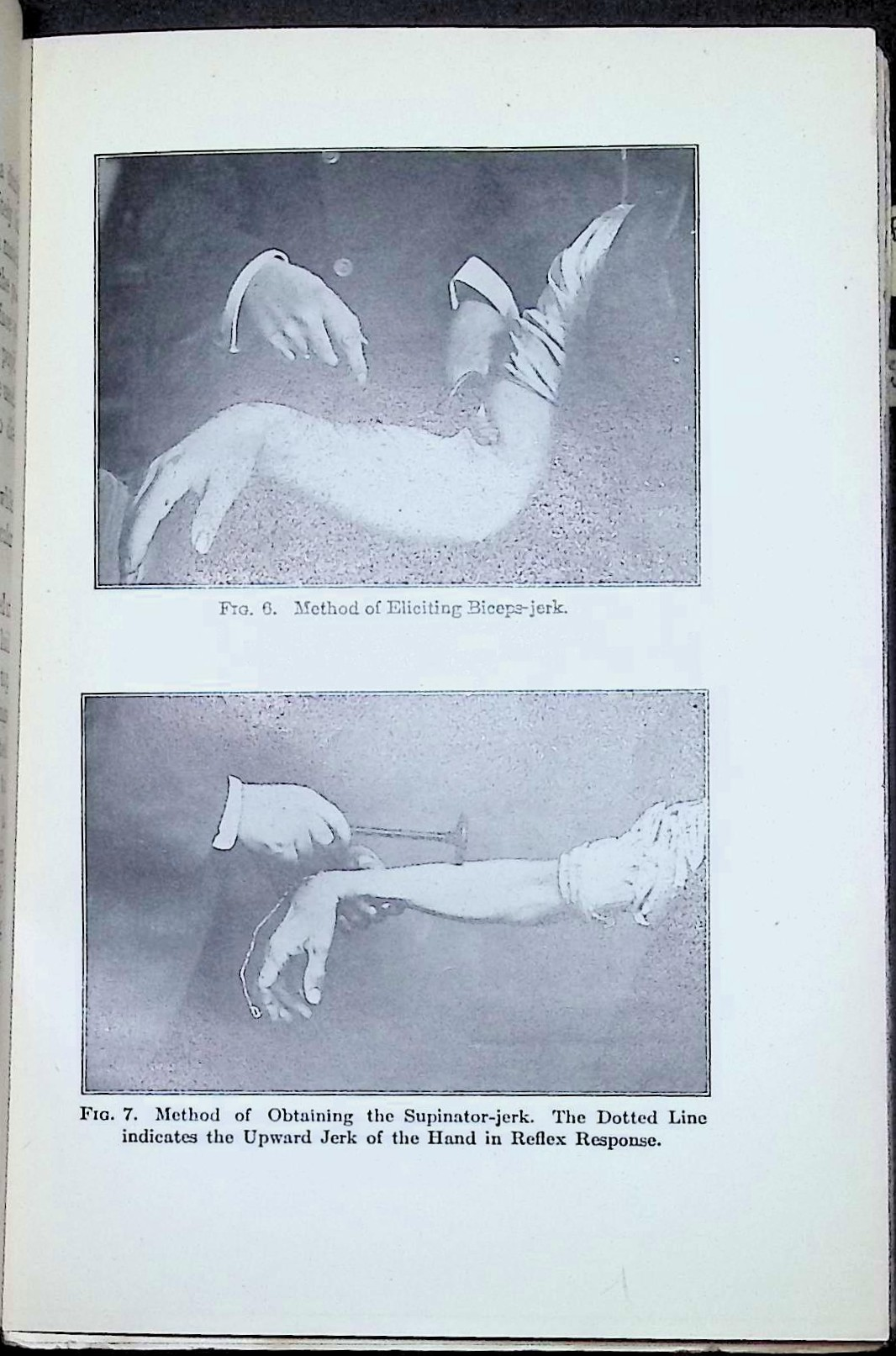
The work provides detailed instruction on reflex testing, muscular tone evaluation, sensory disturbances, hallucinations, illusions, affective symptoms, judgment impairment, and disorders of consciousness, memory, volition, and behavior. The manual’s photographic plates demonstrate proper technique for eliciting reflexes such as the biceps-jerk and supinator-jerk, reflecting a period when physical examination, rather than instrumentation, served as the neurologist’s primary diagnostic tool.
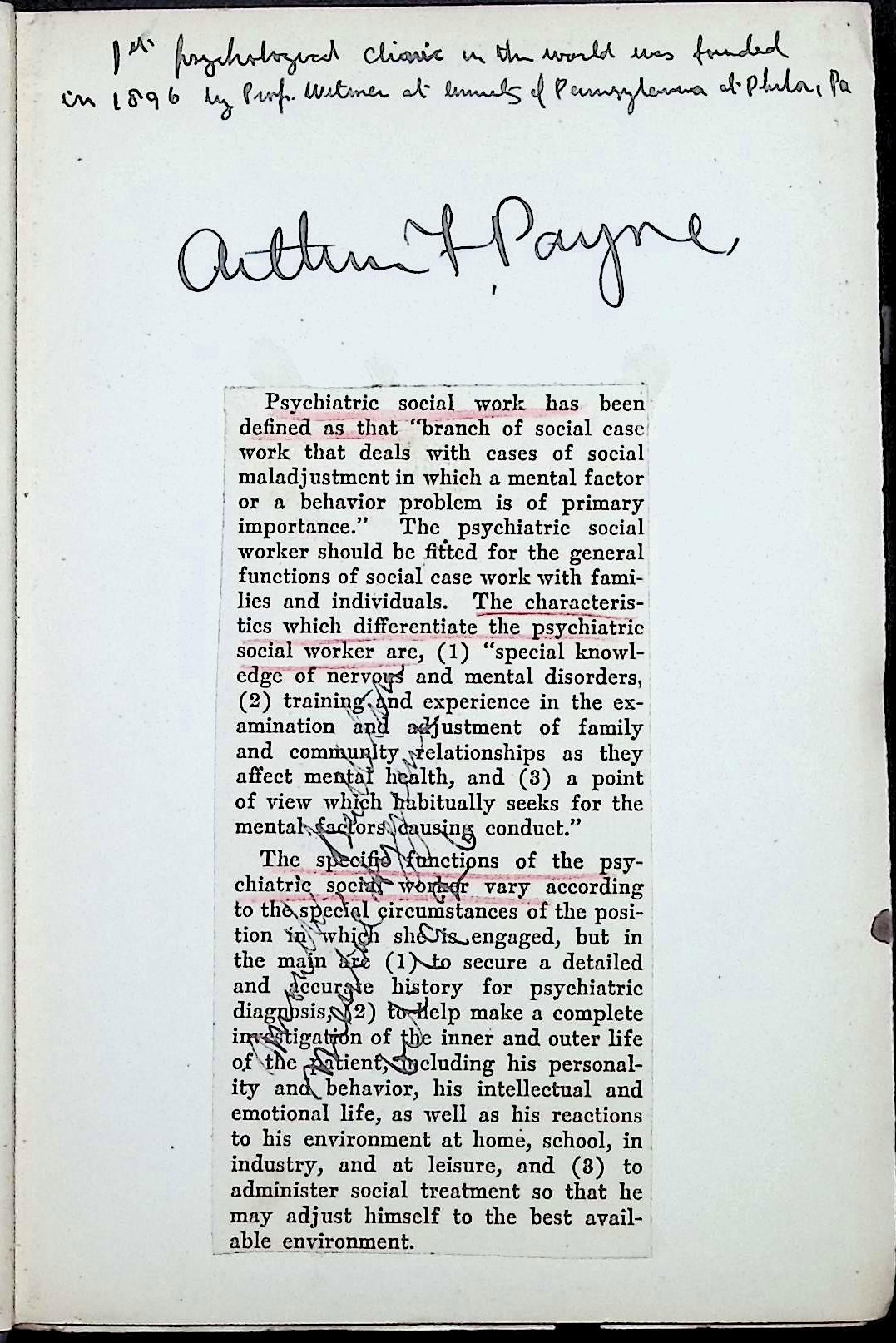
This copy contains marginalia, underscoring its use as a working reference. A pasted clipping discussing psychiatric social work appears on the front flyleaf, accompanied by the owner’s signature and a handwritten historical note about the first psychological clinic established in 1896 at the University of Pennsylvania.
Condition
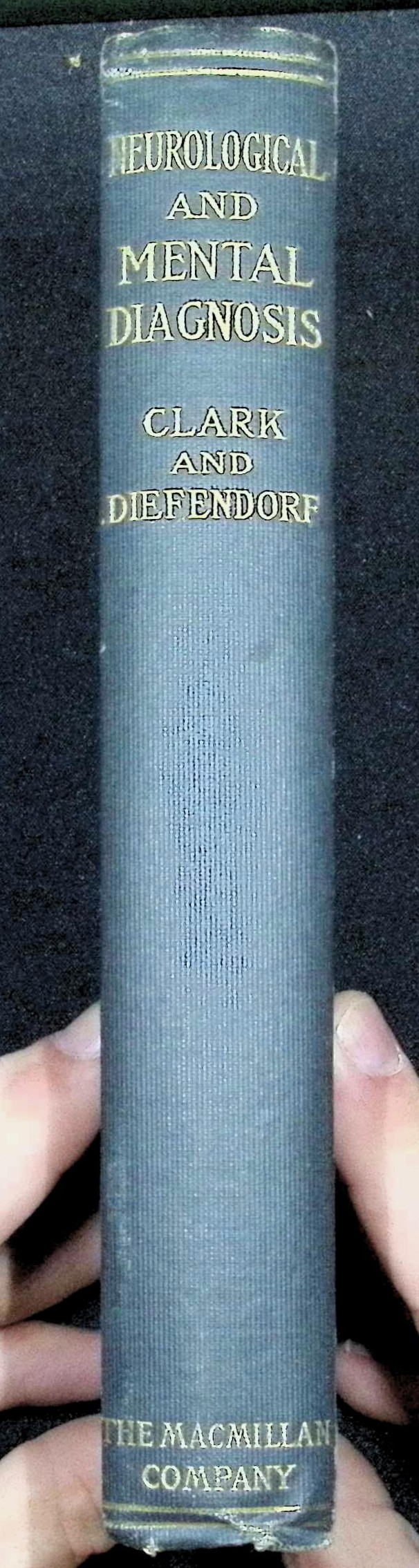
Original blue cloth binding with gilt spine lettering. Moderate edge wear and fraying at crown and foot of spine. Internal pages clean with scattered markings and tape flag. Binding remains sound.
Gallery
Historical context
At the turn of the 20th century, neurology and psychiatry were still emerging as distinct medical specialties. Clark and Diefendorf’s manual provided physicians with a standardized language and methodology for examining disorders of the nervous system and mind—an essential step toward modern neuropsychiatric training.
The authors’ affiliations reflect the institutional landscape of early American mental health: state hospitals for the “insane,” epileptic colonies, and neurologic clinics tied to major universities. Their work predates electroencephalography, CT, MRI, and psychopharmacology, relying instead on meticulous bedside observation. The emphasis on reflexes, sensory testing, hallucinations, and disordered thought reflects a diagnostic era built entirely on clinical skill.
Curious Facts, Ephemera, and Trivia
Diefendorf was a lecturer at Yale and authored several early psychiatric texts; his writings were widely used in asylums and medical schools.
The manuscript insert on psychiatric social work demonstrates the evolving recognition of multidisciplinary mental health care.
Early neurological photography, as seen in this volume’s plates, required long exposures—patients and examiners literally had to hold the reflex technique still long enough for the image to capture.
Clark consulted for multiple major institutions, including Manhattan State Hospital and the Craig Colony for Epileptics, both central to American neurologic history.
Excerpt
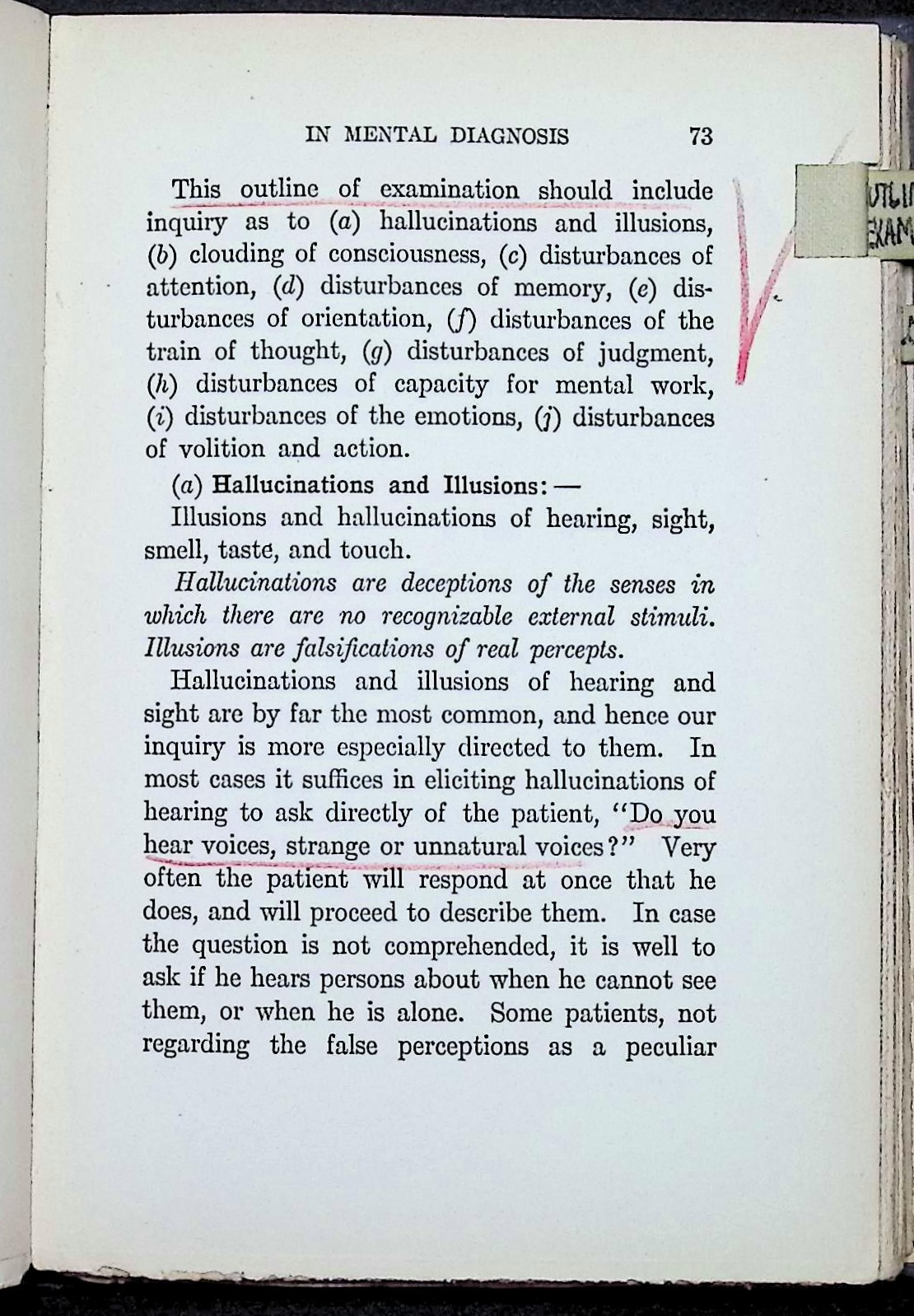
“This outline of examination should include inquiry as to (a) hallucinations and illusions, (b) clouding of consciousness, (c) disturbances of attention…”
— In Mental Diagnosis, p. 73
Why it is in the Cabinet
This volume stands as a foundational artifact of neurological and psychiatric practice—a record of how physicians evaluated the brain and mind before modern technology transformed diagnosis. The annotations and inserted ephemera enhance its historical value, tying the book directly to the lived experience of early 20th-century clinical work.
Support Dr. Bebout’s Cabinet of Medical Curiosities
If you enjoy the history, the oddities, and the effort, help keep this cabinet open. Every little bit helps preserve and share the strange wonders of medicine's past.
Buy Me a Ko-fi ☕ Buy Me a Coffee ☕ Tip via PayPal 💵