
Title
S. B. Goff’s Liniment
Author
S. B. Goff & Sons Co. of Camden, New Jersey
Image
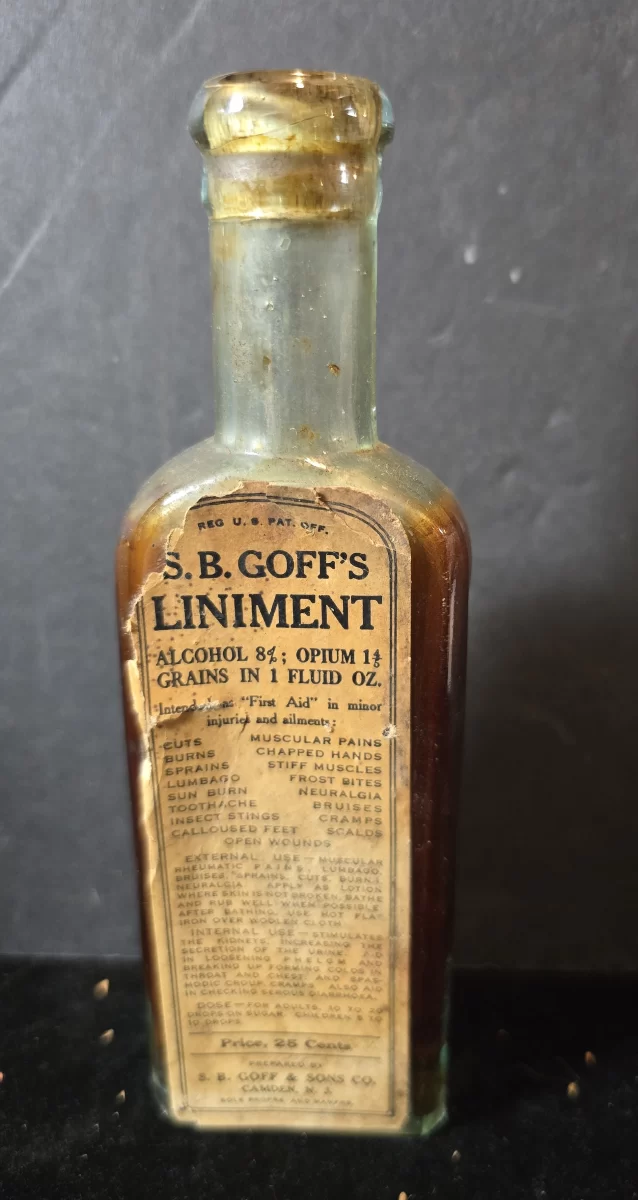
Description
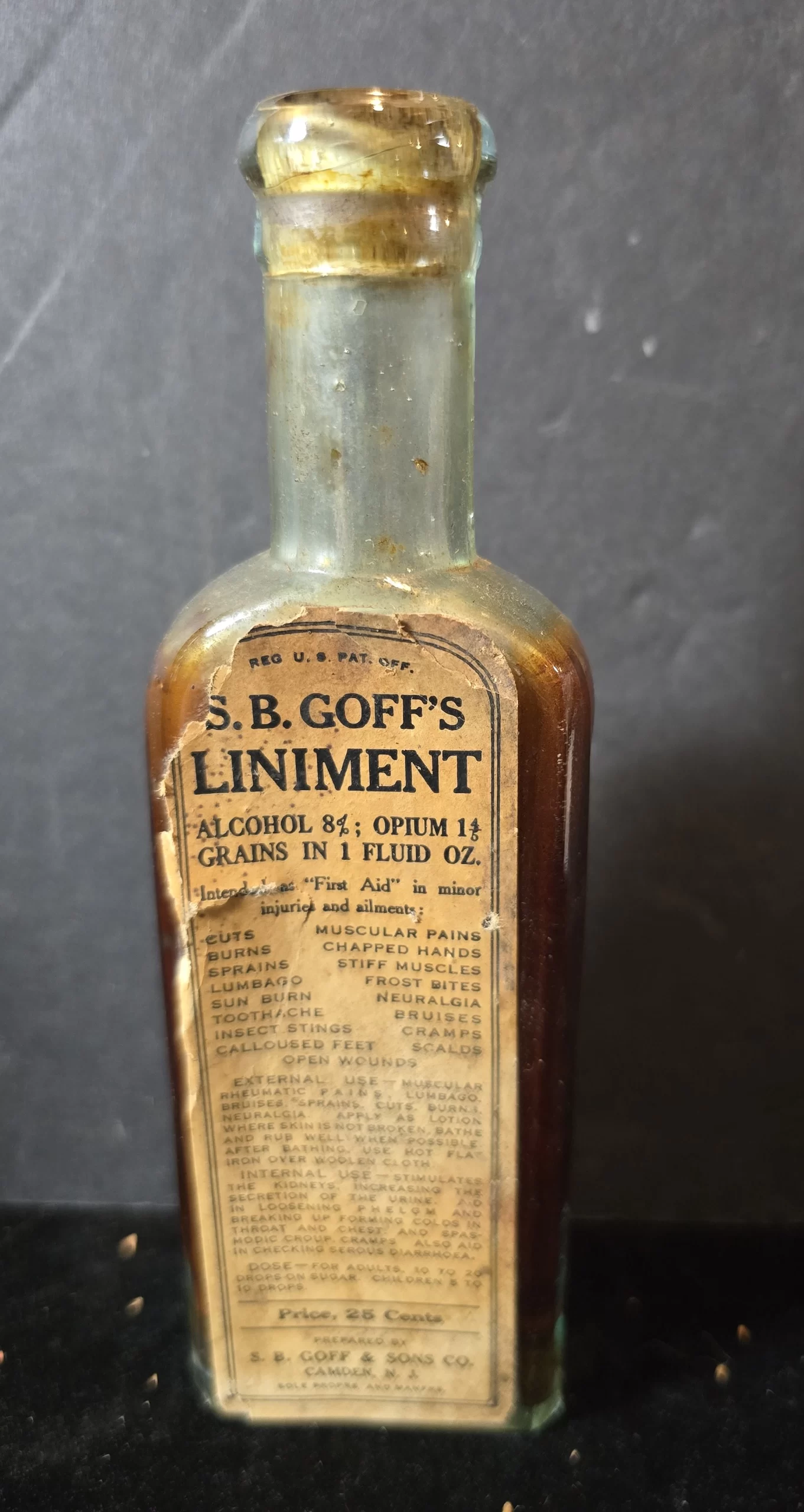
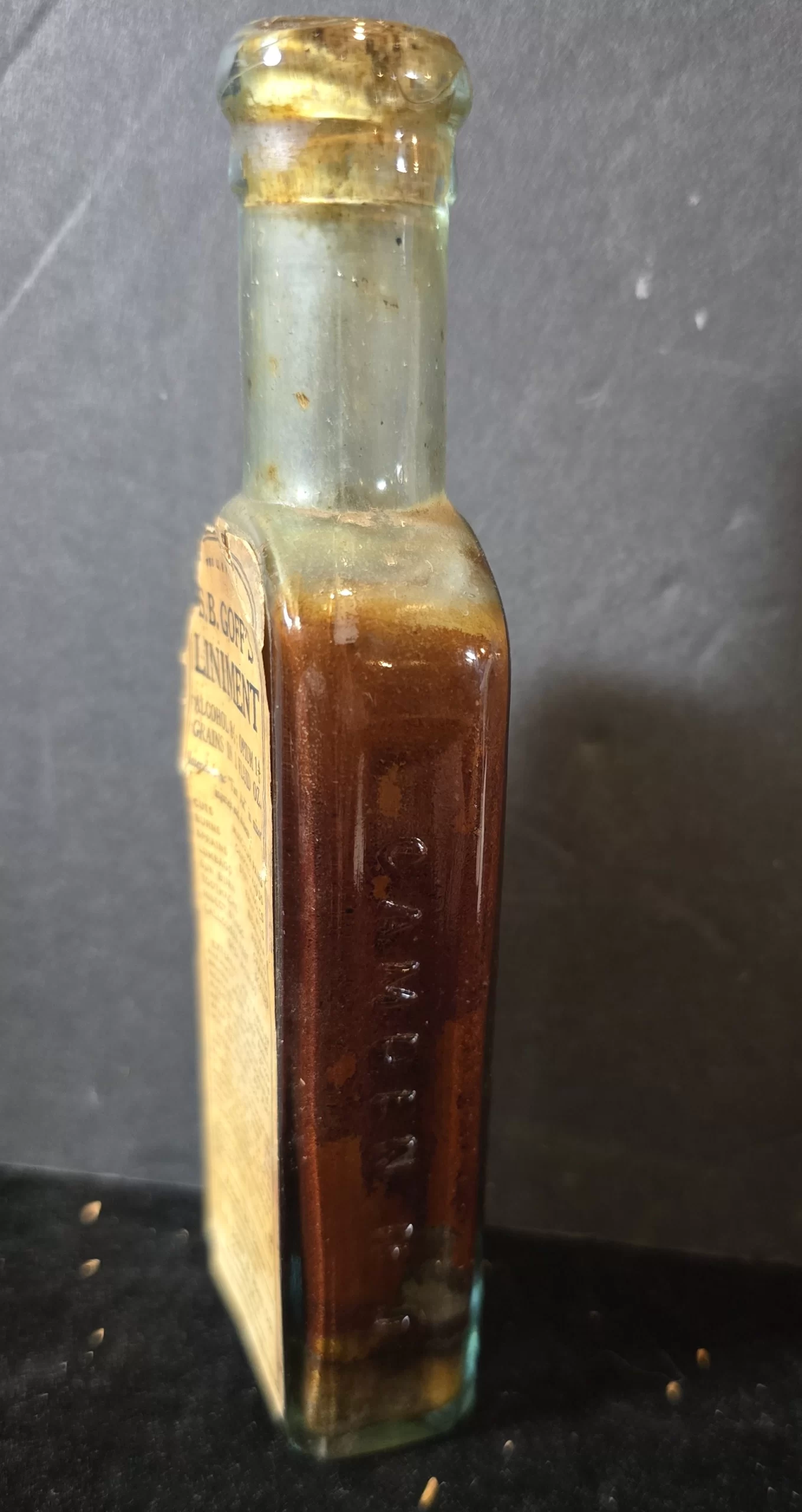
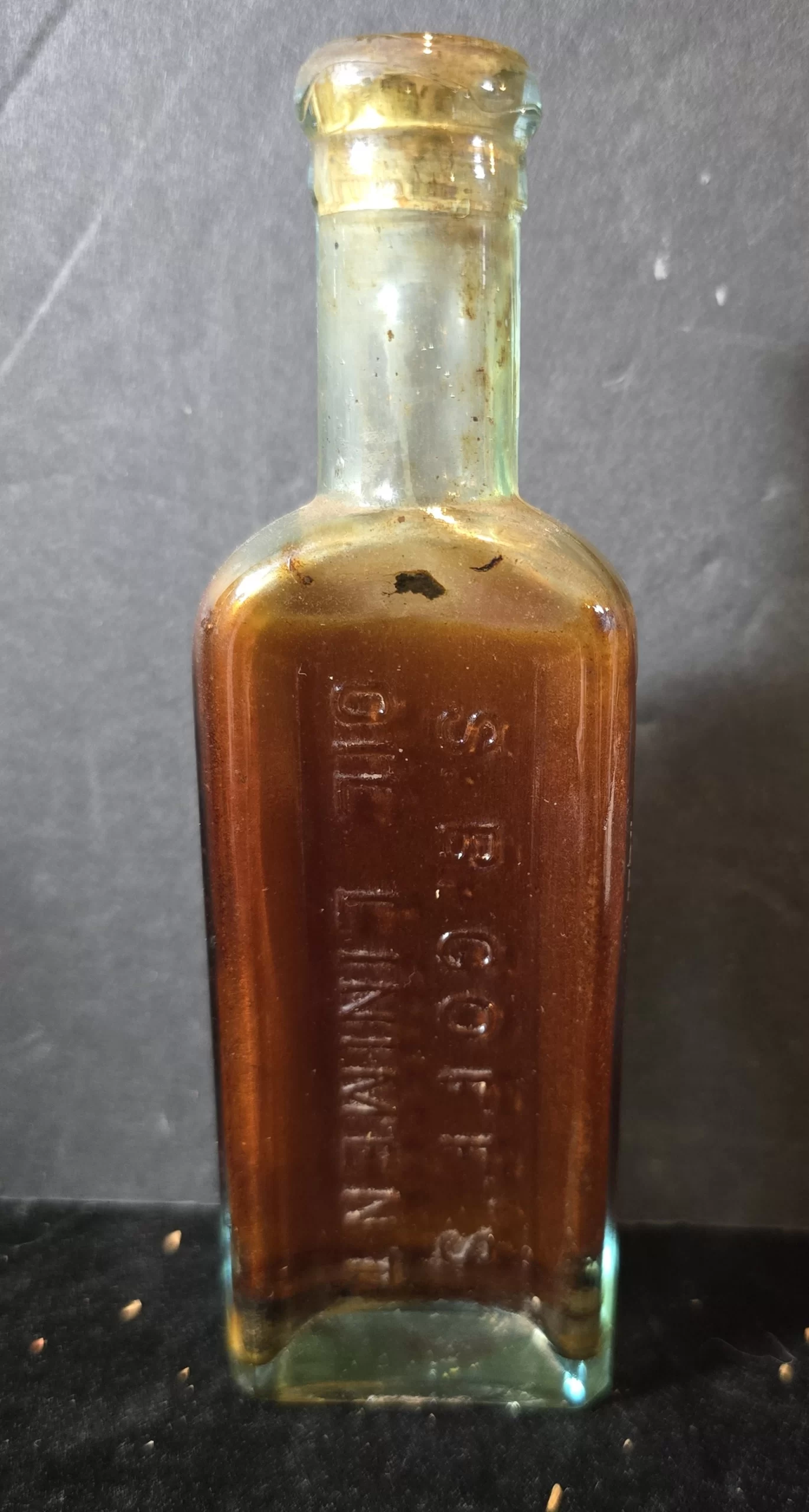
S. B. Goff’s Liniment is a late-19th to early-20th-century patent remedy produced by S. B. Goff & Sons Co. of Camden, New Jersey. This square aqua-glass bottle is fully embossed “S. B. GOFF’S OIL LINIMENT” and retains its original paper label, which advertises the preparation as both an external liniment and an internal medicine—a dual-use approach common before federal drug regulation.
The label lists its active ingredients prominently:
Alcohol 8% and Opium 1½ grains per fluid ounce.
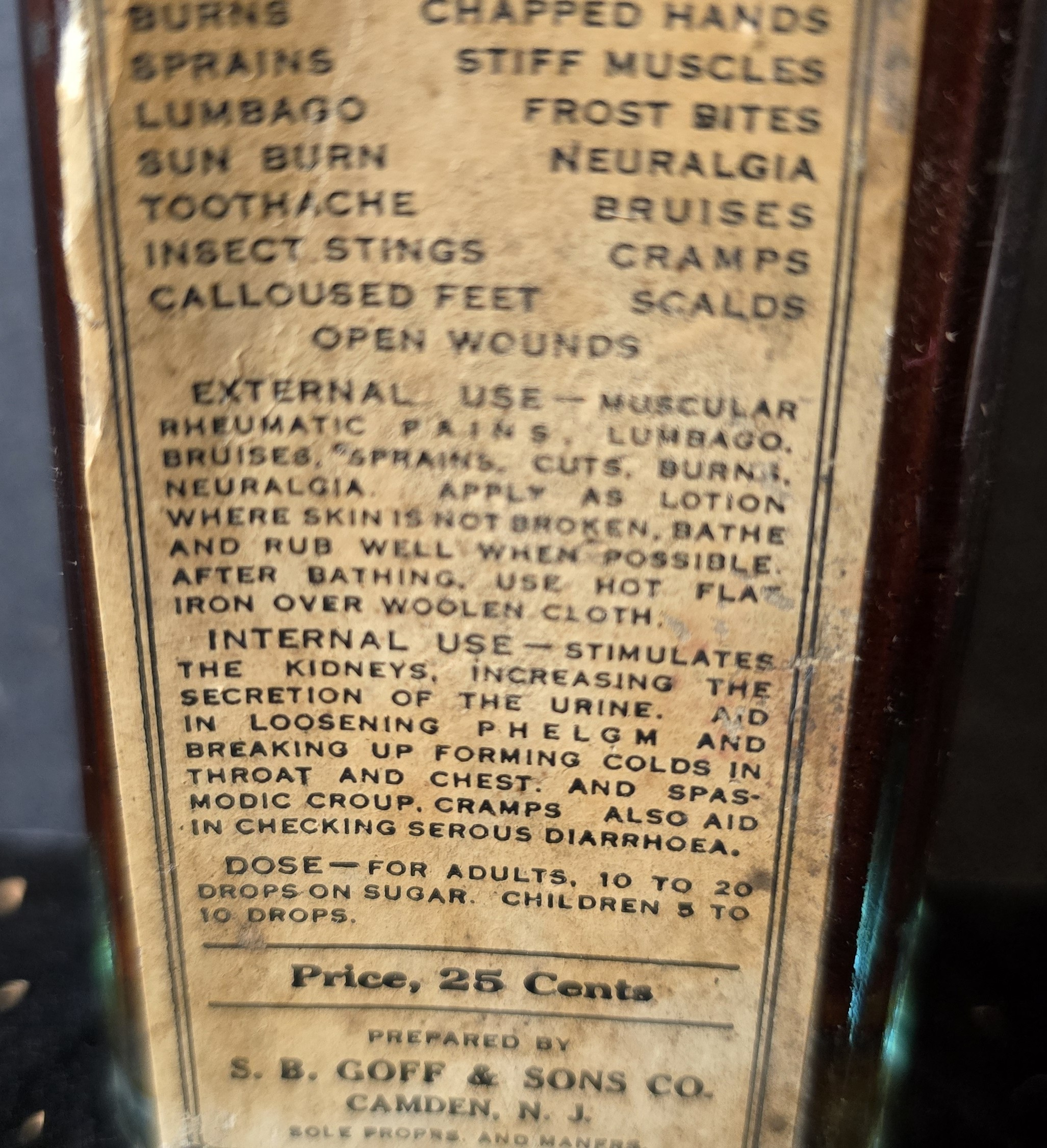
Treatments claimed include cuts, burns, sprains, rheumatic pains, chapped hands, frostbite, neuralgia, cramps, scalds, open wounds, and even “loosening phlegm” and “checking serious diarrhoea.” The internal instructions recommend taking the liniment by the drop on sugar.
The bottle still contains its original thick brown liniment, separated into visible layers—an uncommon survival that preserves the genuine appearance of pre-FDA opiated liniments.
Condition
Bottle is structurally sound with no cracks or chips; original label is present with moderate edge loss; contents remain inside with visible stratification; original cork is partially intact.
Gallery
Historical context
Before the 1906 Pure Food and Drug Act, liniments like Goff’s were sold as universal remedies promising relief for everything from joint pain to bowel disorders. The inclusion of opium was typical—opiates were widely used for pain, sleep, diarrhea, and respiratory complaints, and were rarely disclosed clearly on labels until federal oversight increased.
S. B. Goff & Sons marketed their liniment as an indispensable “First Aid” medicine for households and farms. Products of this kind sat on shelves beside Sloan’s Liniment, Hamlin’s Wizard Oil, and other multi-purpose cure-alls.
Curious Facts, Ephemera, and Trivia
The instructions advise internal use even though the product is fundamentally an oily liniment—an unusual crossover even by patent medicine standards.
“Opium 1½ grains” equals roughly 97 mg of opium per ounce, meaning a full bottle could easily deliver significant narcotic effects.
The bottle embossing style, font, and paper label layout suggest production between 1890–1915.
The price of 25 cents was typical for small-batch regional liniments sold in general stores.
Excerpt
Stimulates the kidneys, increasing the secretion of the urine, and in loosening phlegm and breaking up forming colds in throat and chest… cramps also aid in checking serious diarrhoea.
Why it is in the Cabinet
This bottle represents an era when over-the-counter “cure-alls” blended alcohol, opiates, herbal extracts, and marketing bravado into a single household remedy. Its intact contents, surviving label, and bold therapeutic claims make it a superb example of pre-regulation American patent medicine—exactly the sort of object the Cabinet seeks to preserve.
Support Dr. Bebout’s Cabinet of Medical Curiosities
If you enjoy the history, the oddities, and the effort, help keep this cabinet open. Every little bit helps preserve and share the strange wonders of medicine's past.
Buy Me a Ko-fi ☕ Buy Me a Coffee ☕ Tip via PayPal 💵