
Title
Castoria (Fletcher’s Castoria)
Author
Centaur Company, New York
Image
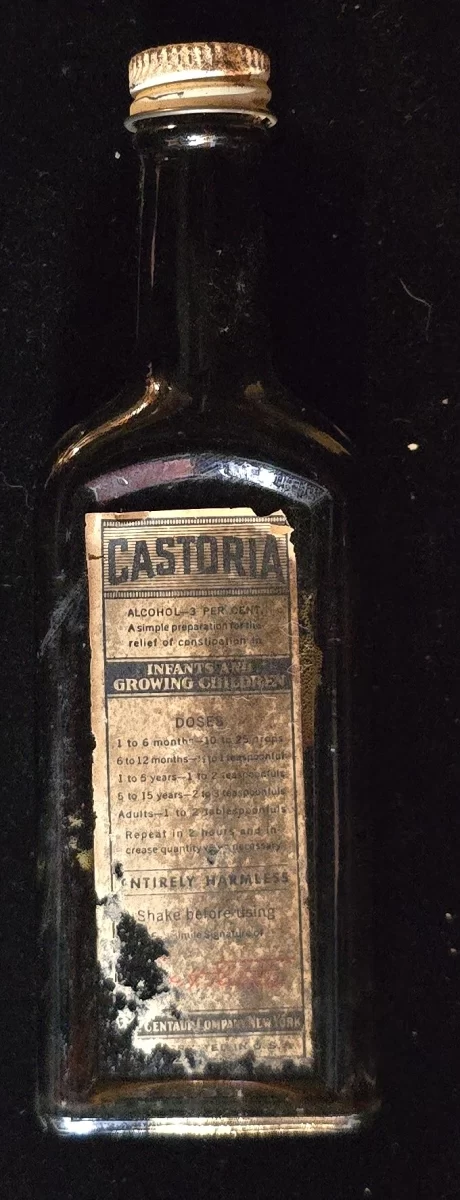
Description
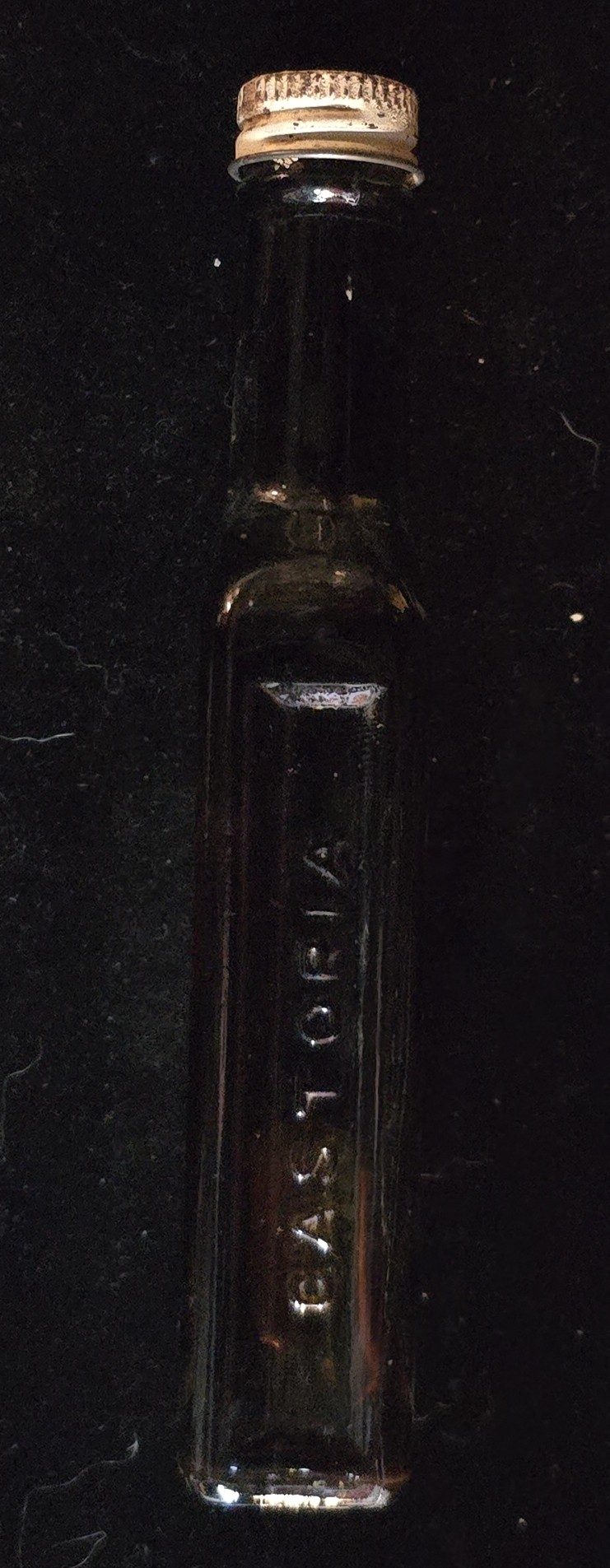
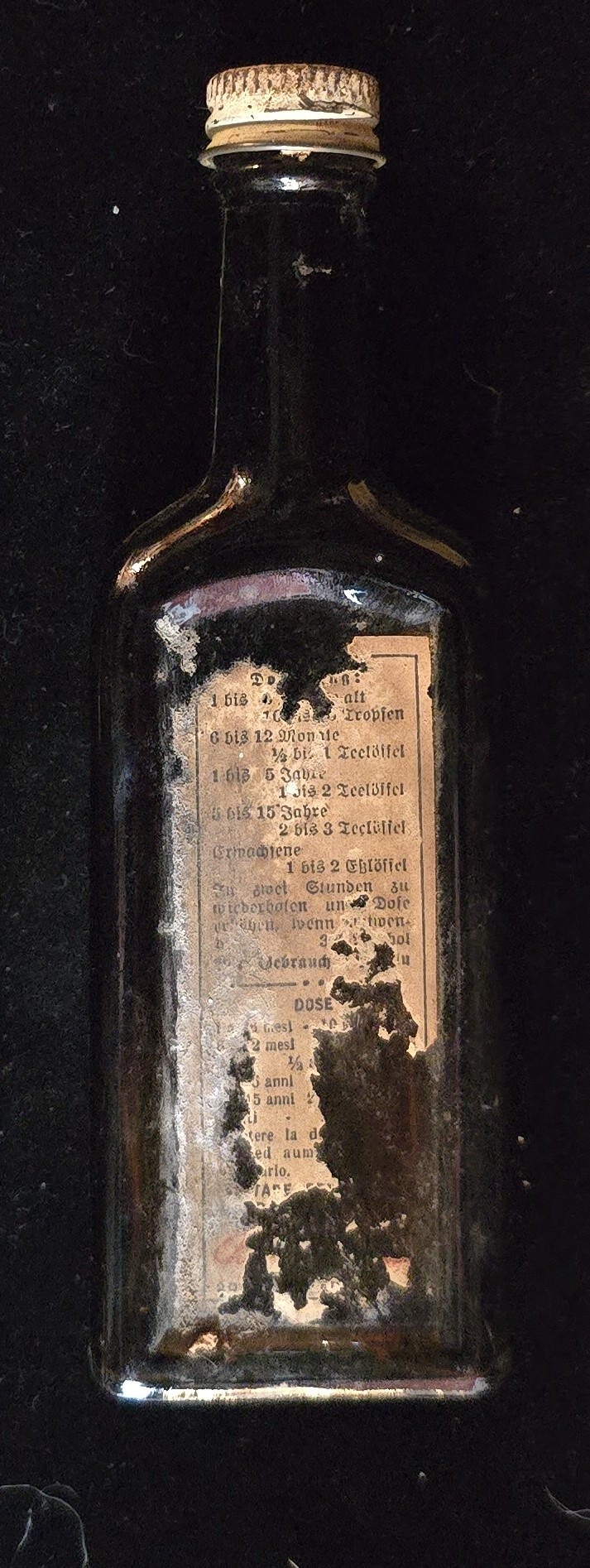
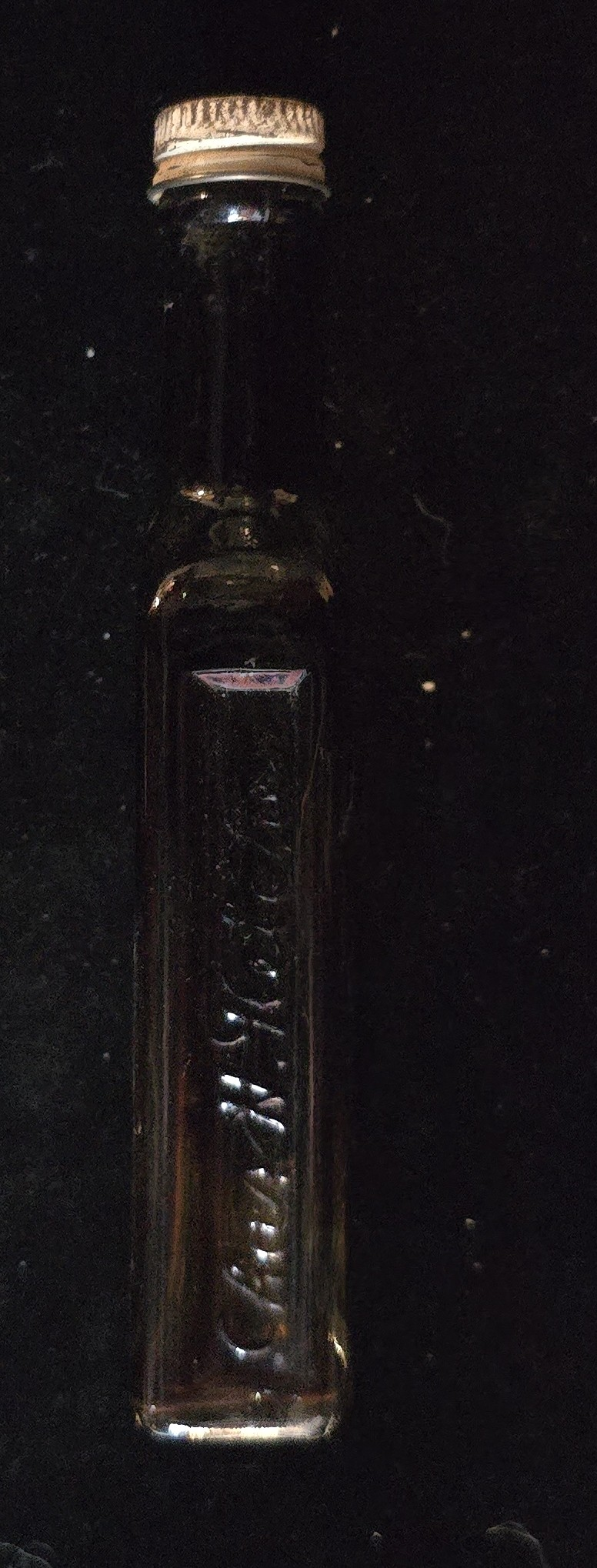
This bottle represents Fletcher’s Castoria, a nationally popular late-19th and early-20th-century laxative marketed for infants and growing children. The surviving front label lists alcohol content, dosing instructions, and assurances of safety, reflecting the era’s reliance on mild cathartics for a wide range of childhood complaints. The bottle is machine-made, dark glass, with the word “CASTORIA” embossed down one side and remnants of both English and German labeling on the panels. Castoria became one of the most aggressively advertised children’s remedies of the period, promoted as a harmless digestive aid at a time when many competing children’s products contained narcotics, alcohol, or harsh cathartics. This example retains the original metal screw cap and portions of the multilingual labels, preserving the product’s transitional packaging style from the early 1900s.
Condition
The bottle is structurally sound with intact glass and original metal screw cap, though the cap shows heavy oxidation and paint loss. The front label is present but significantly deteriorated, with portions missing and surface staining obscuring parts of the text. The rear label is heavily damaged with large areas of loss but still displays German dosing instructions. Embossed lettering remains clear on the side panels. Residual contents or internal deposits are minimal, but the bottle surface shows age-related wear consistent with long-term storage or ground exposure.
Gallery

Historical context
Castoria was introduced in the late 1800s as a safer alternative to laudanum-based children’s remedies, which had caused widespread concern among physicians and reformers. The Centaur Company heavily marketed Castoria as gentle, reliable, and entirely non-narcotic, using newspaper ads, trade cards, and mass-distribution campaigns that reached nearly every American household. By the early 20th century, Fletcher’s Castoria had become one of the most recognizable pediatric medicines in the United States, known for its laxative and carminative effects and its claims of mildness for infants. Multilingual labels, such as the German one preserved on this bottle, were common as the product expanded into immigrant markets and international distribution.
Curious Facts, Ephemera, and Trivia
The slogan “Children Cry for Fletcher’s Castoria” became one of the most famous advertising lines of its time, repeated so widely in newspapers and magazines that it became a cultural reference point. Castoria’s success was so immense that the company battled constant counterfeits and unauthorized imitations, prompting distinctive embossing and trademark protection. Despite being advertised as “entirely harmless,” early Castoria formulas still contained alcohol—listed openly on labels like the one surviving here.
Excerpt
“Alcohol 3 per cent. A simple preparation for the relief of constipation in infants and growing children. Entirely harmless. Shake before using.”
(From surviving portions of the front label.)
Why it is in the Cabinet
This bottle exemplifies the evolution of pediatric over-the-counter medicine during a period when safety, regulation, and marketing were rapidly changing. Its embossed panels, multilingual labels, and surviving dosing instructions provide a direct snapshot of early 20th-century pharmaceutical practice, domestic medicine, and commercial branding aimed at families. It stands as an important artifact of everyday medical history and a recognizable icon of children’s remedies.
Support Dr. Bebout’s Cabinet of Medical Curiosities
If you enjoy the history, the oddities, and the effort, help keep this cabinet open. Every little bit helps preserve and share the strange wonders of medicine's past.
Buy Me a Ko-fi ☕ Buy Me a Coffee ☕ Tip via PayPal 💵