
Title
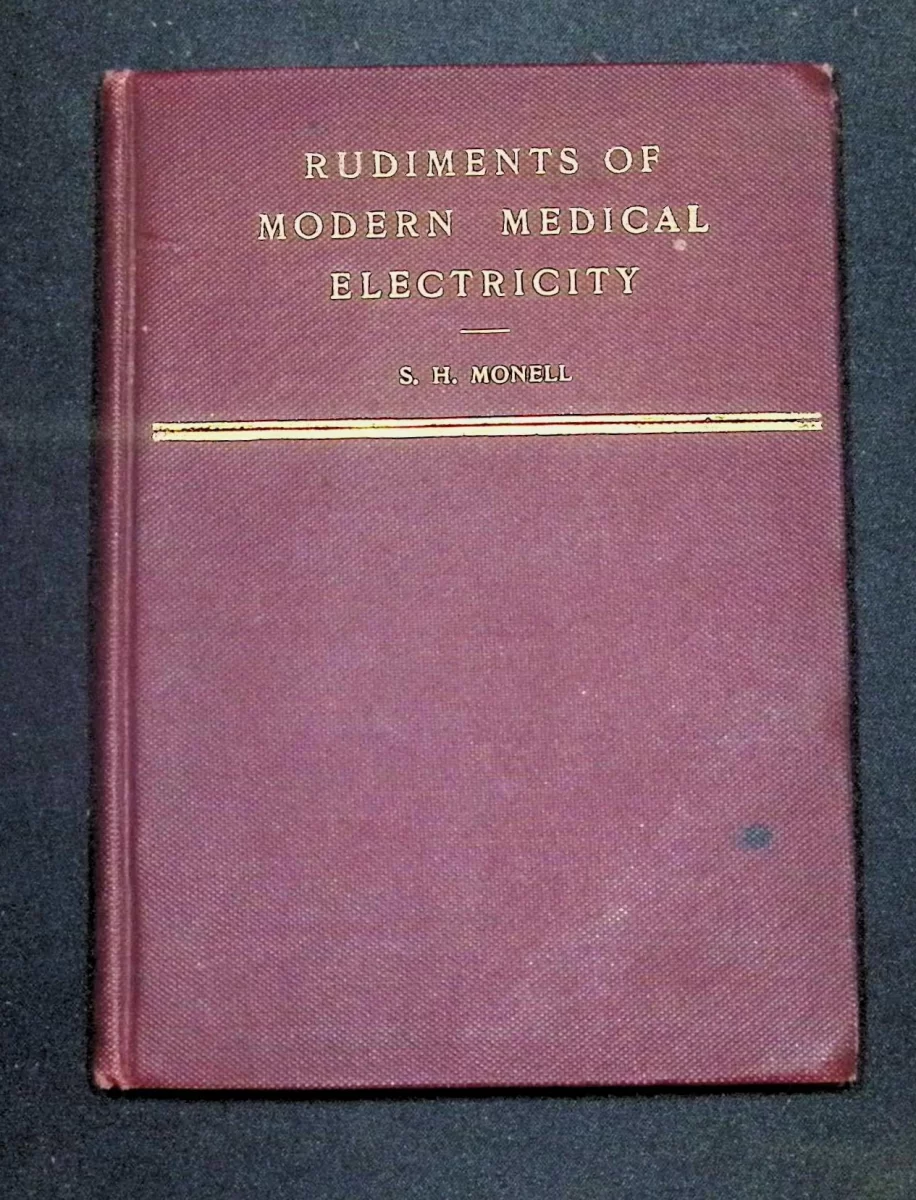
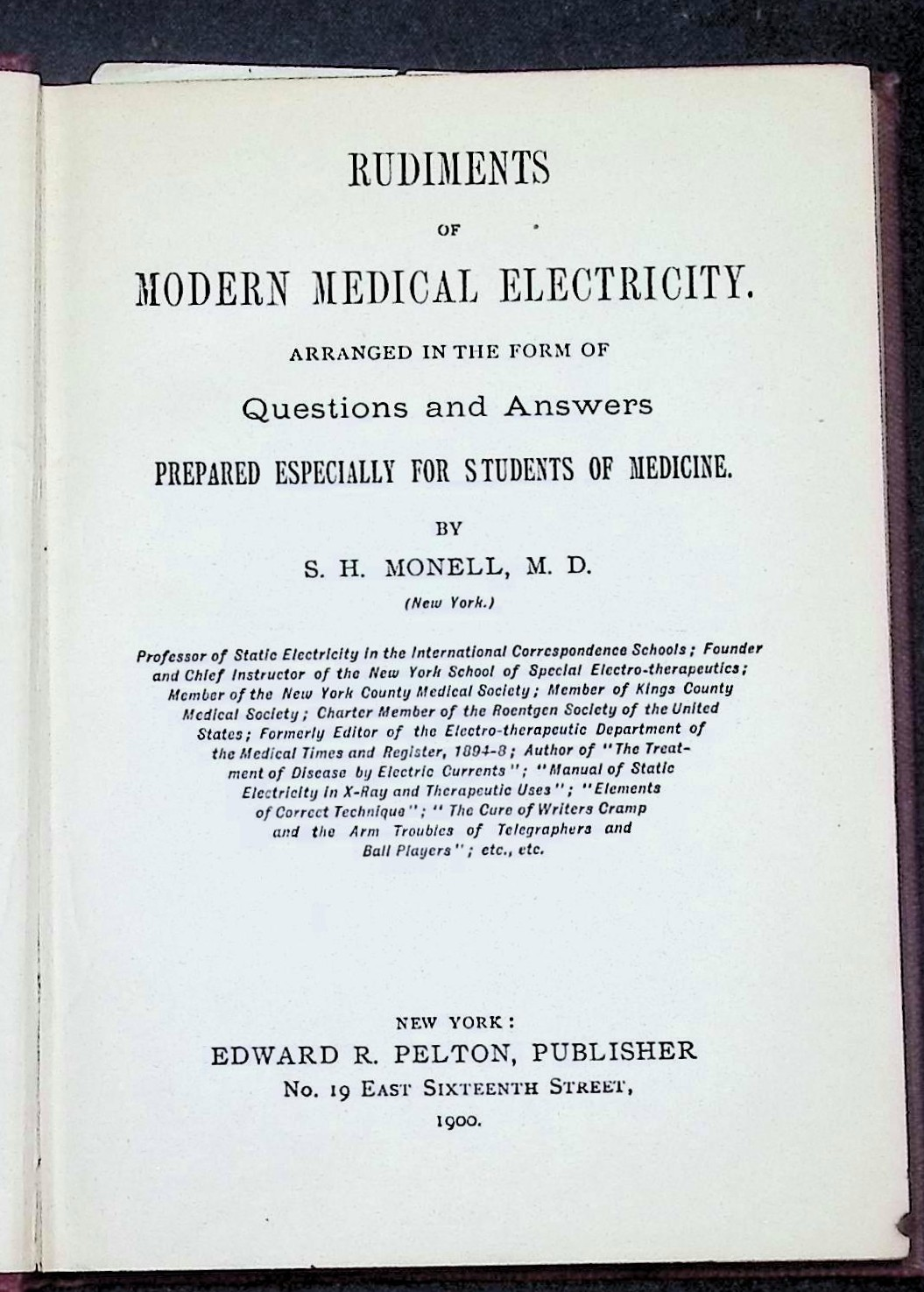
Rudiments of Modern Medical Electricity (1900)
Author
S. H. Monell, M.D.
Published by Edward R. Pelton, New York
Image
Description
This 1900 instructional manual, Rudiments of Modern Medical Electricity, was written by Dr. S. H. Monell and arranged in a question-and-answer format for medical students. The book serves as a concise training text for the use of electricity in diagnosis and therapy at the turn of the 20th century. Monell, a prominent figure in electro-therapeutics, provides direct, formulaic instruction on galvanic currents, faradaic currents, sinusoidal currents, static electricity, and the equipment needed to apply each safely.
The text captures a transitional moment in medical history when electricity had shifted from spectacle and pseudoscience into a serious therapeutic modality. Monell discusses battery systems, amperage control, electrodes, interrupters, switchboards, and the physiology of currents with clinical clarity unusual for the era. His manual bridges the gap between Victorian enthusiasm for “medical galvanism” and the scientific standardization emerging in professional medicine.
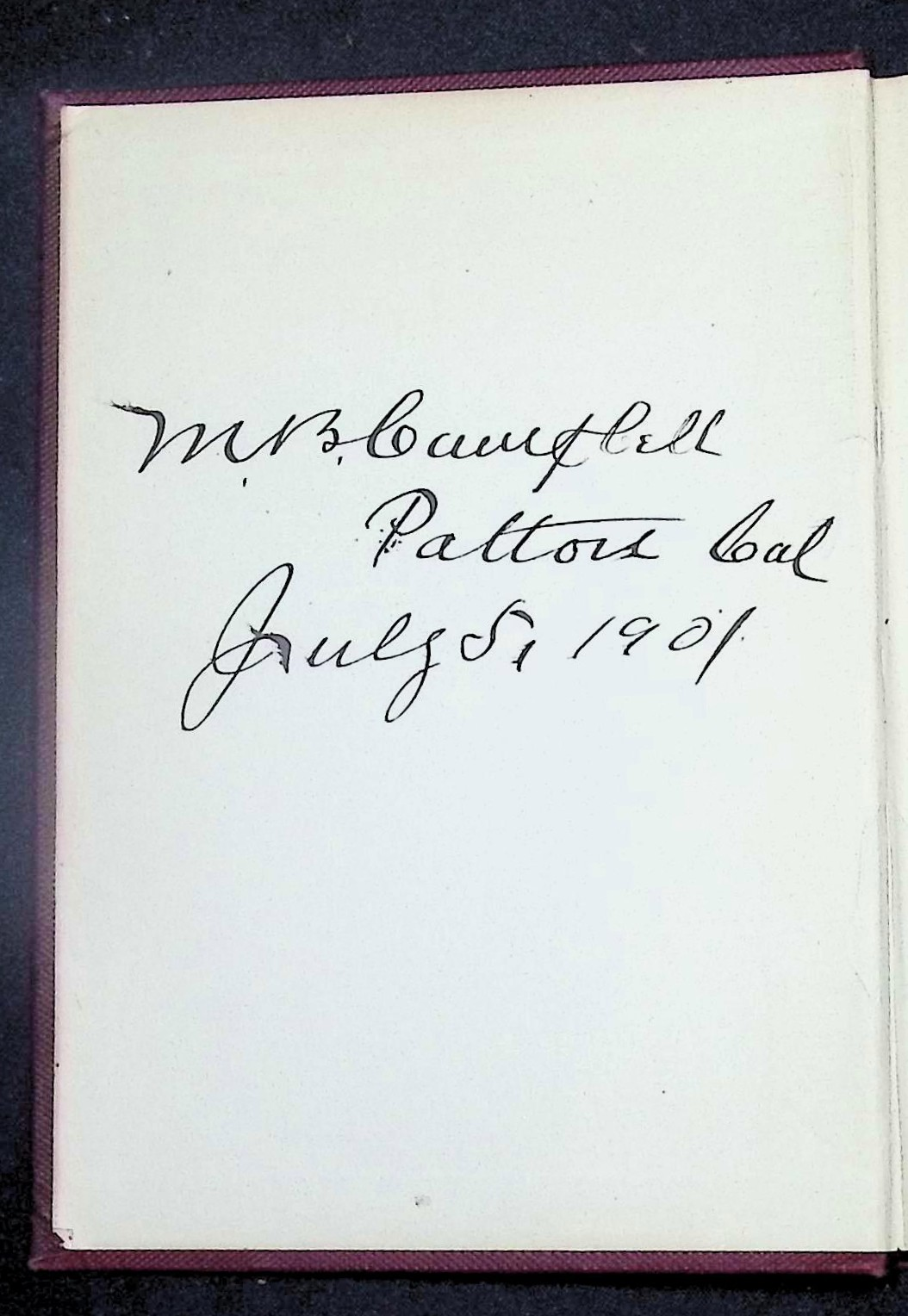
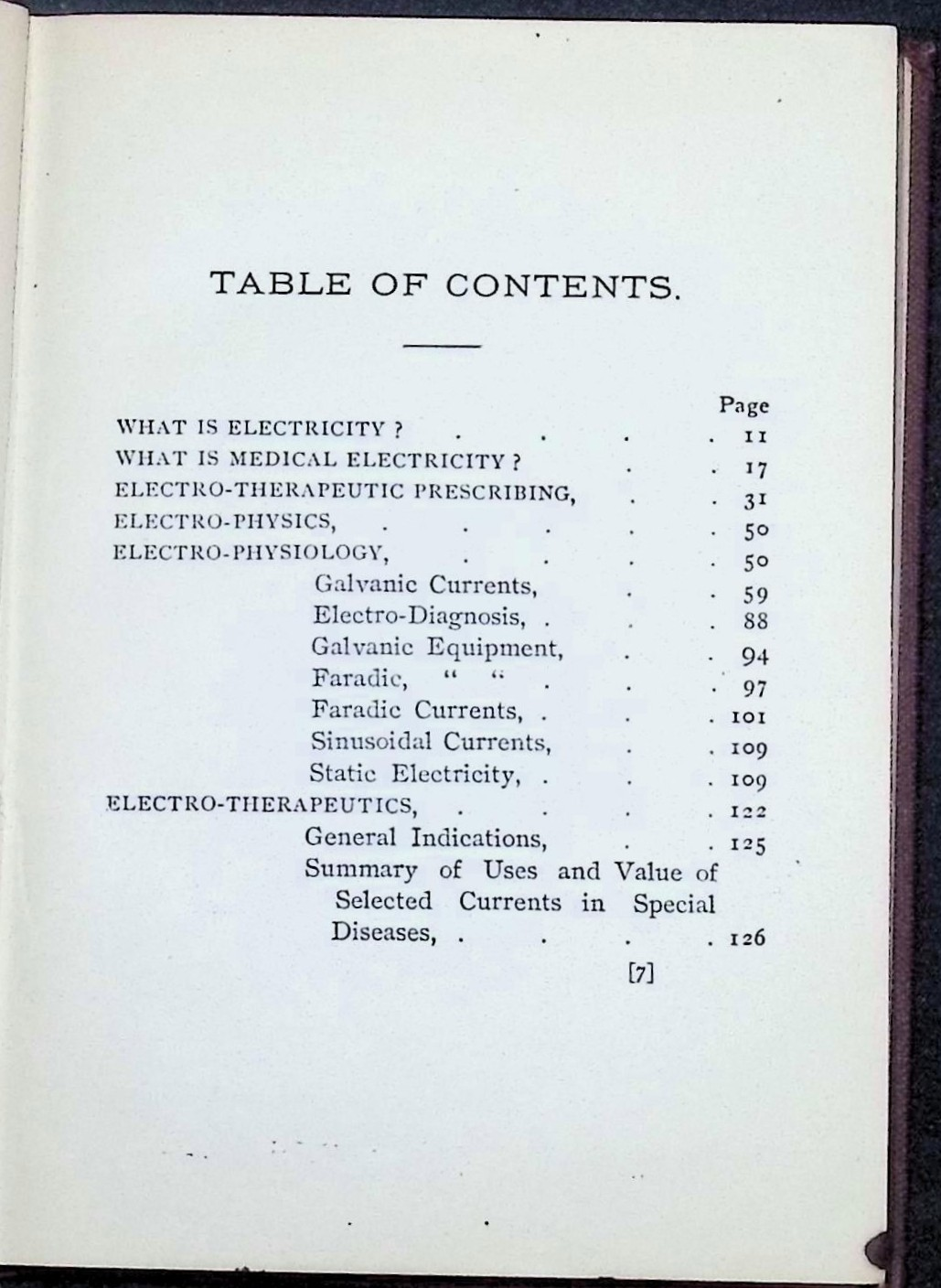
The volume includes a detailed table of contents, technical discussions of electro-diagnosis, and practical therapeutic guidance for conditions ranging from writer’s cramp to neuralgia. An inscription on the front endpaper dates to July 5, 1901, placing this specific copy in the hands of an early adopter during the height of medical electrification.
Condition
Very good for its age. Binding remains tight with minimal wear to the maroon cloth boards. Gilt lettering is bright. Interior pages are clean with only minor toning. The 1901 ownership inscription is bold and well-preserved.
Gallery
Historical context
Medical electricity emerged in the late 1800s as physicians gained access to reliable electrical equipment and a growing scientific understanding of current behavior. By 1900, electro-therapeutics had become a formal medical subspecialty, used for both diagnostic purposes (such as electro-diagnosis and muscle testing) and therapeutic interventions including muscle stimulation, pain management, and neuromuscular conditioning.
Dr. Monell was one of the central figures in this movement. He founded the New York School of Special Electro-Therapeutics and produced multiple influential textbooks. His works helped shift electricity away from quack devices and traveling performers toward mainstream medical practice. Manuals like this were used in medical schools, nursing programs, and postgraduate instruction.
This book also reflects the early professionalization of electro-therapy before the widespread adoption of X-ray and radiofrequency technologies. Its detailed equipment descriptions document a now-obsolete era of hand-built battery cells, fluid-filled jars, rheostats, pole-changing switches, and early interrupters.
Curious Facts, Ephemera, and Trivia
Monell was a charter member of the Roentgen Society of the United States, linking early electro-therapy with early radiology.
The Q&A structure was designed to mirror oral examination formats used in medical schools of the era.
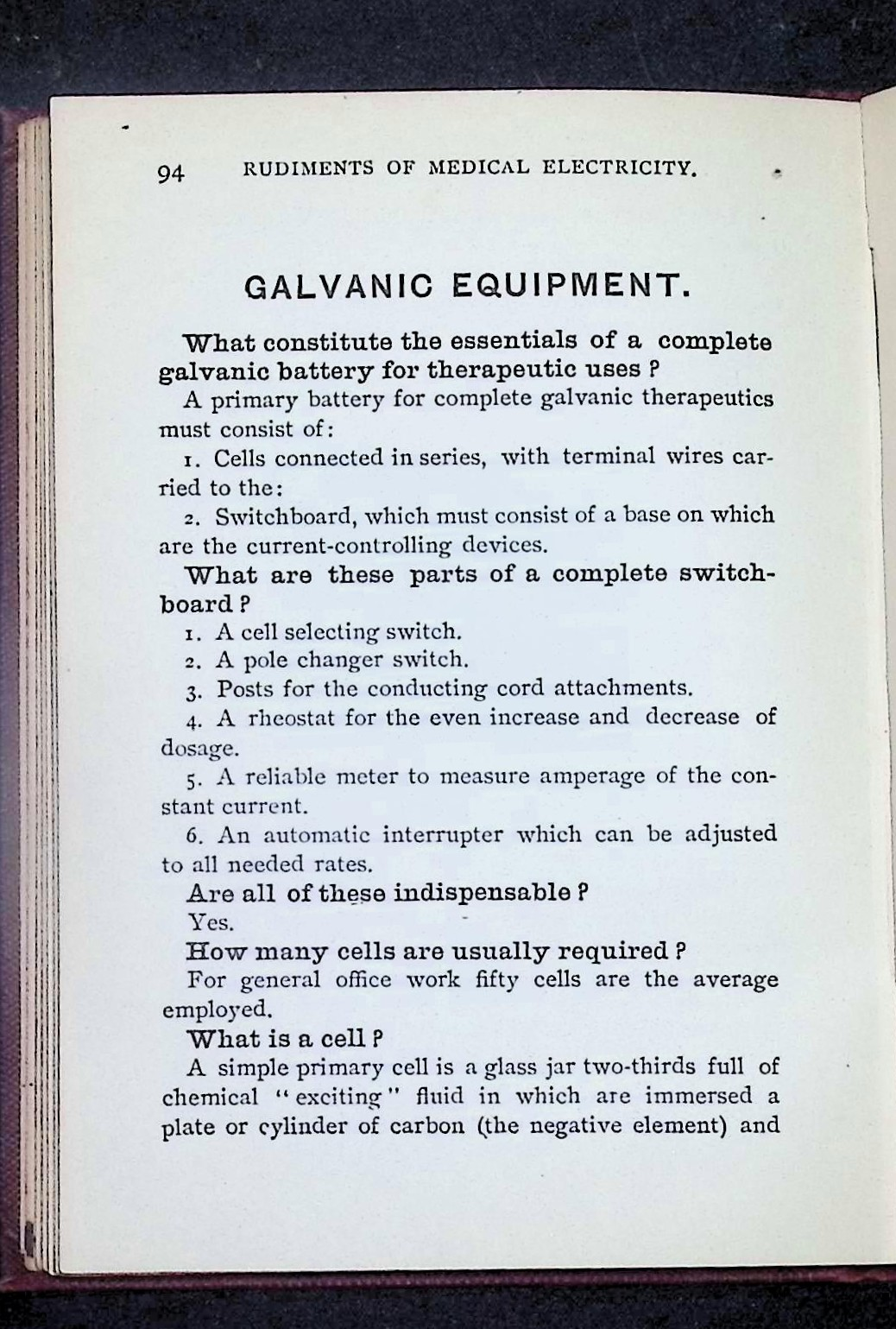
The book’s instructions on battery construction include advice on assembling chemical “exciting” fluids and carbon plates — tasks modern clinicians will never have to perform.
The manual lists 50 cells as the average office requirement for galvanic work, illustrating the high electrical demands of early therapeutic equipment.
Monell wrote extensively on writer’s cramp, telegrapher’s arm, and ballplayers’ arm, making this book a precursor to modern sports medicine and occupational health.
Excerpt
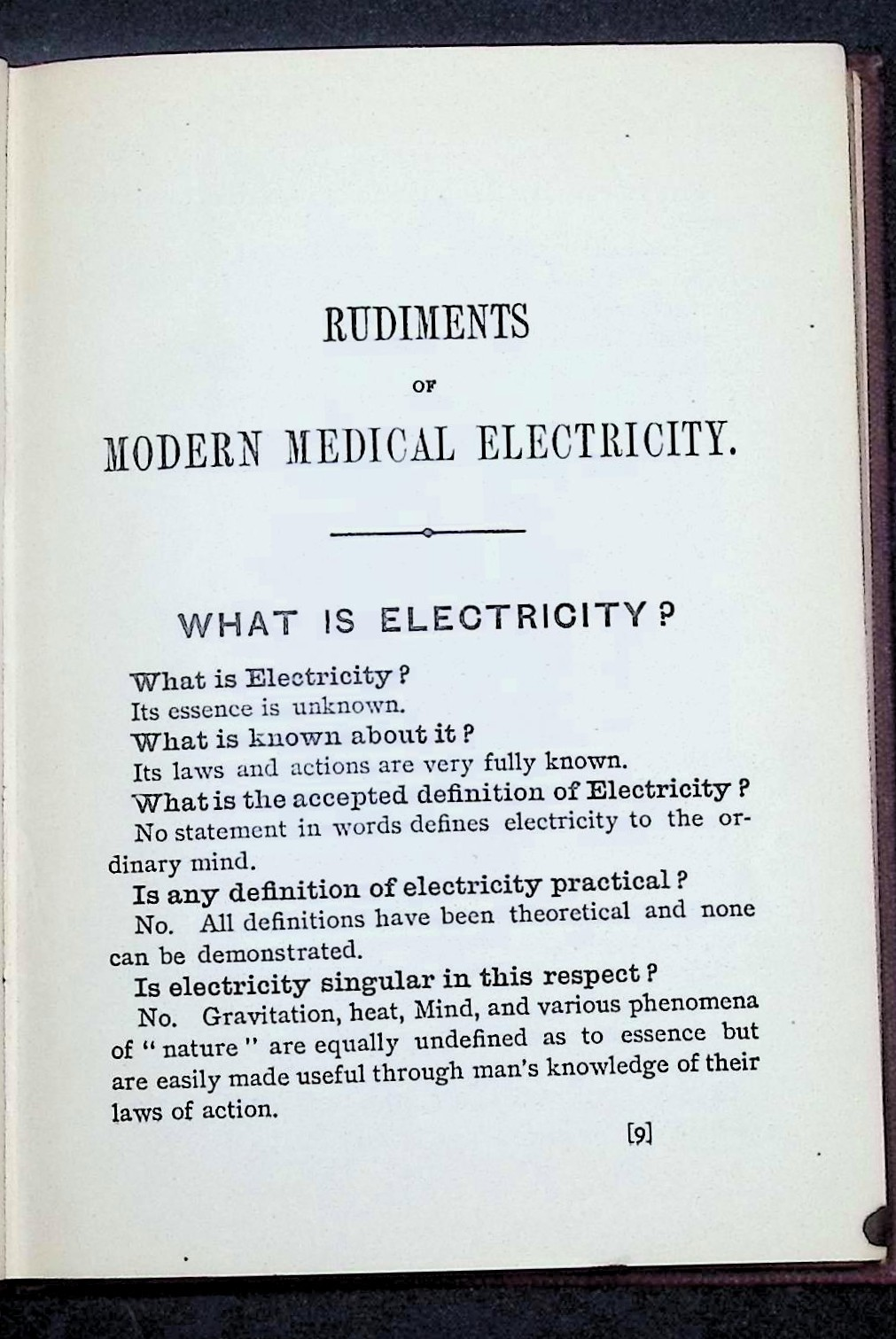
“No statement in words defines electricity to the ordinary mind… yet its laws and actions are very fully known.”
(Page 9)
Why it is in the Cabinet
This volume represents the technological optimism that shaped turn-of-the-century medicine. As one of the earliest standardized textbooks on clinical electricity, it provides a direct look at how physicians learned and applied electro-therapy before the digital age. Its preserved inscription and detailed technical content make it an invaluable artifact documenting the rise of medical electricity and the early professionalization of electro-therapeutics.
Support Dr. Bebout’s Cabinet of Medical Curiosities
If you enjoy the history, the oddities, and the effort, help keep this cabinet open. Every little bit helps preserve and share the strange wonders of medicine's past.
Buy Me a Ko-fi ☕ Buy Me a Coffee ☕ Tip via PayPal 💵