
Title
Cooper’s Practice of Surgery (1828)
Author
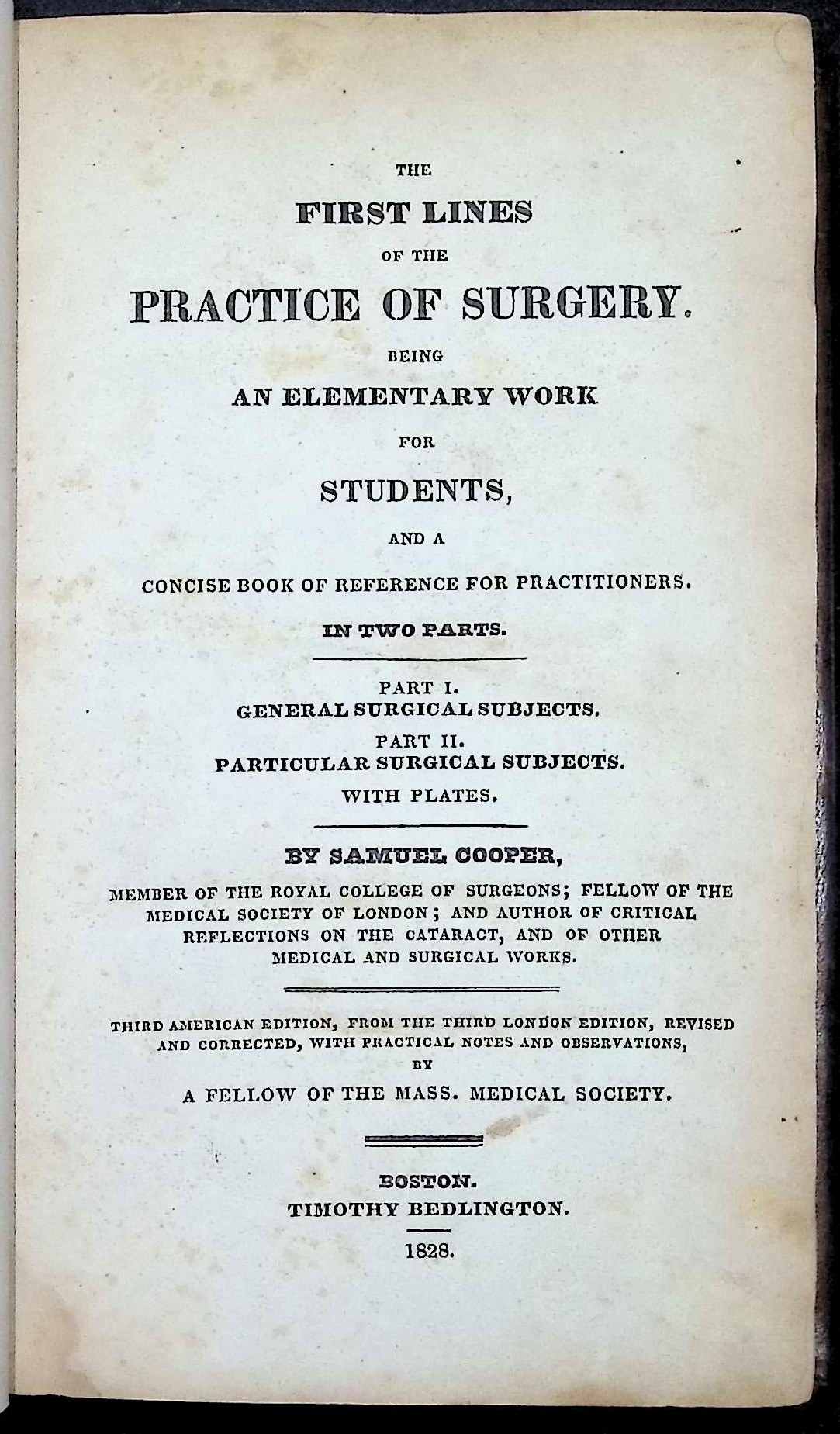
Author: Samuel Cooper, F.R.S.
Publisher: James Webster, Philadelphia
Edition: Third American Edition, revised and corrected
Year: 1828
Image
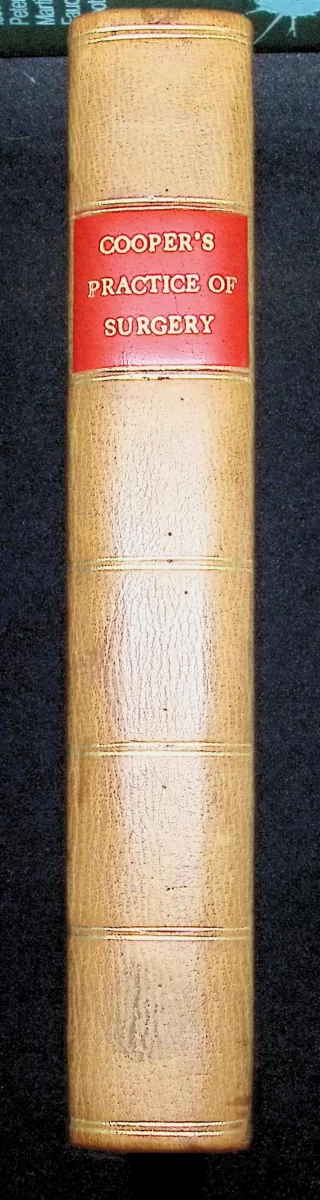
Description
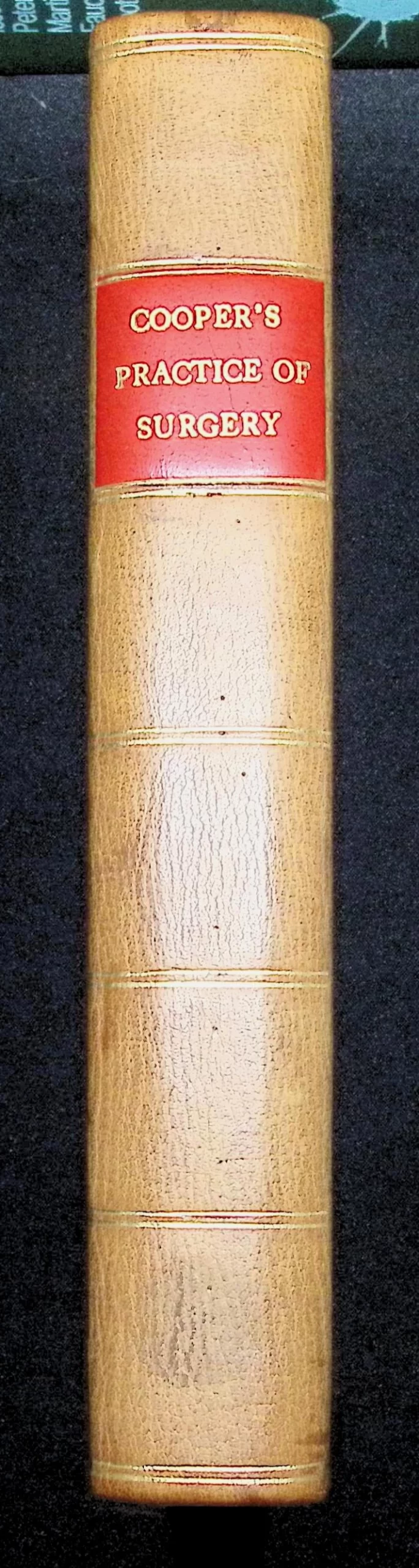
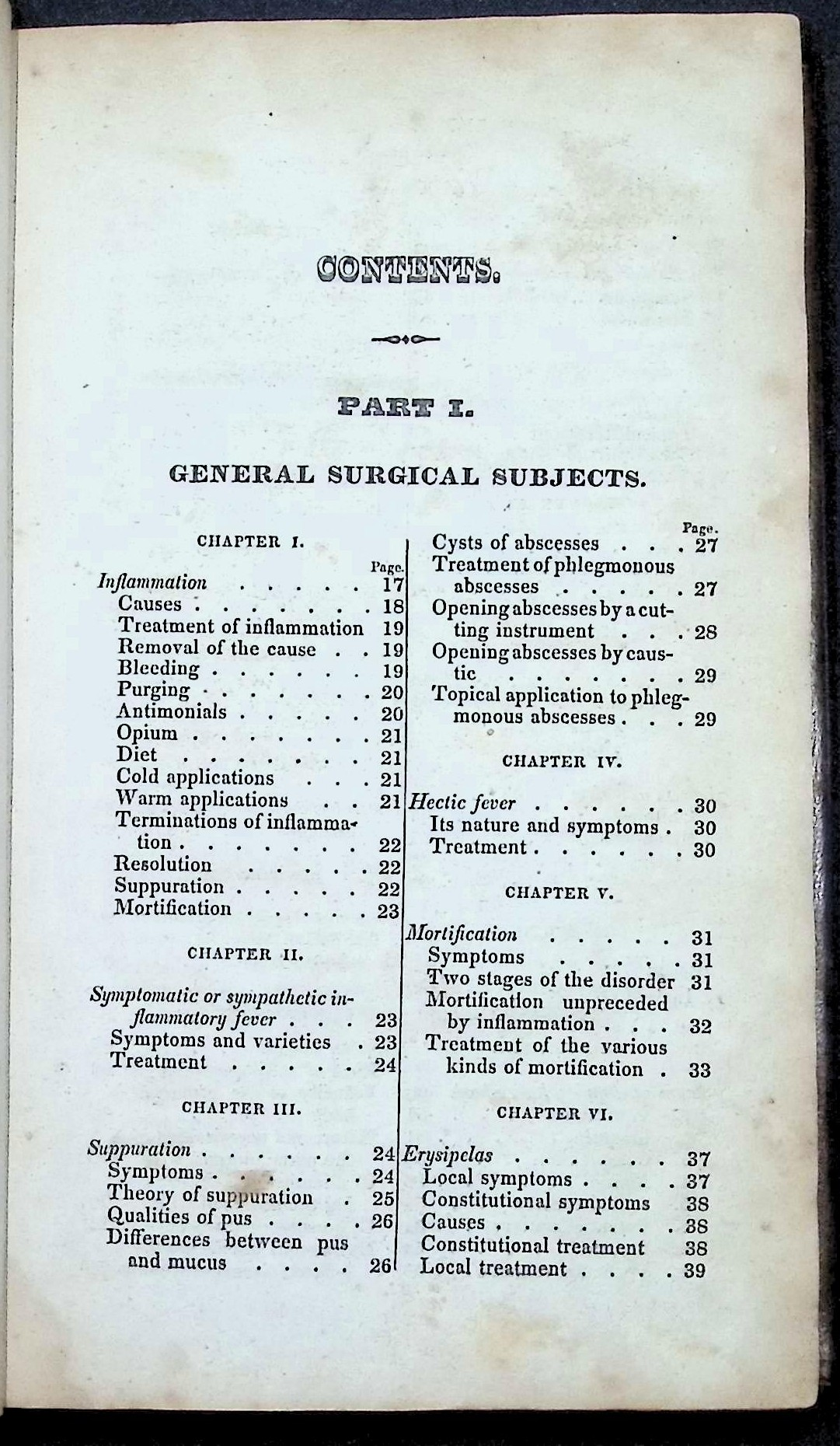
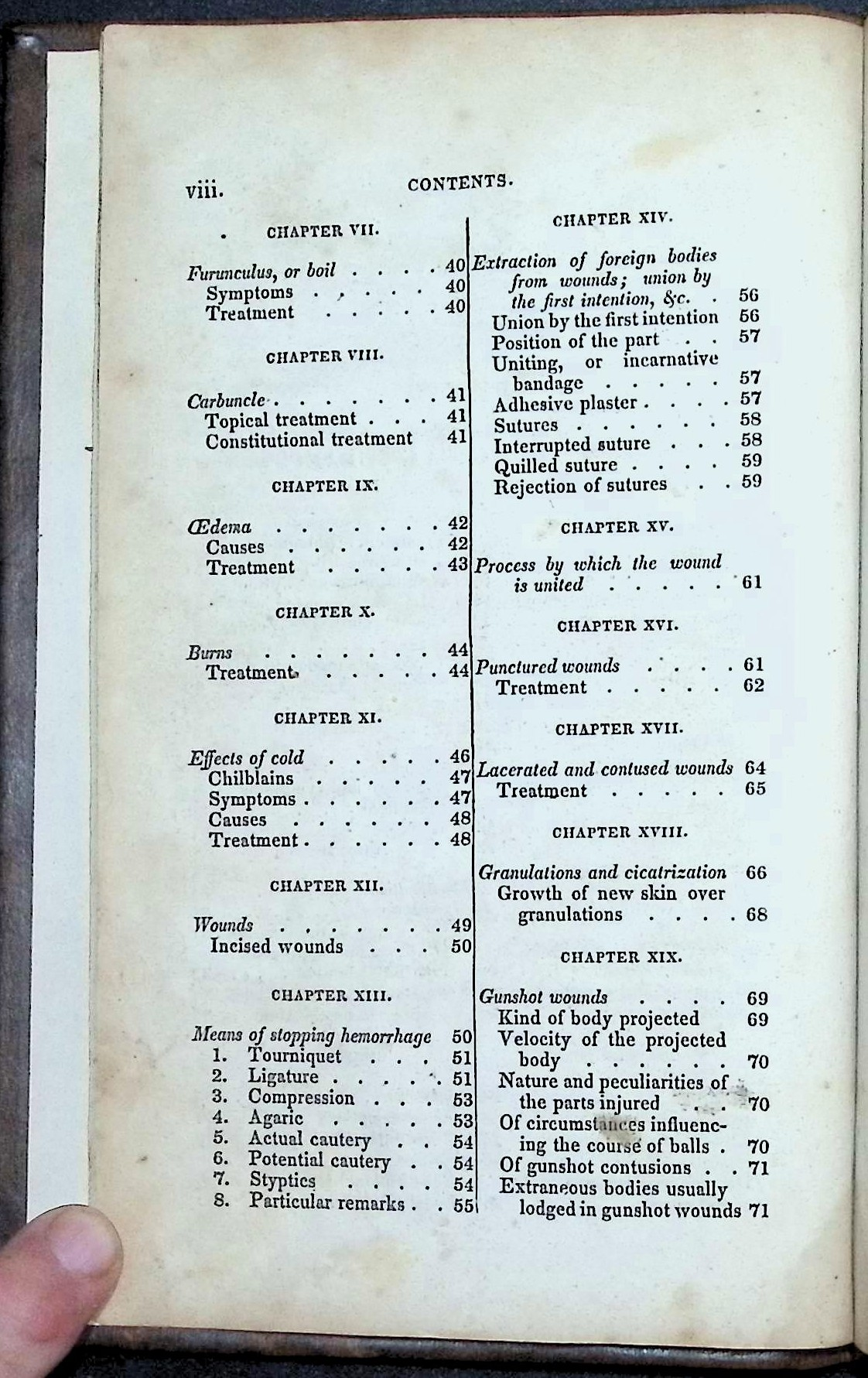
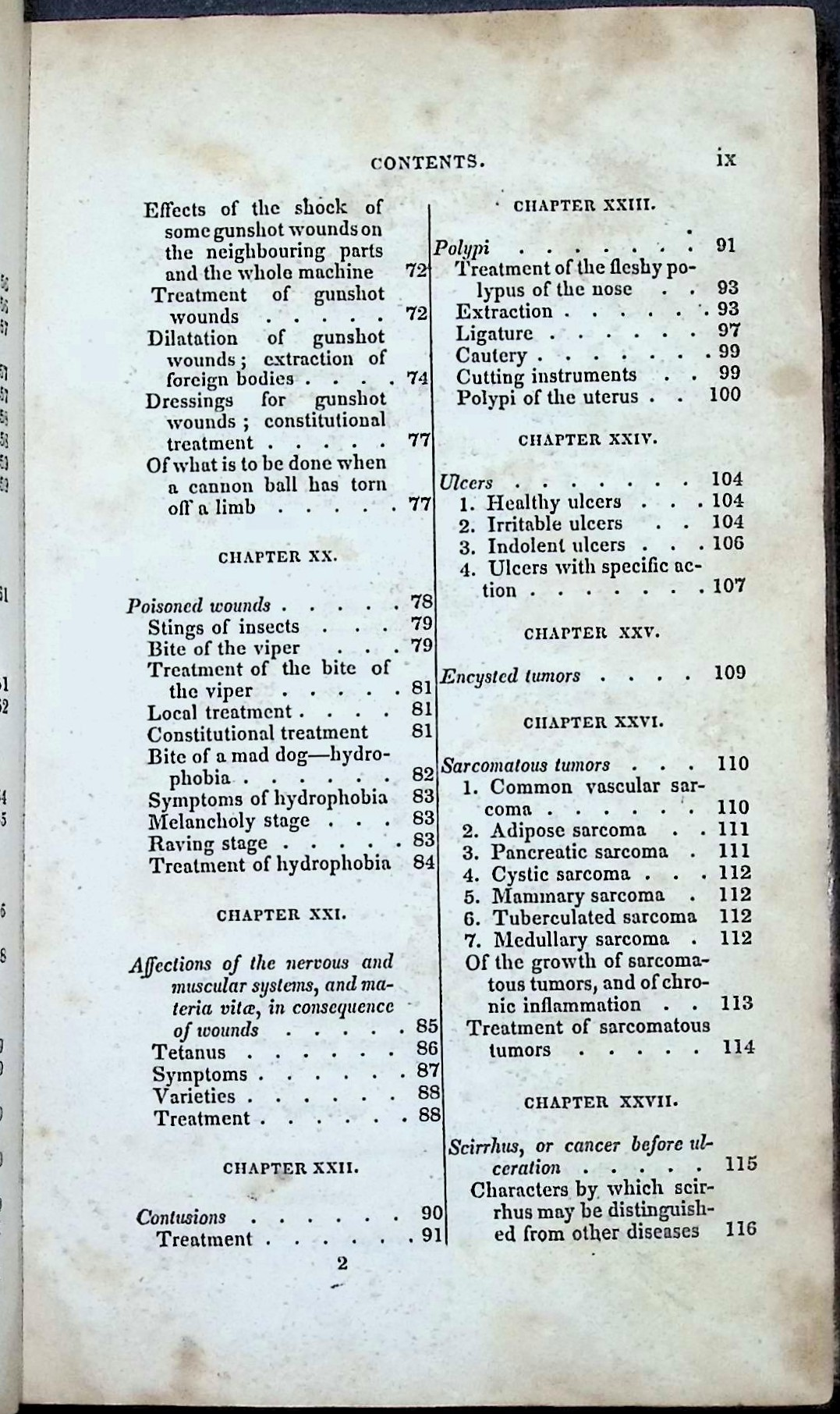
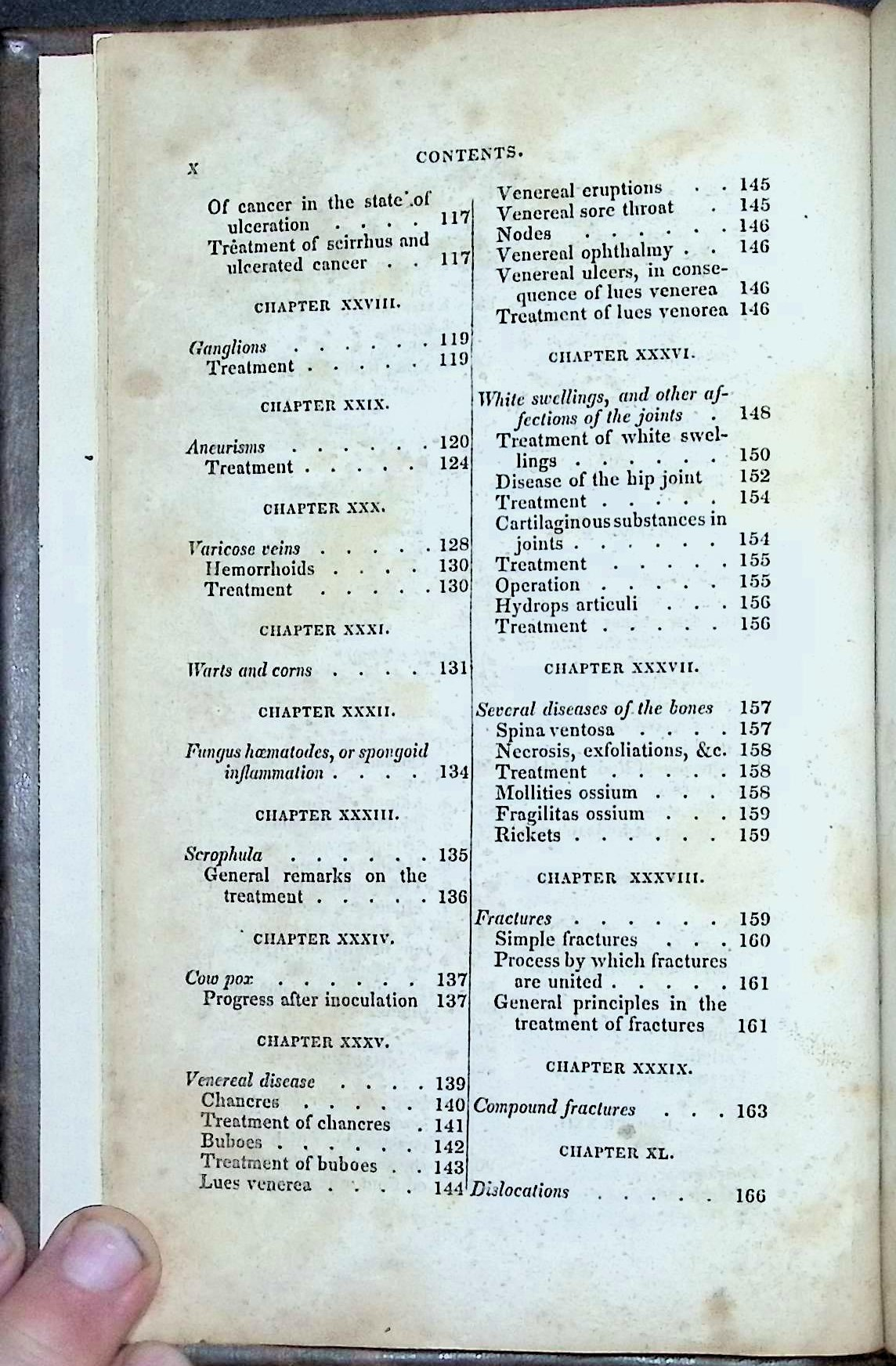
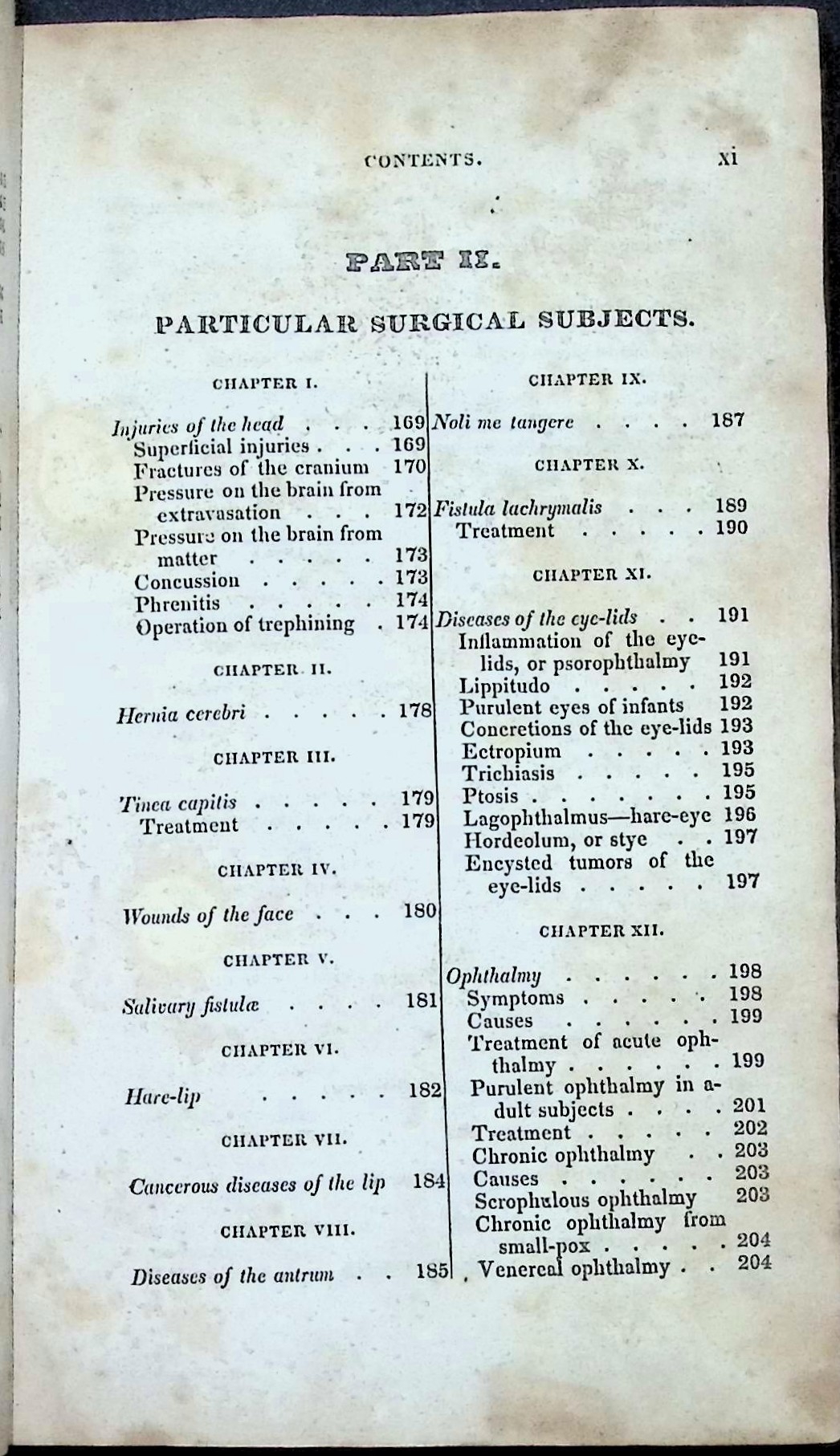
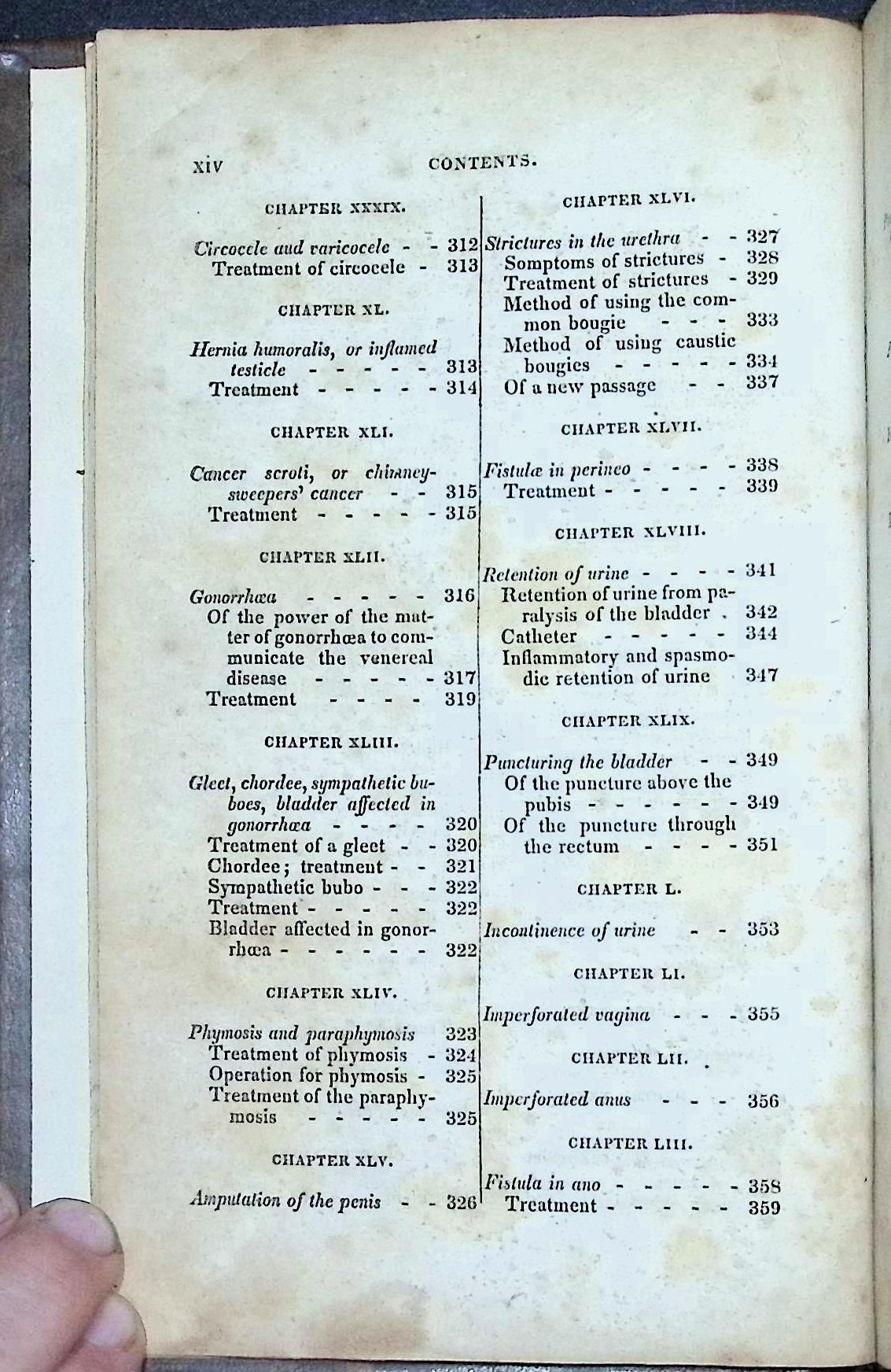
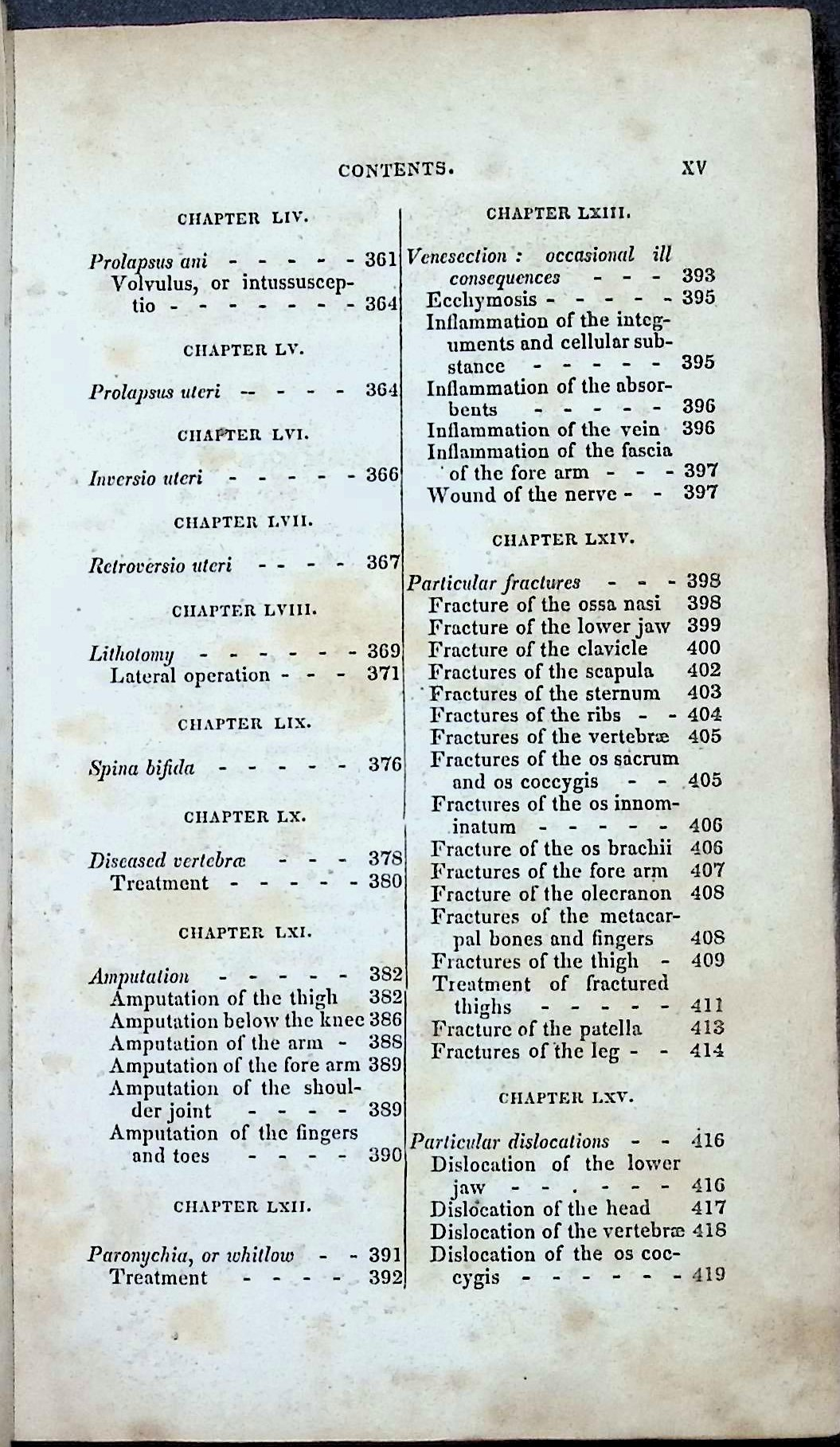
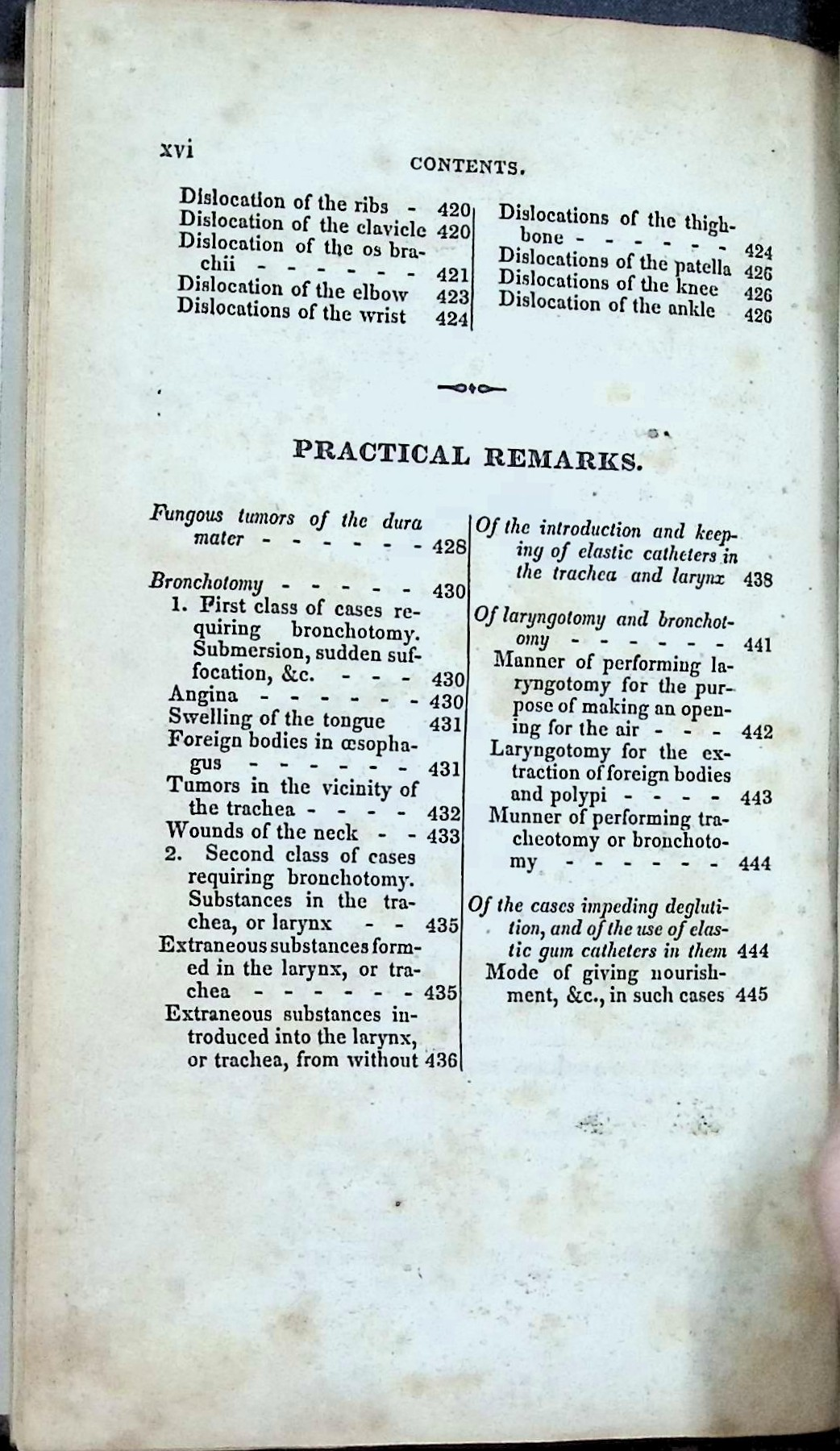
A substantial early-19th-century surgical reference bound in full leather with raised bands and a red spine label. This American printing of Samuel Cooper’s The First Lines of the Practice of Surgery presents the prevailing operative techniques and principles used by surgeons in the decades before anesthesia and antisepsis. The book covers everything from amputation methods and wound management to tumors, urinary obstruction, and obstetric emergencies.
Condition
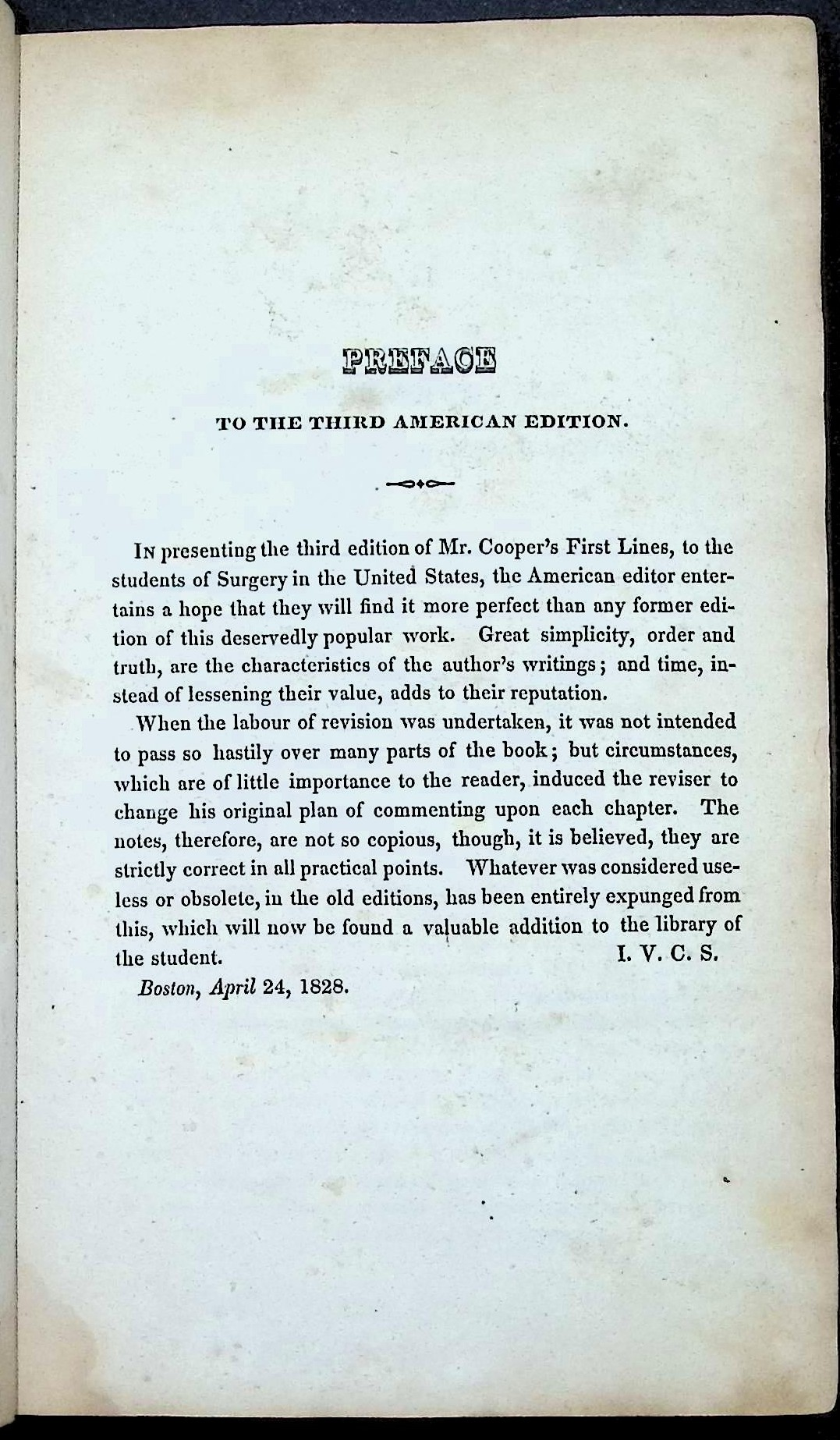
Moderate wear consistent with age. Leather shows scuffing and edge loss at corners, but the binding remains solid. Pages are evenly toned with occasional foxing. Some marginal notations and an early owner’s name appear on the endpapers, adding character to its long clinical history.
Gallery

Historical context
Samuel Cooper (1780–1848) was one of Britain’s most respected early surgical writers. His First Lines of the Practice of Surgery first appeared in 1807 and quickly became a cornerstone of 19th-century medical education, particularly in America, where successive editions were reprinted for students and physicians working far from large teaching hospitals. Cooper’s text offered a pragmatic approach to surgical disease—focusing on observation, cleanliness, and anatomical precision long before the germ theory transformed practice.
This 1828 Philadelphia edition reflects the medical frontier of its day: when surgical success depended almost entirely on the surgeon’s speed, steadiness, and endurance under pressure.
Curious Facts, Ephemera, and Trivia
Cooper’s First Lines was required reading in many American medical schools well into the 1840s.
Early copies often exhibit bloodstains or chalk notes from surgical apprentices—an unintended testament to their use in real operating rooms.
The book helped shape the surgical thinking of figures such as Valentine Mott and Samuel D. Gross, bridging British and American operative traditions.
Excerpt
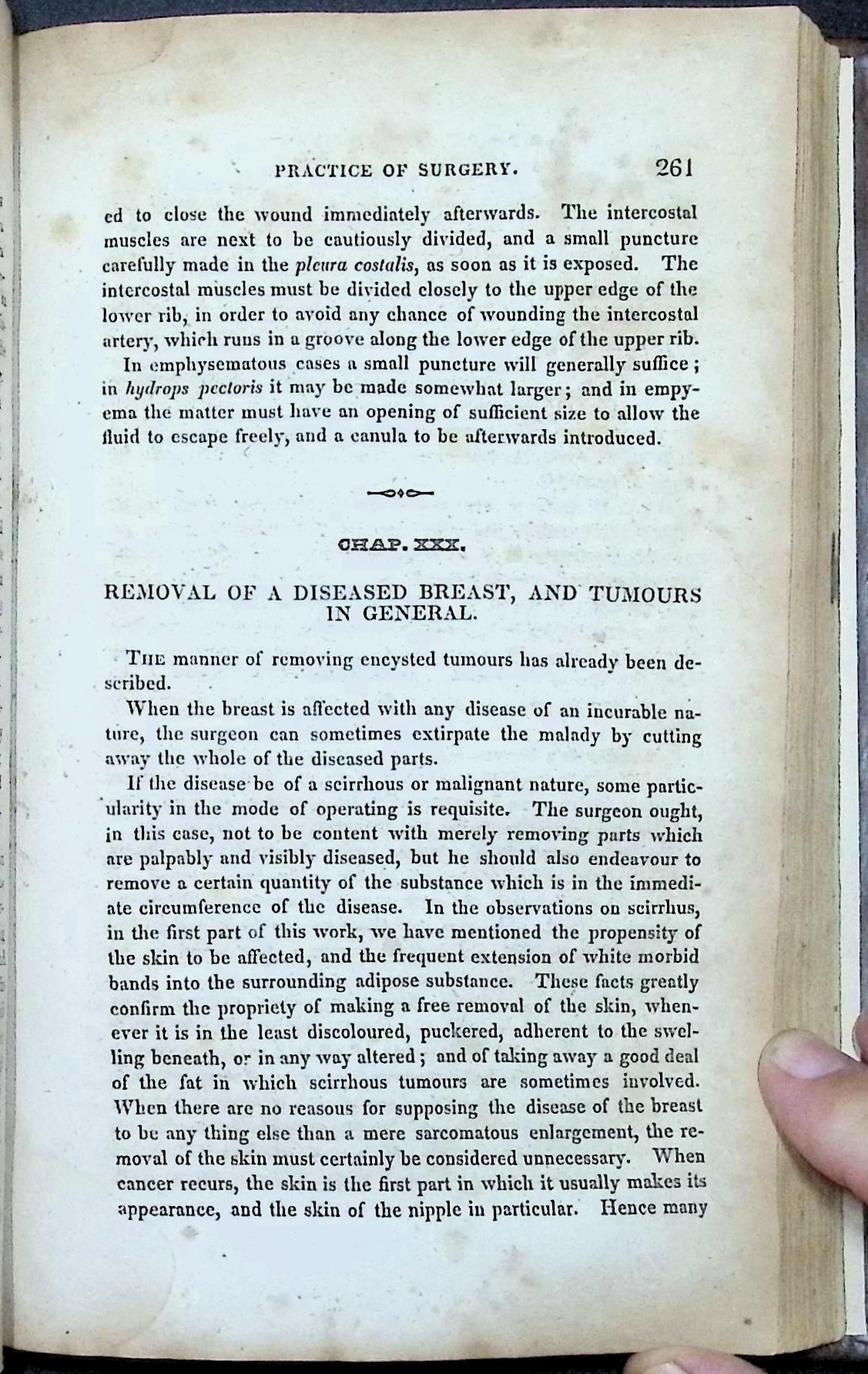
“In cases of scirrhus or cancer of the breast, the earlier the removal of the whole diseased mass is undertaken, the greater the chance of preserving life… The surgeon must proceed with a firm hand, making an elliptical incision which entirely includes the tumor, and continuing the dissection until the whole of the morbid structure is removed.”
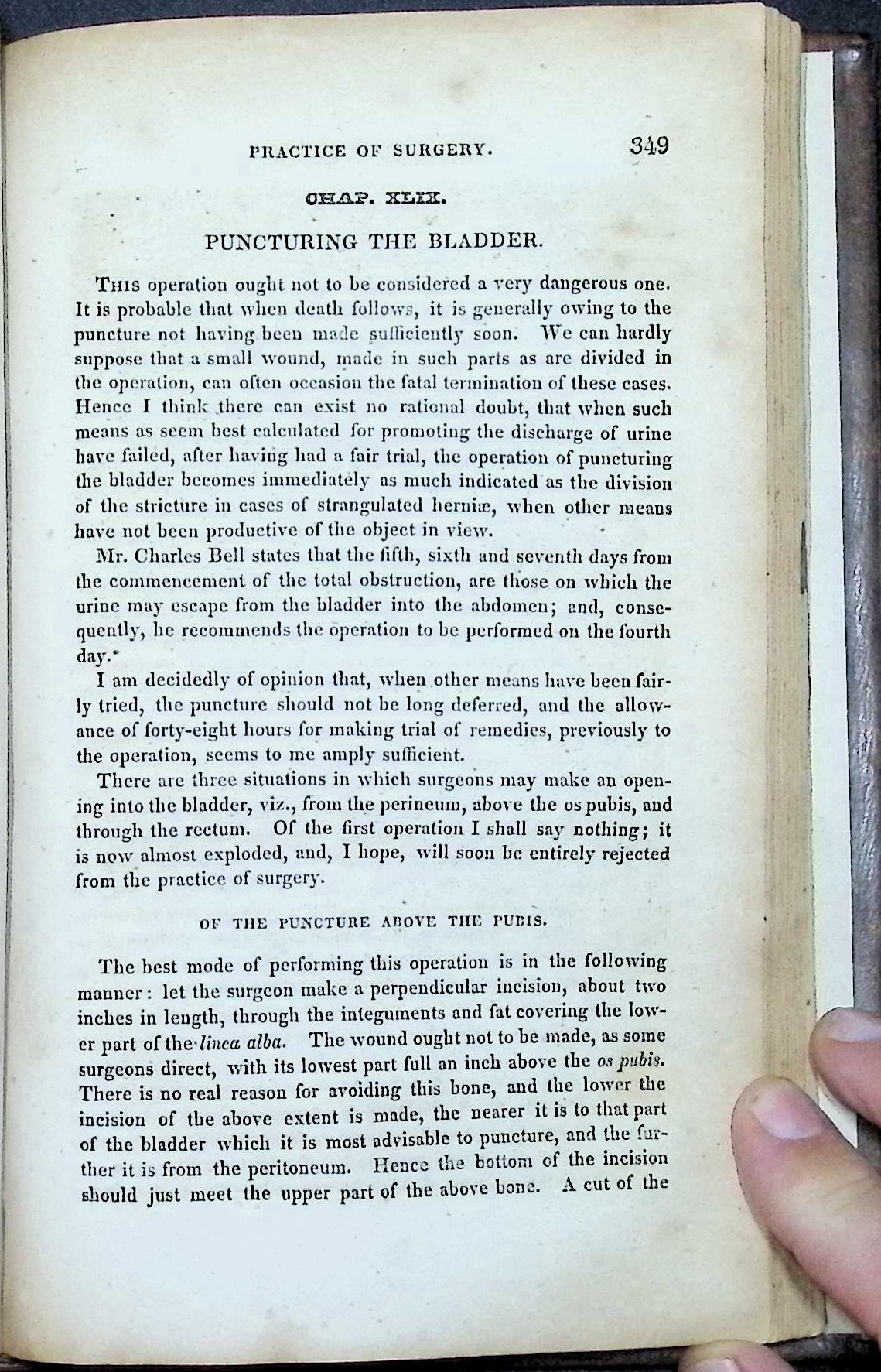
“When retention of urine cannot be relieved by ordinary means, it becomes necessary to puncture the bladder. This may be done above the pubes, or through the rectum in the male, or through the vagina in the female; the choice depending on the situation of the obstruction.”
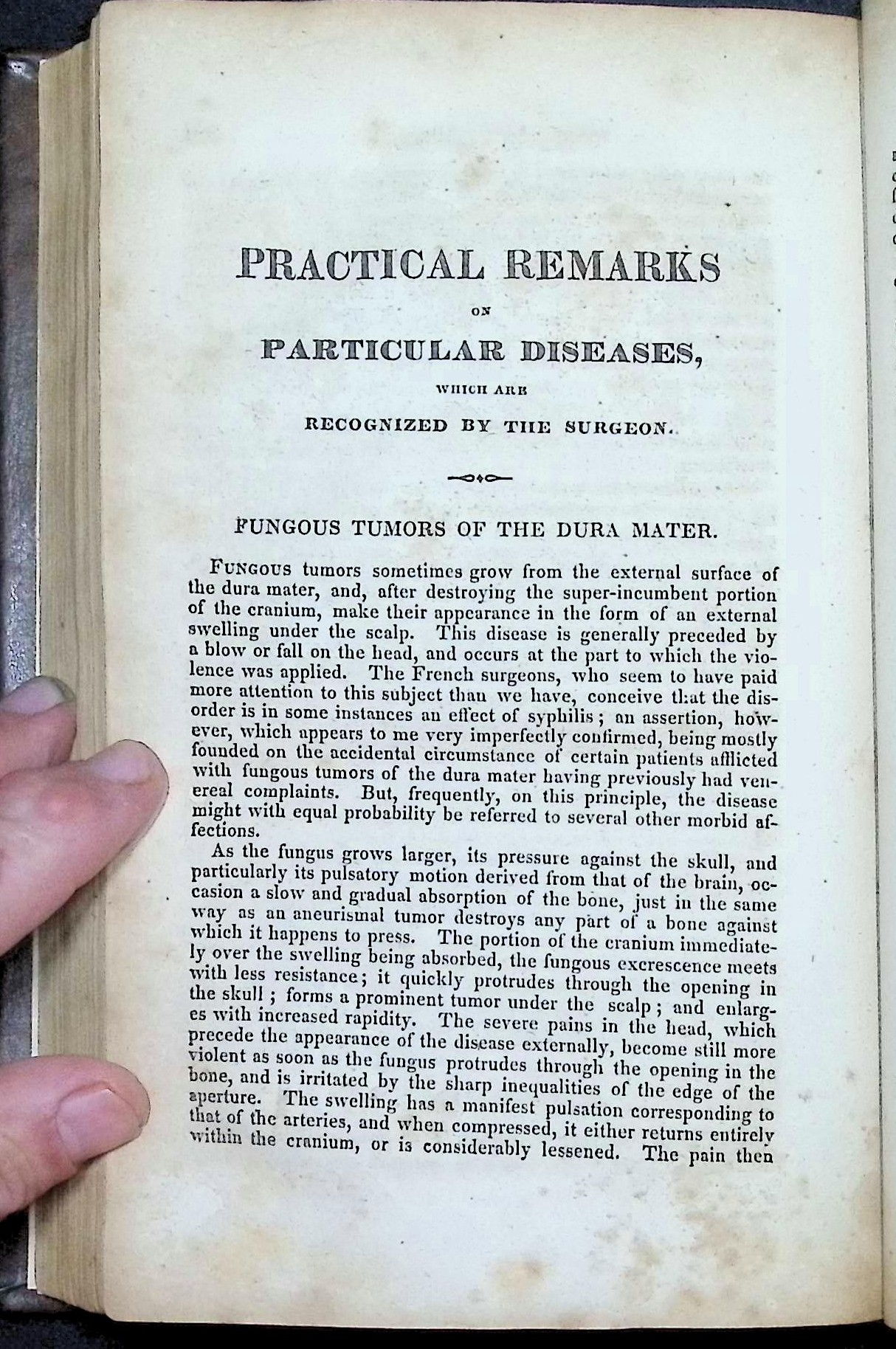
“Fungous tumors, arising after injury or ulceration of the periosteum, sometimes attain considerable magnitude… the most effectual treatment is the application of caustic or the complete excision of the diseased part.”
These selections reflect a stark and unflinching era of pre-anesthetic surgery, where precision and restraint were as vital as courage.
Why it is in the Cabinet
This volume exemplifies the transitional period of surgery between the age of barbers and the dawn of scientific medicine. Its pages document both the brutality and brilliance of early operative practice. It represents the surgeon’s art before ether, antisepsis, and modern technique—a vital artifact of the craft’s evolution.
Support Dr. Bebout’s Cabinet of Medical Curiosities
If you enjoy the history, the oddities, and the effort, help keep this cabinet open. Every little bit helps preserve and share the strange wonders of medicine's past.
Buy Me a Ko-fi ☕ Buy Me a Coffee ☕ Tip via PayPal 💵