
Title
Hydrastine Hydrochlorate — Merck & Co.
Author
E. Merck, Darmstadt, Germany and Merck & Co., New York
Image
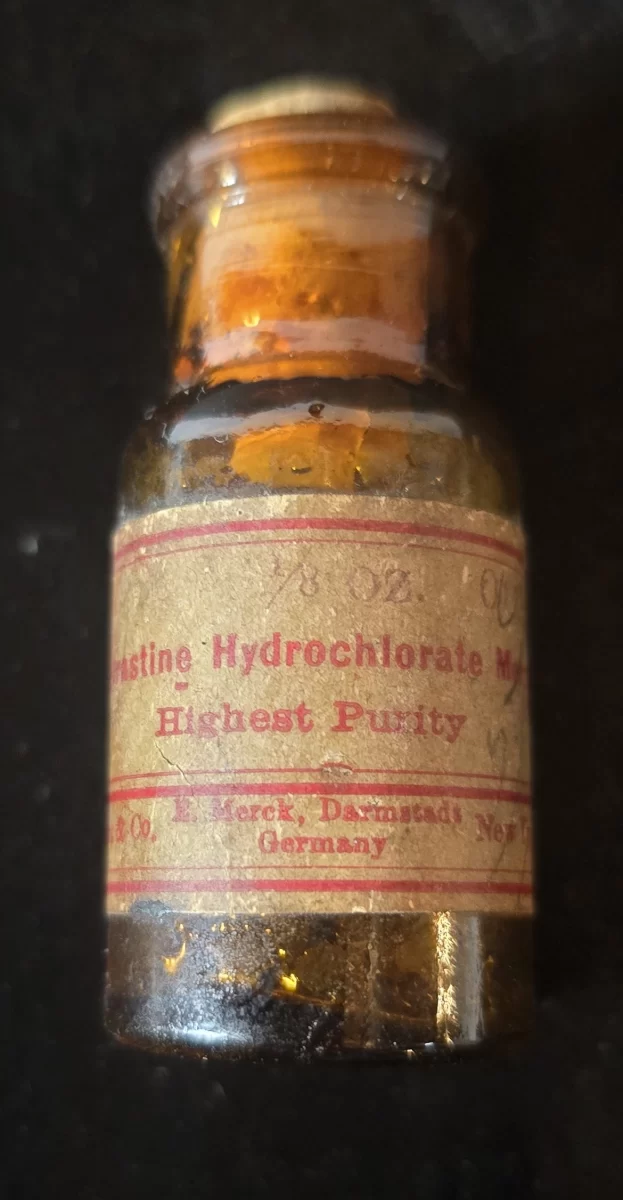
Description
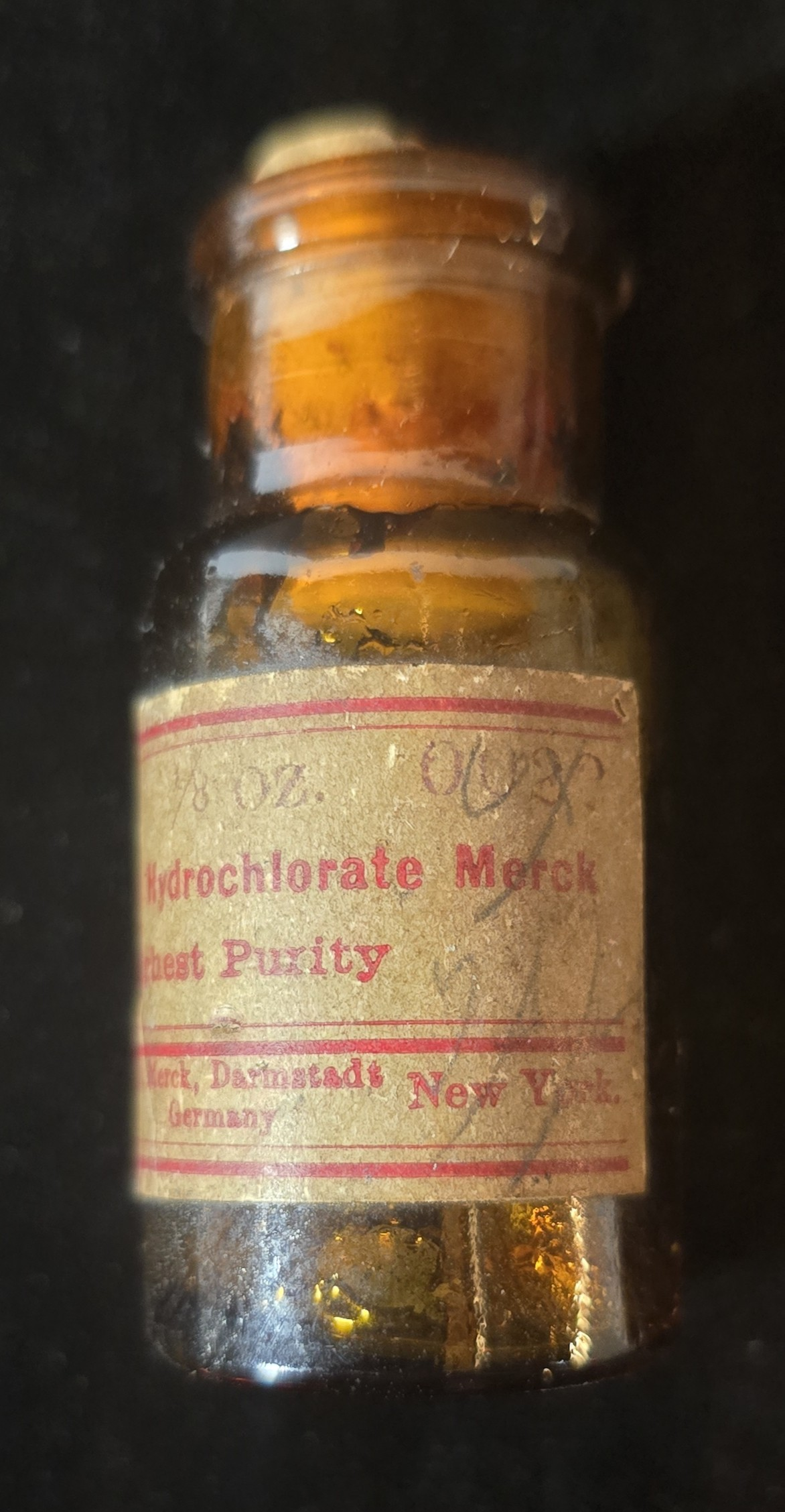
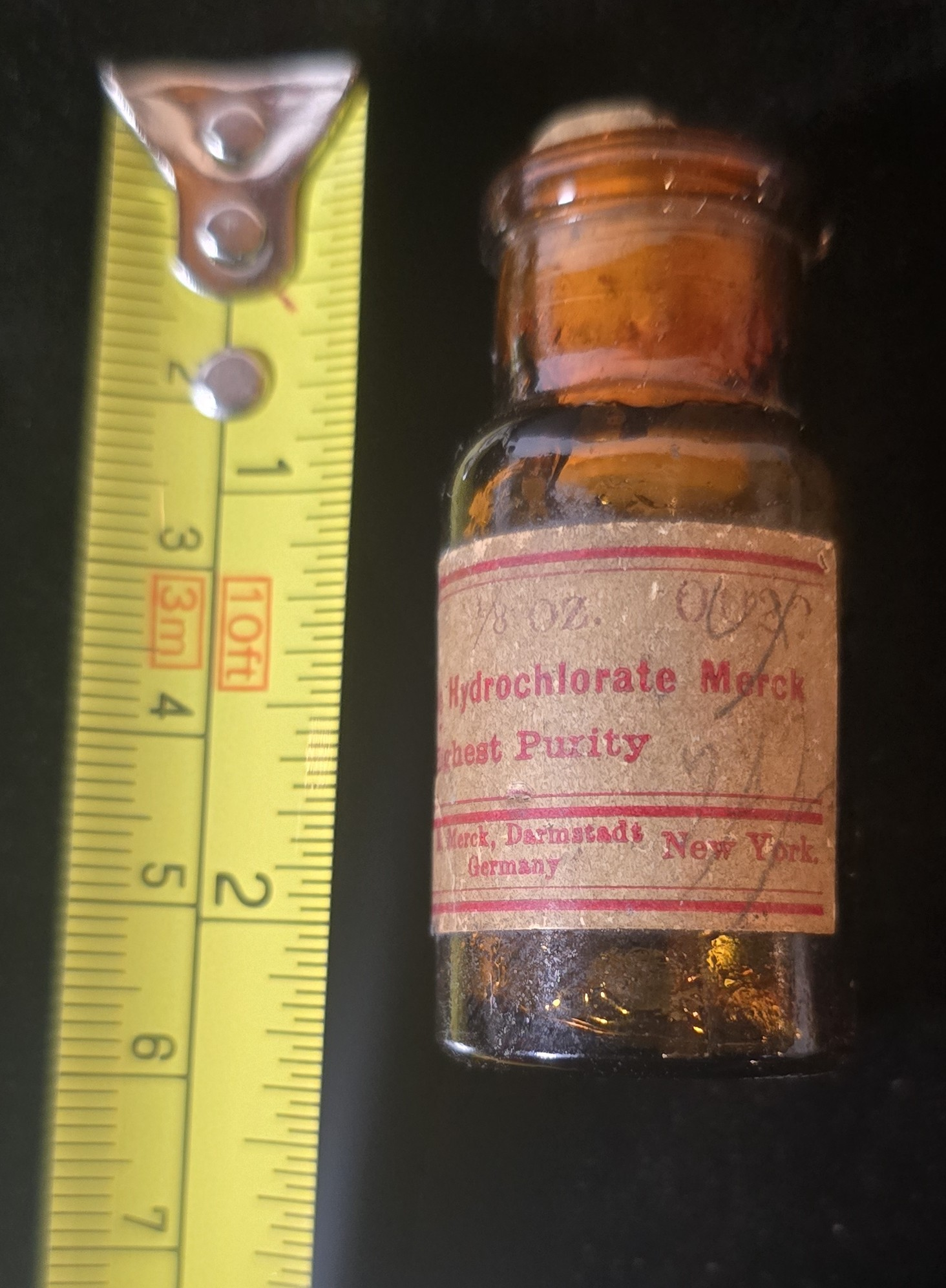
This small amber glass bottle labeled “Hydrastine Hydrochlorate Merck — Highest Purity” was produced by E. Merck of Darmstadt, Germany, with U.S. distribution through Merck & Co., New York. The bottle, holding approximately ⅛ oz, dates to the late 19th or early 20th century, when Merck supplied pure chemical reagents and pharmaceuticals to physicians and apothecaries.
Hydrastine is an alkaloid derived from goldenseal (Hydrastis canadensis), a medicinal plant long used in North America. The hydrochloride salt form increased water solubility, making it suitable for compounding solutions and injectable preparations. In medical practice of the era, hydrastine hydrochlorate was employed as a uterine tonic and hemostatic, prescribed to control postpartum or menstrual bleeding and occasionally used for nasal or mucosal congestion.
The bottle’s simple paper label in red serif print and the words “Highest Purity” reflect Merck’s early-20th-century reputation for pharmaceutical precision and laboratory-grade alkaloids. Such reagent bottles were typically sealed with a cork or glass stopper, as seen here, and distributed to physicians’ dispensaries for in-office preparation.
Condition
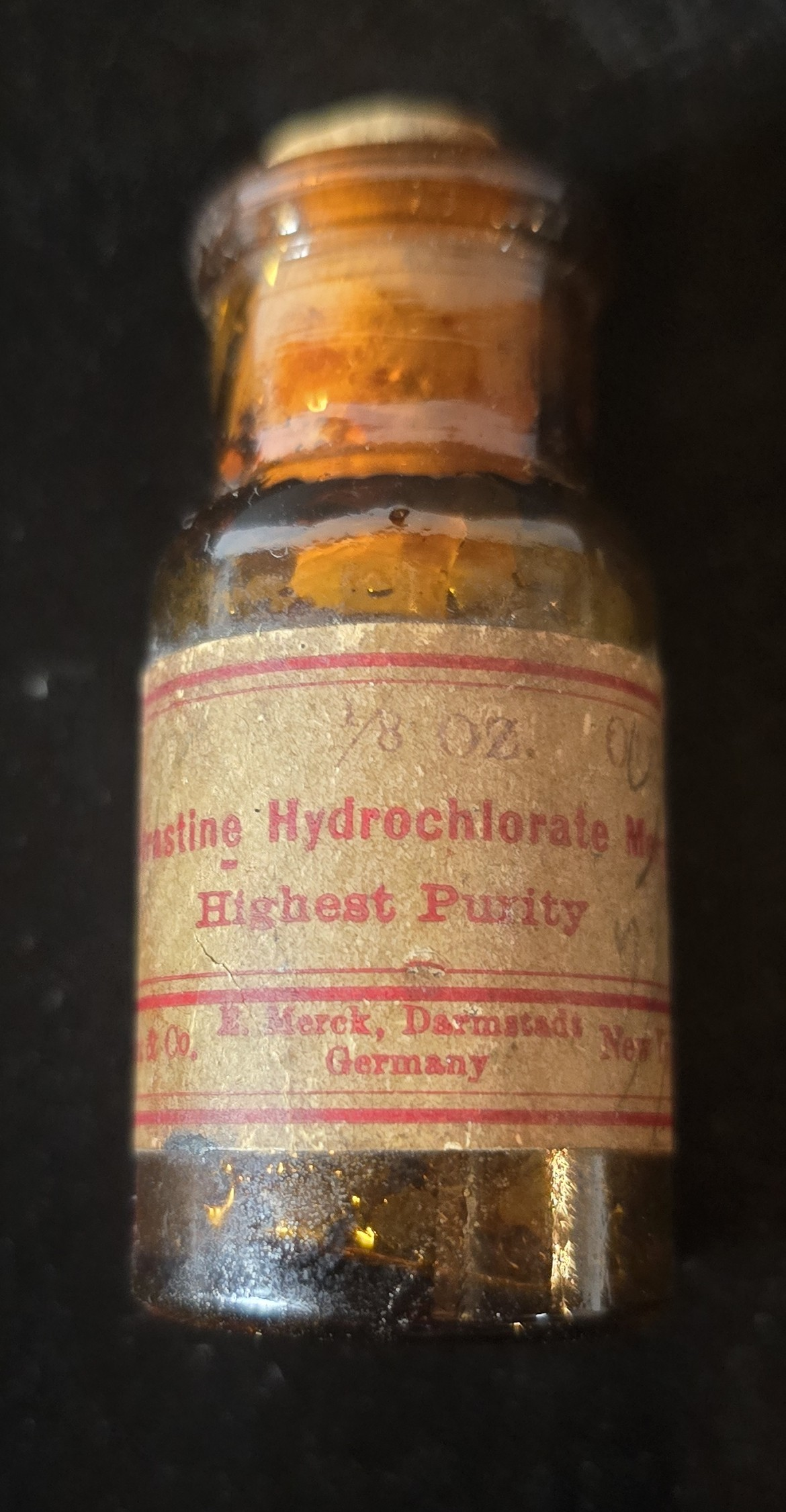
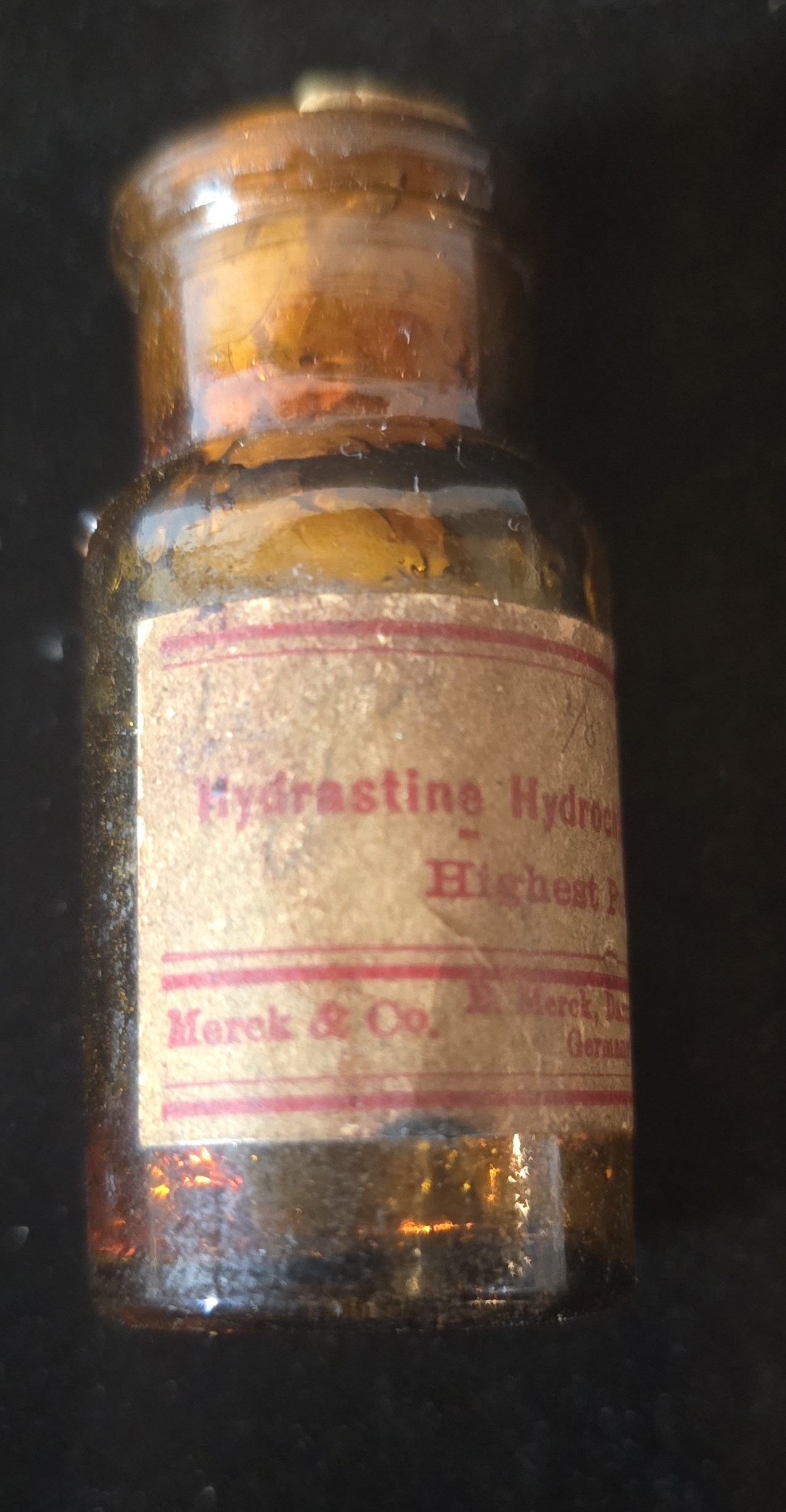
Amber glass intact with original cork closure and partial contents residue. Label browned, lightly abraded, and annotated in pencil with “⅛ oz.” but remains legible. Overall excellent display condition for age.
Gallery
Historical context
By 1900, Merck had become one of the foremost suppliers of pure alkaloids to American pharmacies, bridging the scientific pharmacy movement between Germany and the United States. Hydrastine hydrochlorate was listed in multiple U.S. Dispensatory editions and remained in use until safer synthetic uterotonics supplanted it by mid-century. The goldenseal plant itself became overharvested, leading to conservation efforts still active today.
Curious Facts, Ephemera, and Trivia
Hydrastine was first isolated in 1851 by Alfred P. Durand.
Its related compound hydrastinine, discovered in 1898, was used as a synthetic uterine hemostatic for decades.
Merck reagent bottles like this are prized by collectors for their dual “Merck Darmstadt / New York” labeling, denoting export during the company’s international expansion.
Excerpt
Hydrastine and its salts act as astringents and hemostatics, influencing the capillary circulation and promoting uterine contraction.”
— The Dispensatory of the United States of America, 19th Ed., 1907.
Why it is in the Cabinet
This bottle represents a turning point in early modern pharmacology — when botanically derived alkaloids were isolated, standardized, and distributed globally by firms such as Merck. As an authentic labeled reagent vial, it embodies the scientific elegance of turn-of-the-century pharmacy.
Support Dr. Bebout’s Cabinet of Medical Curiosities
If you enjoy the history, the oddities, and the effort, help keep this cabinet open. Every little bit helps preserve and share the strange wonders of medicine's past.
Buy Me a Ko-fi ☕ Buy Me a Coffee ☕ Tip via PayPal 💵