
Title
Booth’s Hyomei “Dri Ayr” Inhalant
Author
Manufacturer: Booth’s Hyomei Co., Buffalo, New York
Date: Circa 1910–1920
Image
Description
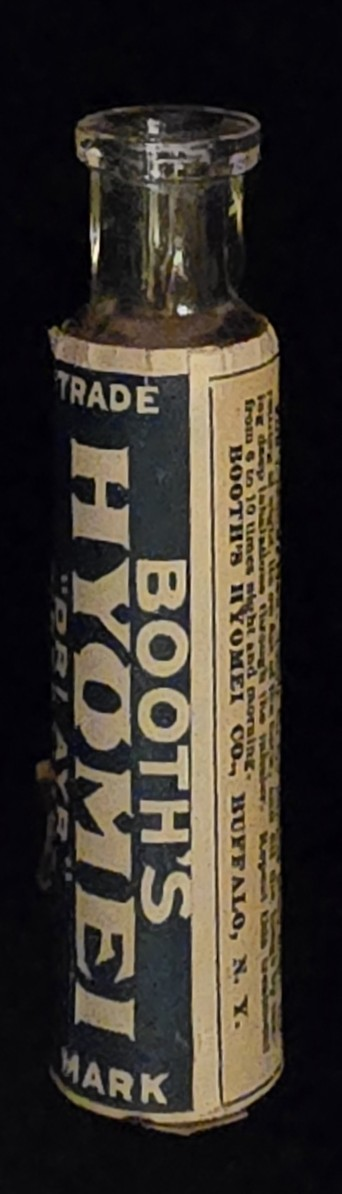
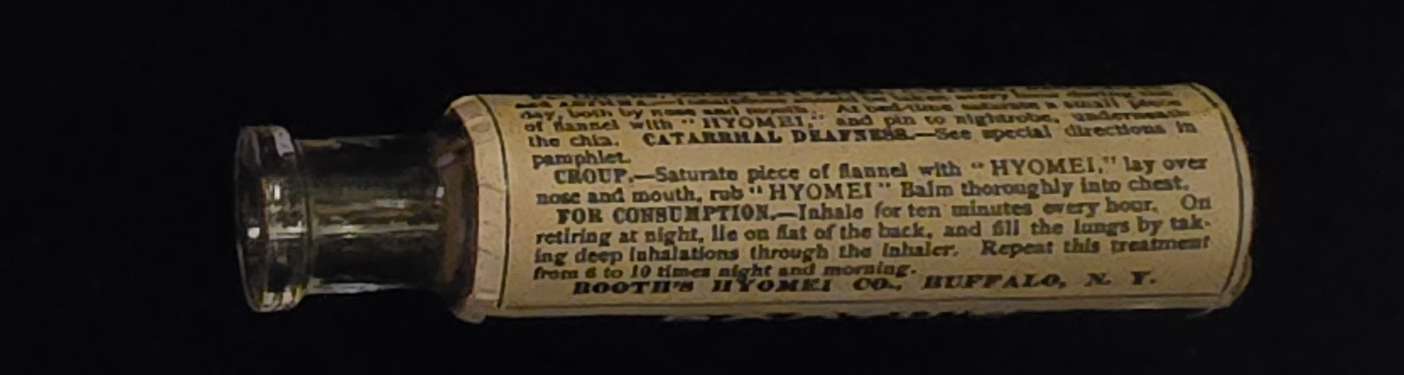
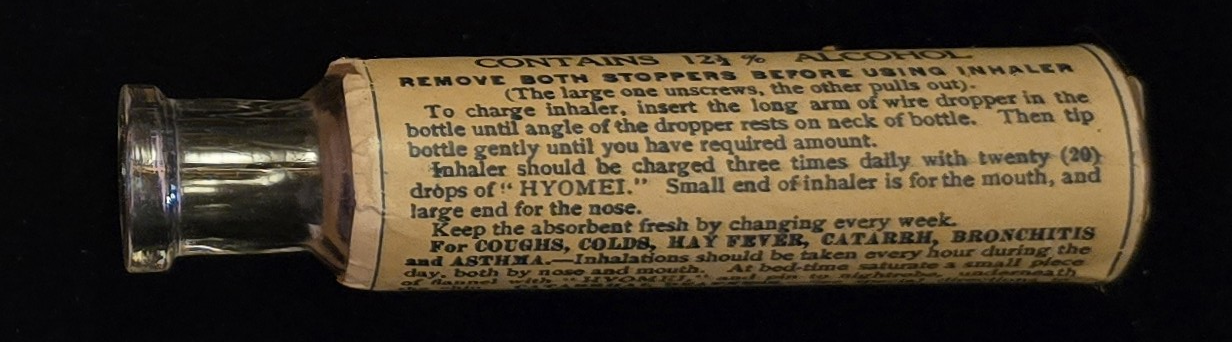
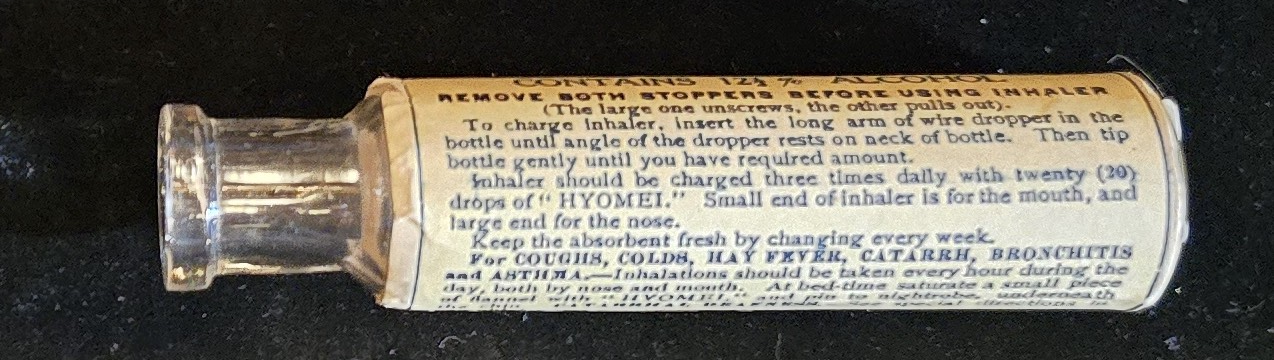
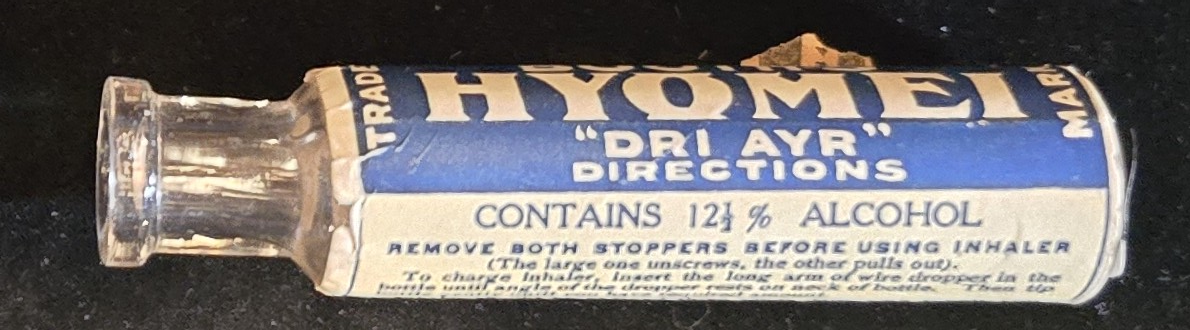
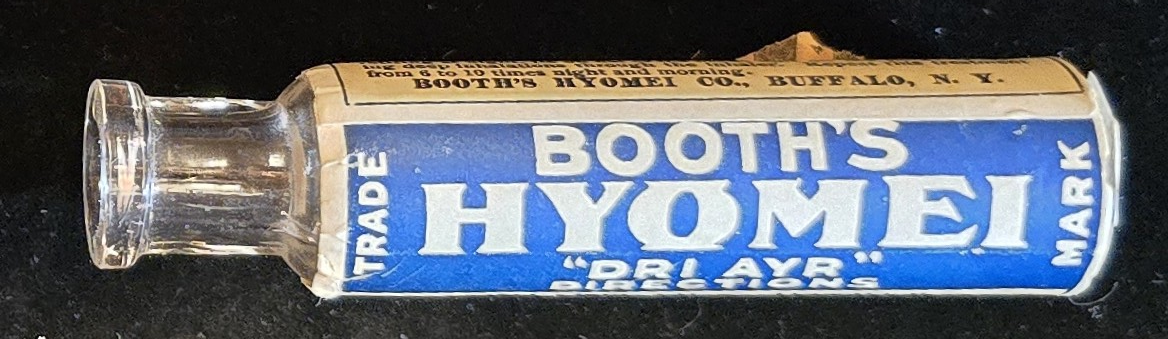
A small clear glass bottle with applied lip and full wraparound paper label in blue and cream. The front reads “Booth’s Hyomei ‘Dri Ayr’”, while the side panels provide detailed instructions for recharging the inhaler with drops of the solution. The label specifies a 12½% alcohol content and advises removal of both stoppers before use. Text on the rear gives detailed instructions for treatment of catarrh, bronchitis, coughs, and colds, directing the user to inhale medicated vapors through a specialized device sold with the product.
Condition
Excellent preserved label with only minor edge wear and toning. Glass is clear and free of chips or cracks. Label remains legible on all sides.
Gallery
Historical context
Booth’s Hyomei (pronounced High-o-me) was a widely marketed early 20th-century inhalant therapy, claiming to treat nasal and bronchial ailments through “medicated dry air.” Advertised as a “sure cure for catarrh,” it was one of many patent medicines of the era combining mentholated oils with alcohol for aromatic inhalation. The company operated out of Buffalo, New York, and heavily promoted its home inhaler device—a portable ceramic diffuser into which this refill bottle was poured. Hyomei’s success reflected the public fascination with “air disinfection” and inhaled antiseptics before the germ theory was fully integrated into mainstream medicine.
Curious Facts, Ephemera, and Trivia
The term catarrh once referred broadly to chronic congestion or inflammation of the mucous membranes, especially the sinuses or bronchial passages. Booth’s advertisements claimed that regular inhalation of Hyomei’s medicated air would “destroy germs in the air passages.” Its formula, likely containing eucalyptol, menthol, thymol, and alcohol, mirrored other antiseptic tonics of the time. The product remained on the market well into the 1930s before being regulated under the Pure Food and Drug Act amendments.
Excerpt
“To charge the inhaler, insert the long arm of wire dropper in the bottle until angle of the dropper rests on neck of bottle. Then tip bottle and put in required amount of drops of Hyomei. Should be charged three times daily.”
Why it is in the Cabinet
This compact refill bottle encapsulates the transitional era between folk respiratory remedies and modern inhalation therapy. Booth’s Hyomei is a striking example of early pharmaceutical marketing that merged the language of science with the showmanship of the patent medicine trade.
Support Dr. Bebout’s Cabinet of Medical Curiosities
If you enjoy the history, the oddities, and the effort, help keep this cabinet open. Every little bit helps preserve and share the strange wonders of medicine's past.
Buy Me a Ko-fi ☕ Buy Me a Coffee ☕ Tip via PayPal 💵