
Title
Cocillana Compound Syrup
Author
Morwessel Drugs
Image
Description
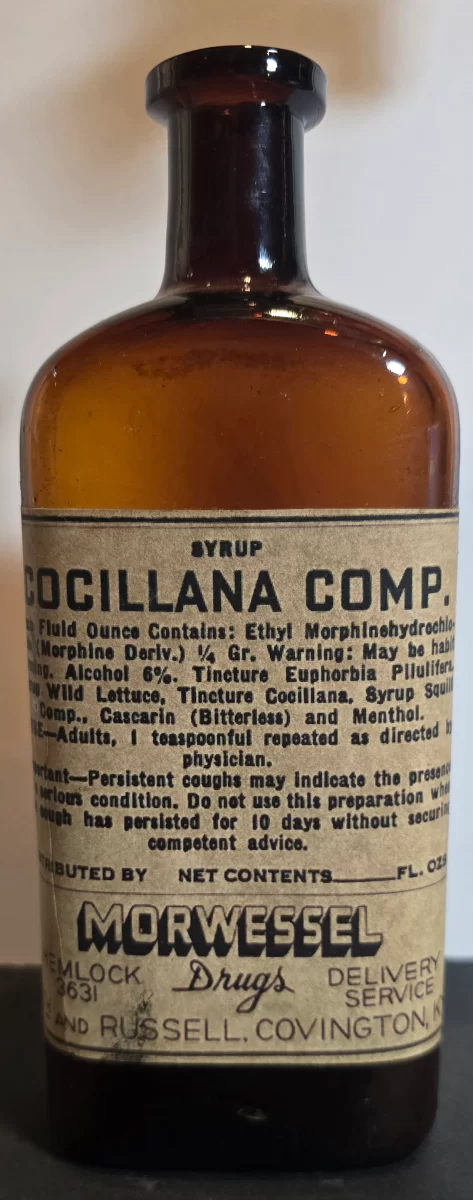
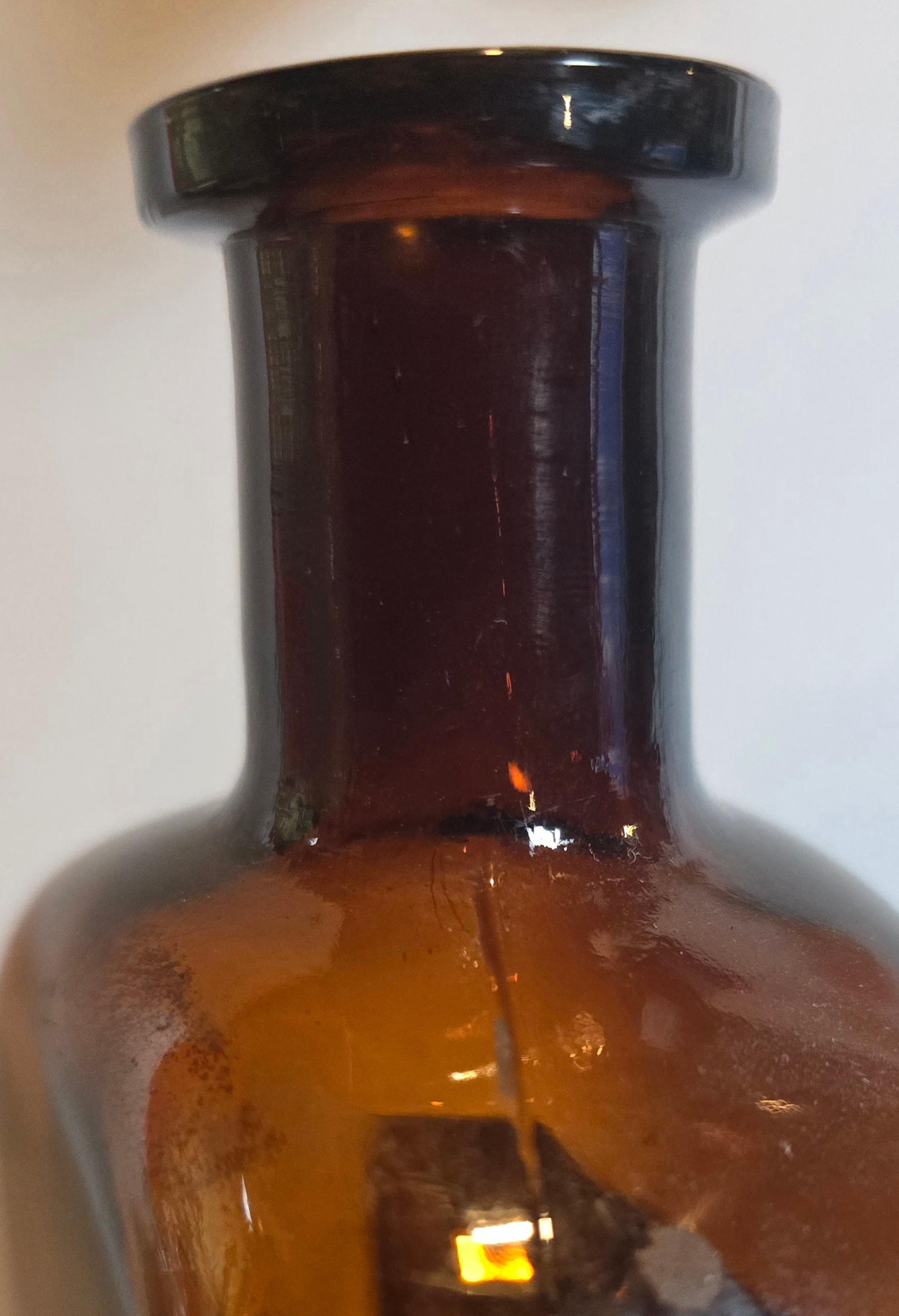
This amber glass bottle once contained Syrup Cocillana Compound, a widely dispensed narcotic cough syrup of the early–mid 20th century. Each fluid ounce contained ethyl morphine hydrochloride (a morphine derivative), along with euphorbia pilulifera, wild lettuce, cocillana bark tincture, syrup of squill, cascarin, menthol, and six percent alcohol. Marketed as a soothing expectorant and cough suppressant, Cocillana Compound was a popular proprietary formula used by pharmacies nationwide.
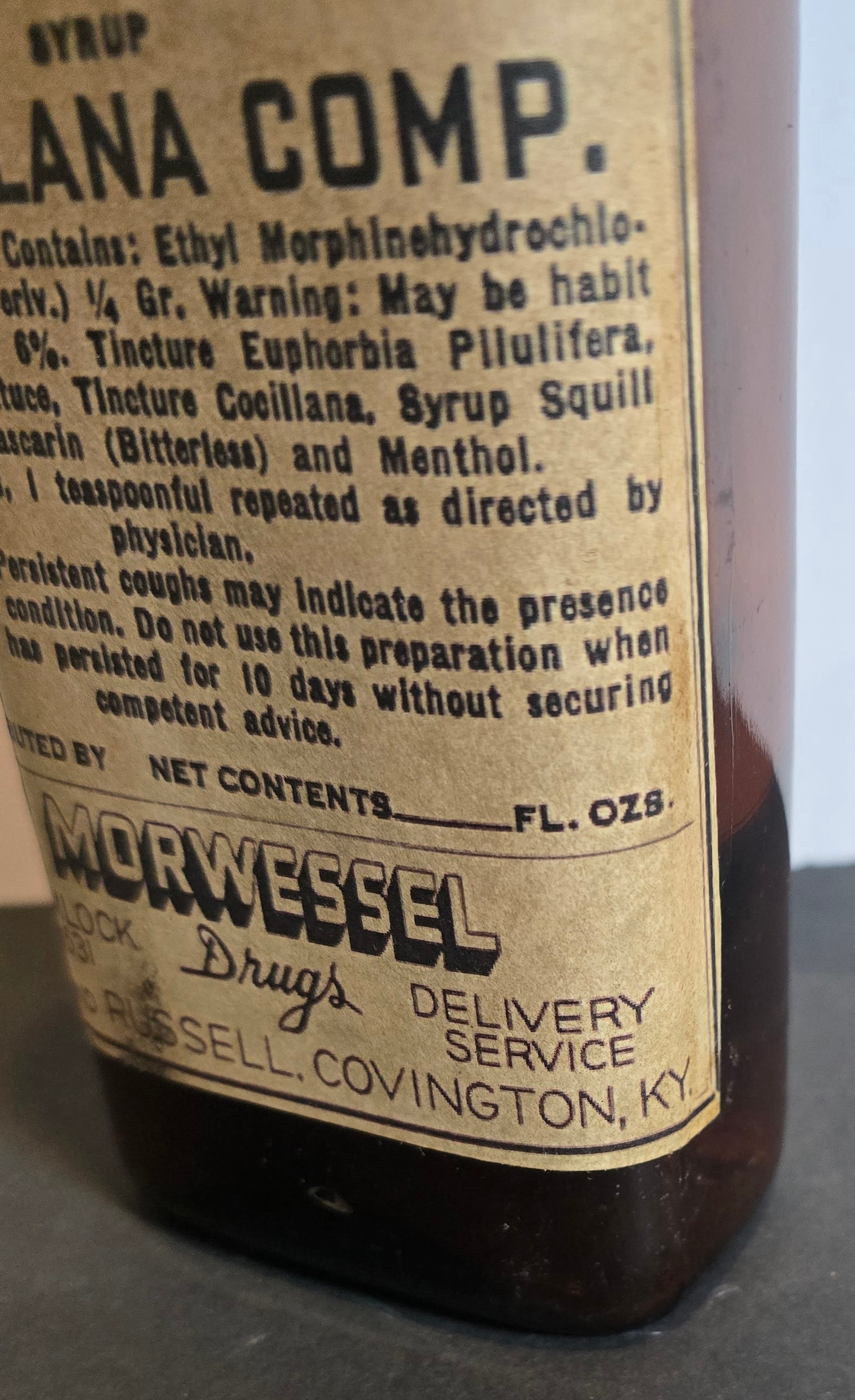
The label from Morwessel Drugs, located at 6th and Russell, Covington, Kentucky, notes:
“Warning: May be habit-forming. Persistent coughs may indicate a serious condition.”
Such phrasing reflects the transitional era of pharmaceutical regulation—after the 1914 Harrison Narcotics Act but before the more stringent labeling standards of the late 1930s.
Condition
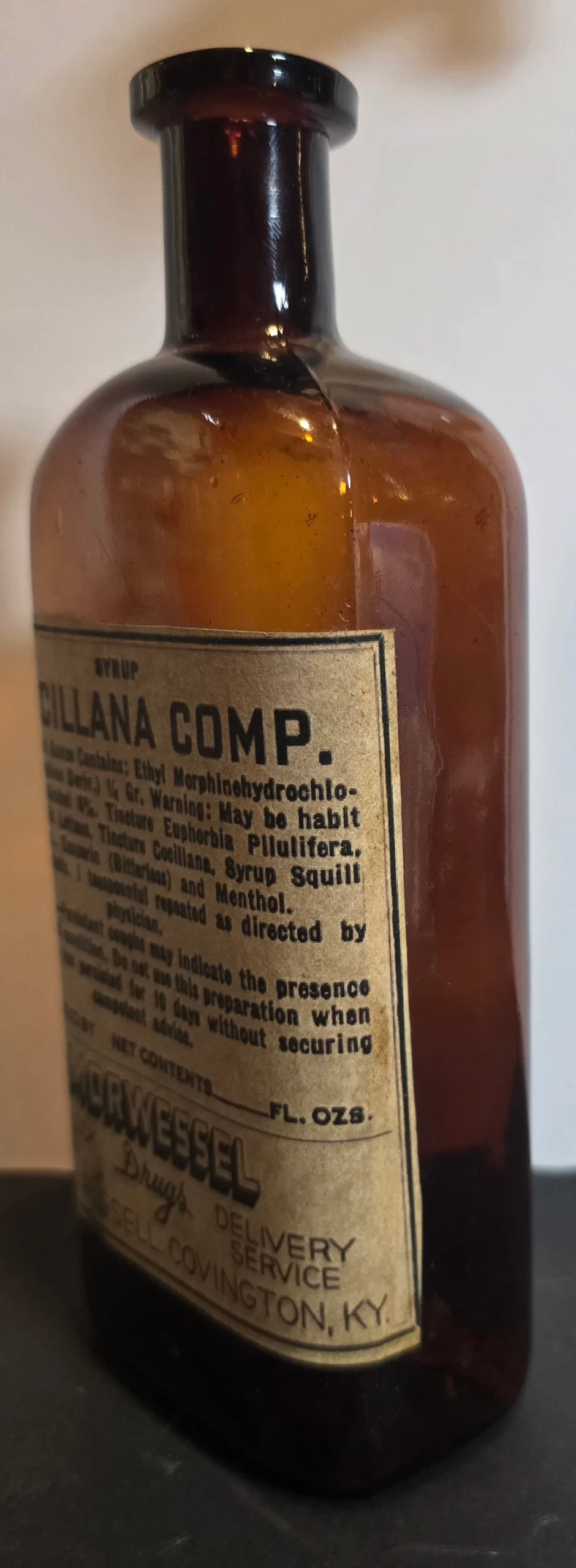
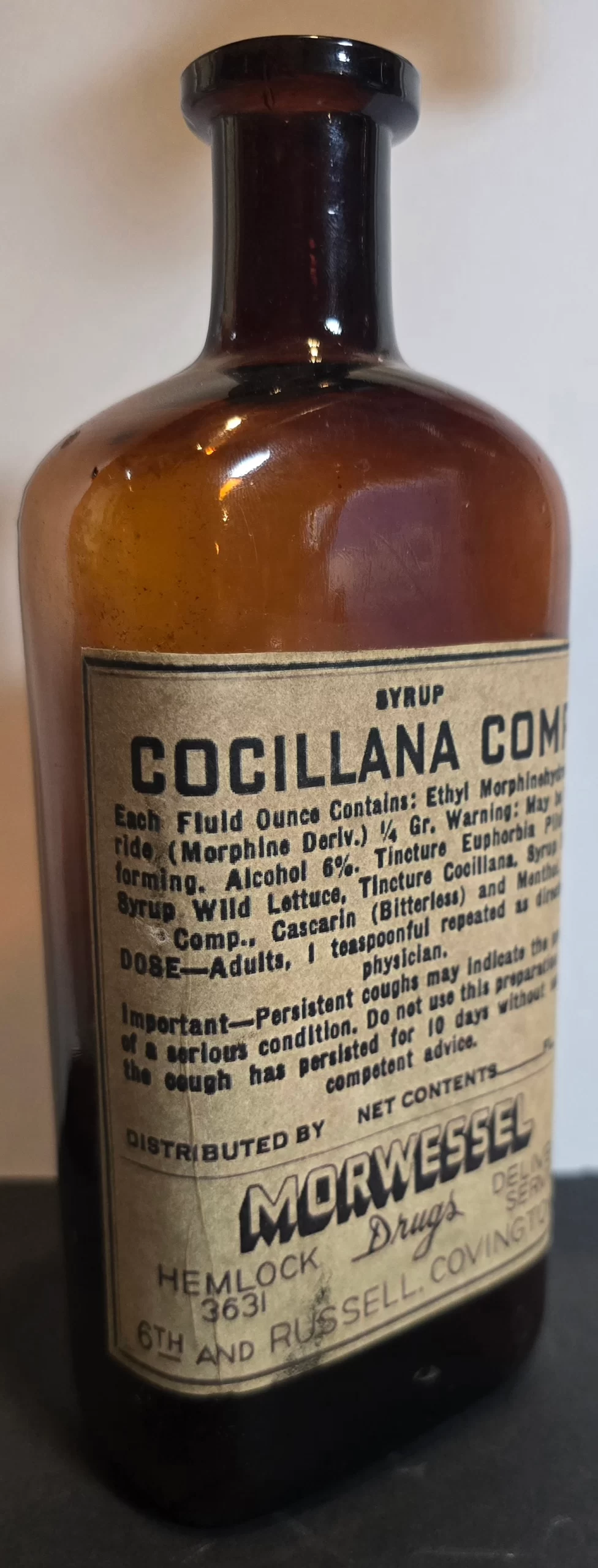
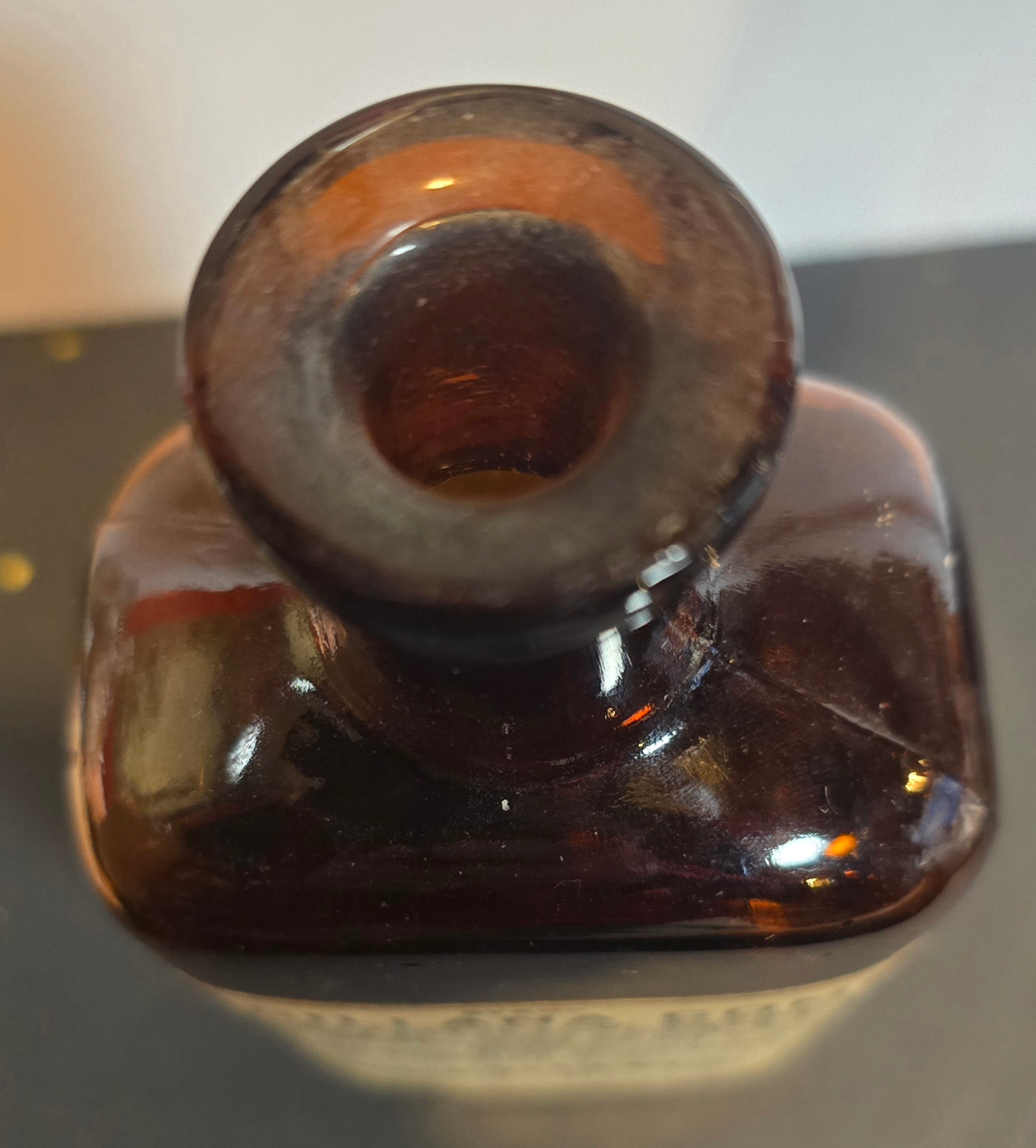
Excellent overall. Original label intact with minimal discoloration. Bottle glass shows a clean seam line and applied lip with minor internal residue typical of age.
Gallery

Historical context
Cocillana bark, derived from Guarea rusbyi, was first introduced to Western medicine in the late 1800s as a botanical expectorant similar to ipecac. When combined with opiate derivatives and alcohol, it became a mainstay in prescription cough syrups throughout the early 20th century. By the 1950s, ethylmorphine preparations like this were gradually phased out under tightening narcotic control laws.
Curious Facts, Ephemera, and Trivia
Cocillana syrup persisted in the National Formulary well into the 1940s.
“Ethylmorphine hydrochloride,” sometimes called dionine, was favored for being less potent than morphine yet still effective for cough suppression.
The inclusion of euphorbia and wild lettuce hints at Victorian herbalism’s influence on later pharmaceutical compounding.
Excerpt
“Important—Persistent coughs may indicate the presence of a serious condition. Do not use this preparation when the cough has persisted for 10 days without securing competent advice.”
Why it is in the Cabinet
This bottle exemplifies the intersection of herbal and narcotic medicine in American pharmacy practice before modern regulation. The Covington, Kentucky label gives it valuable local provenance, representing a period when neighborhood drugstores dispensed potent remedies under their own branding.
Support Dr. Bebout’s Cabinet of Medical Curiosities
If you enjoy the history, the oddities, and the effort, help keep this cabinet open. Every little bit helps preserve and share the strange wonders of medicine's past.
Buy Me a Ko-fi ☕ Buy Me a Coffee ☕ Tip via PayPal 💵