
Title
Dr. Jayne’s “The Morning Prayer” Trade Card
Author
Dr. D. Jayne
Image
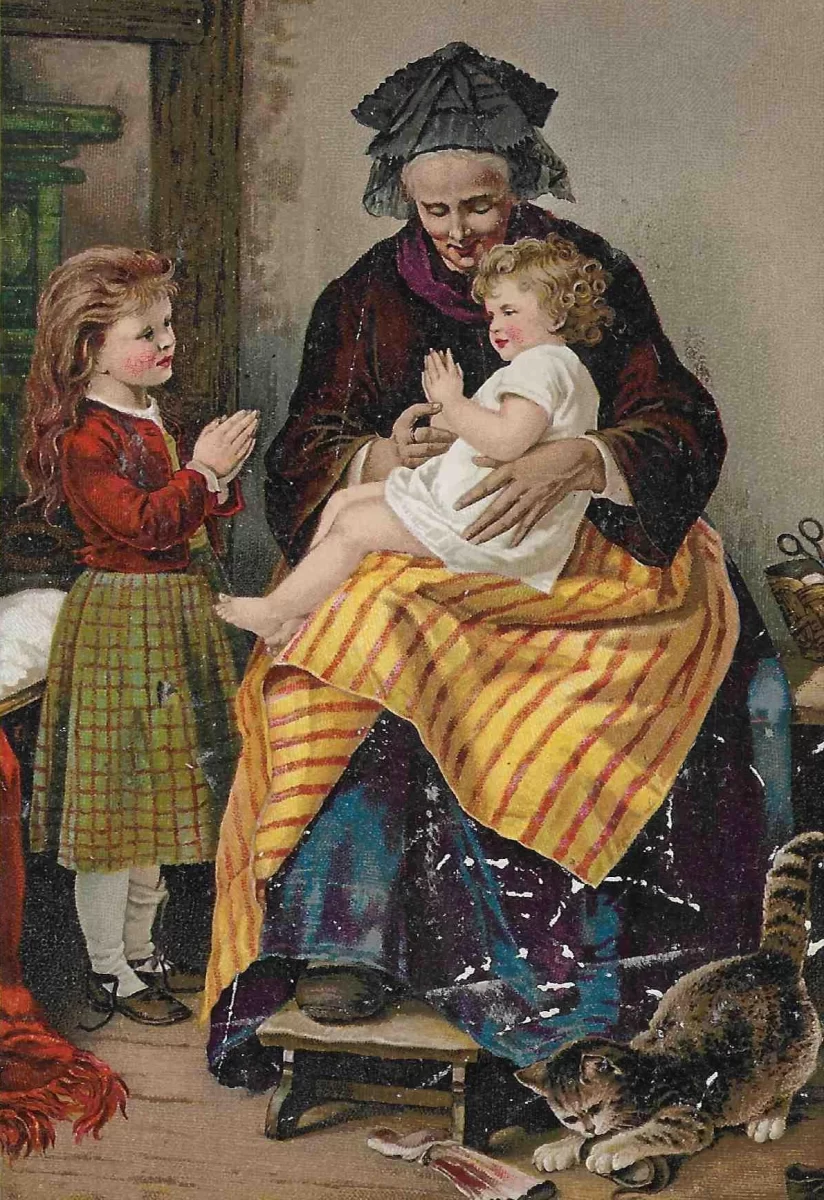
Description
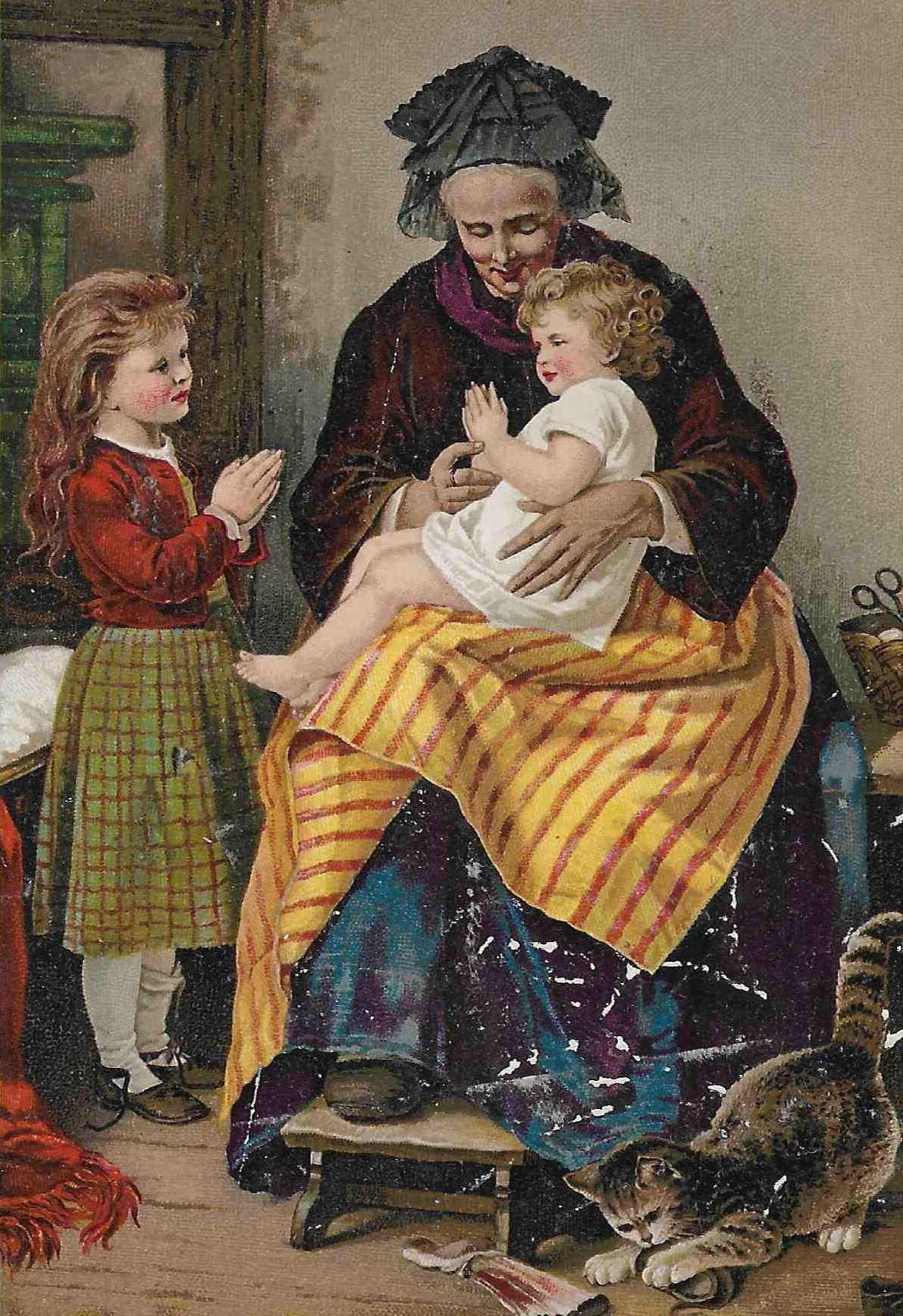
This chromolithographed advertising card, titled “The Morning Prayer,” was created by artist R. Epp as part of the eleventh entry in Dr. D. Jayne’s Album Card Series. The sentimental domestic scene depicts a mother holding a small child while an older daughter kneels beside them in prayer. A cat lounges above them, completing the cozy image of family devotion. The reverse side promotes Dr. D. Jayne’s Carminative Balsam and Dr. Jayne’s Tonic Vermifuge, two widely distributed 19th-century patent medicines marketed for digestive and intestinal ailments.
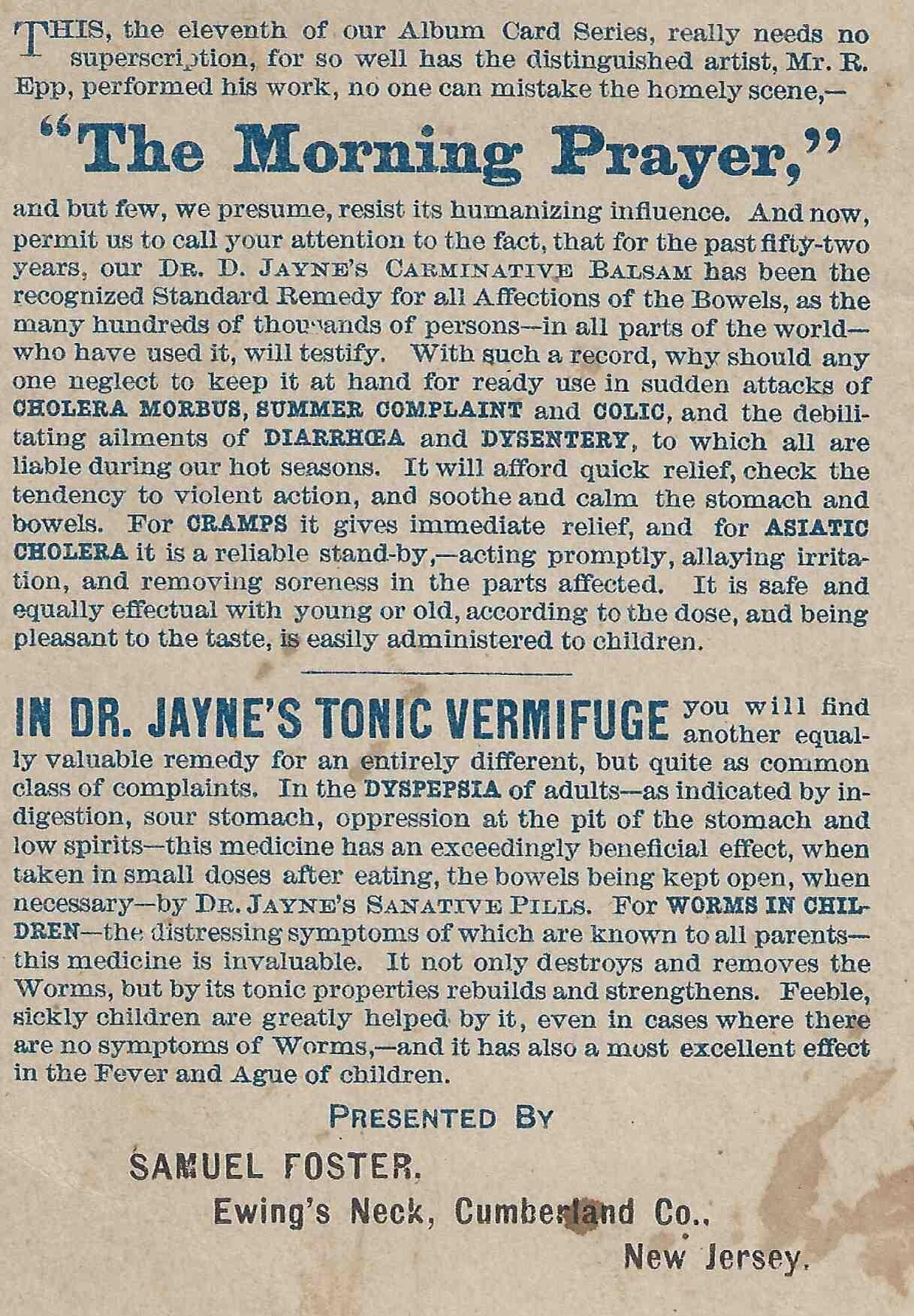
Jayne’s Carminative Balsam was advertised as a remedy for cholera morbus, summer complaint, colic, diarrhea, and dysentery, claiming to soothe the stomach and bowels. The Tonic Vermifuge was presented as both a treatment for worms in children and a general digestive tonic for adults suffering from dyspepsia or “low spirits.” The text emphasizes Jayne’s products as safe for all ages and palatable for children, a common reassurance in an era when many patent medicines contained alcohol or opiates.
Condition
Light surface wear and spotting, with some scuffing visible on the image side. Colors remain vivid with only minor edge softening typical of age.
Gallery
Historical context
Dr. David Jayne (1799–1866) of Philadelphia was one of the most successful patent-medicine manufacturers of the 19th century. His company, Dr. D. Jayne & Son, became nationally recognized for its extensive advertising campaigns, colorful trade cards, and bold medical claims. The firm’s building, Jayne’s Hall, was a Philadelphia landmark and one of the city’s earliest skyscrapers.
Jayne’s product line included tonics, balsams, expectorants, and purgatives—all sold through pharmacies and traveling agents across the United States. The Album Card Series, of which “The Morning Prayer” was part, featured sentimental and moral domestic scenes to lend respectability and warmth to his medical brand.
Curious Facts, Ephemera, and Trivia
R. Epp, credited on the card, was a European artist known for his genre paintings of home life, making his work ideal for moral-themed advertising.
Jayne’s advertisements frequently cited decades of use (“for the past fifty-two years”) to suggest scientific authority and long-standing trust.
“Vermifuge” was a common 19th-century term for a worm expellant, derived from the Latin vermis (worm) and fugare (to drive away).
Excerpt
“For the past fifty-two years, Dr. D. Jayne’s Carminative Balsam has been the recognized Standard Remedy for all Affections of the Bowels.” (from card reverse)
Why it is in the Cabinet
This card represents the fusion of art, morality, and commerce in late 19th-century medical advertising. The blend of religious imagery and medicinal claims reveals how marketers appealed to family values to promote patent drugs. It also exemplifies how companies like Jayne’s used printed ephemera to build brand identity long before the modern pharmaceutical era.
Support Dr. Bebout’s Cabinet of Medical Curiosities
If you enjoy the history, the oddities, and the effort, help keep this cabinet open. Every little bit helps preserve and share the strange wonders of medicine's past.
Buy Me a Ko-fi ☕ Buy Me a Coffee ☕ Tip via PayPal 💵