
Title
Aesculus (Aesculus glabra)
Author
Lloyd Brothers, Cincinnati
Image
Description
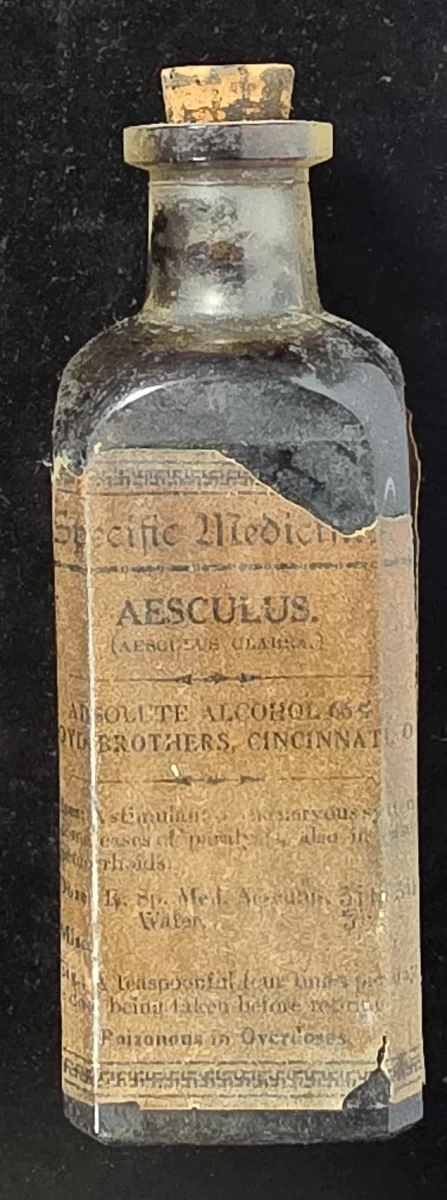
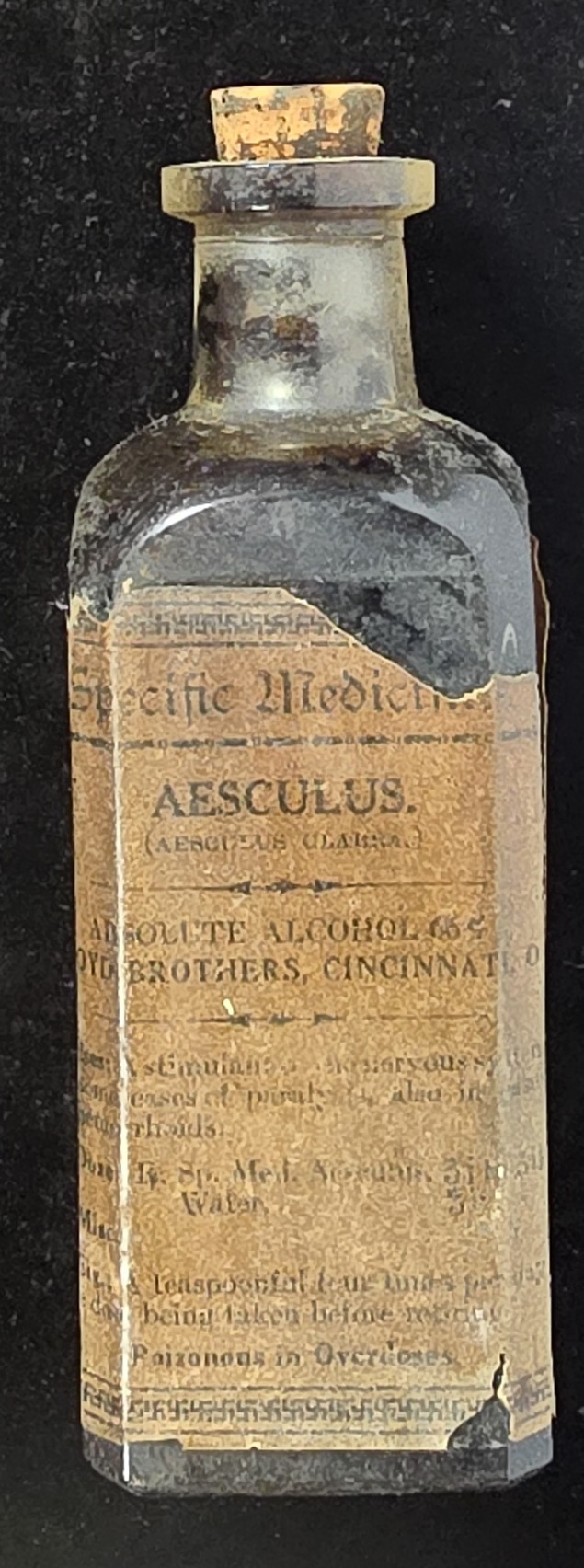
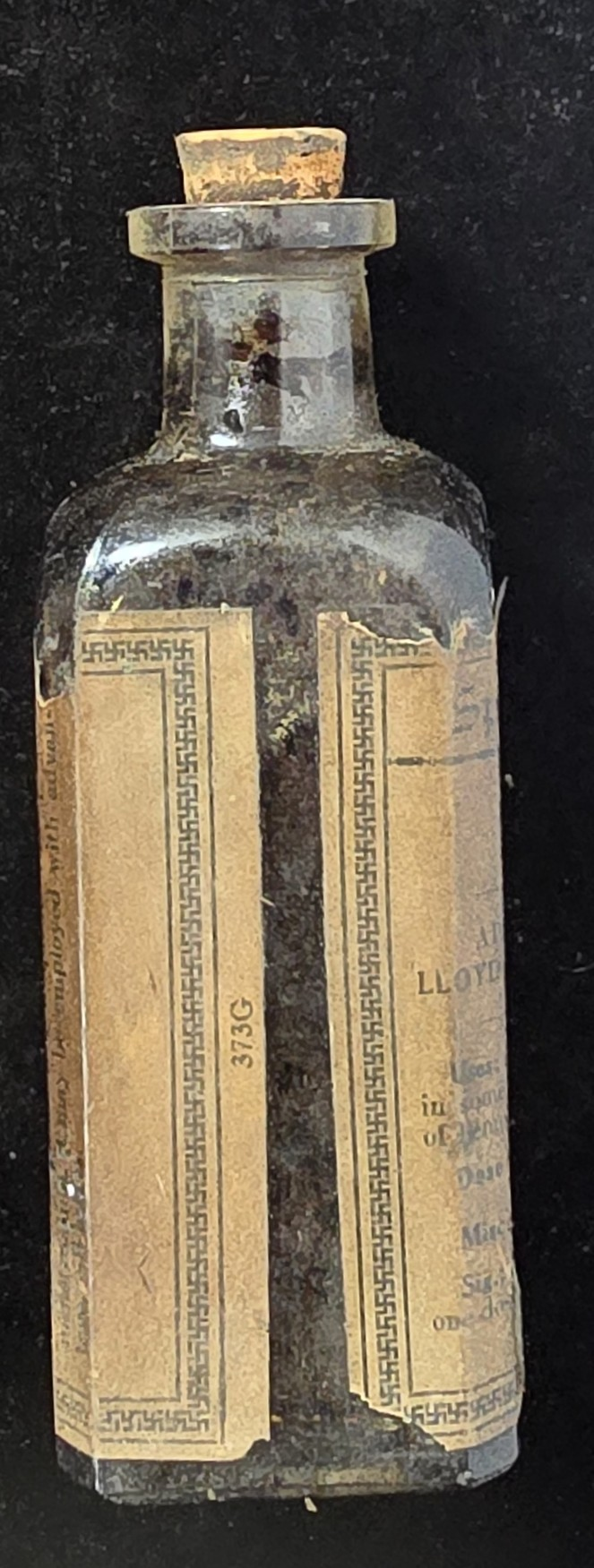
This small brown glass bottle labeled “Aesculus (Aesculus glabra)” was produced by Lloyd Brothers, Pharmacists, of Cincinnati, Ohio. The label identifies it as a Specific Medicine containing Aesculus glabra (Ohio buckeye) in absolute alcohol 65%, a tincture once used in Eclectic and early American medicine. The preparation was indicated for disorders of the circulatory and nervous systems, particularly those involving sluggish venous return or portal congestion.
The label text notes:
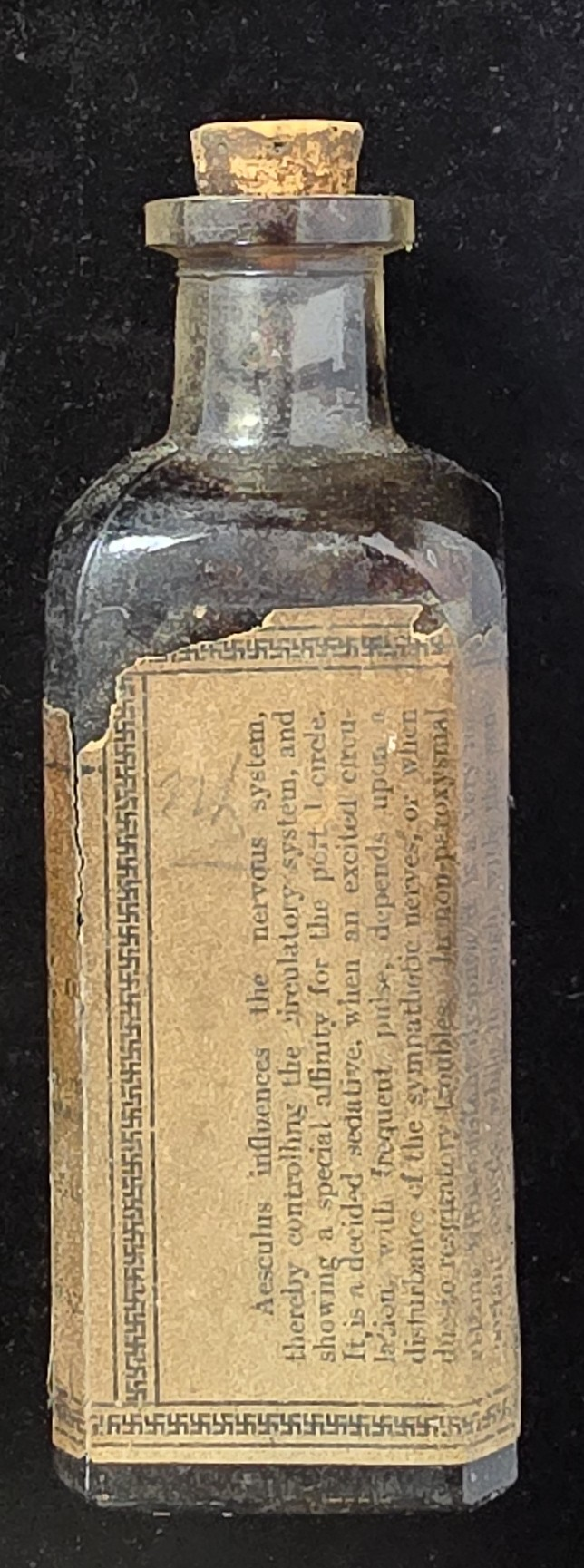
“Aesculus influences the nervous system, thereby controlling the circulatory system… showing a special affinity for the portal circulation.”
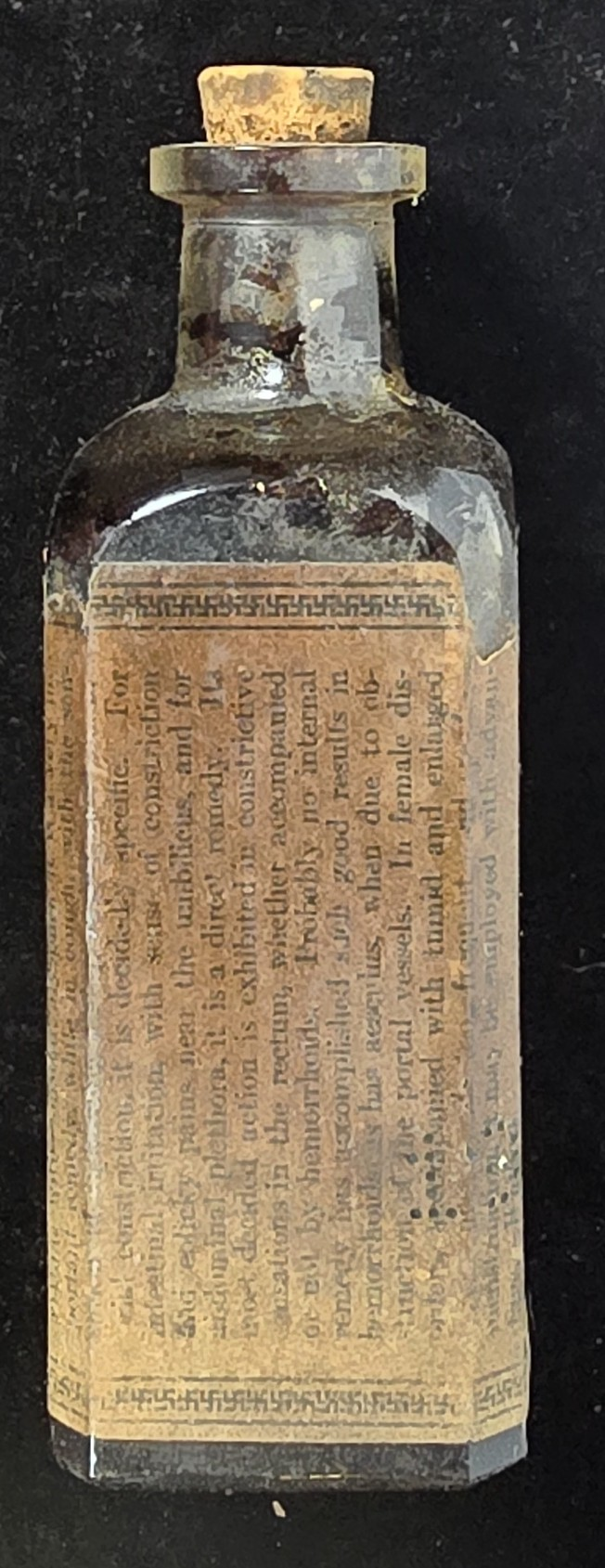
The back label describes its use in hemorrhoidal, venous, and female pelvic conditions, especially where congestion or “constrictive fullness” was present. It cautions that it was “poisonous in overdose.”
Condition
Bottle is complete with original cork and nearly intact multi-panel paper label featuring Lloyd Brothers’ distinct Greek key border design. Moderate staining and age-related darkening are present, with partial label loss at edges and minor paper chipping. The glass itself remains clear and undamaged.
Gallery
Historical context
Lloyd Brothers, established in Cincinnati in 1870 by John Uri Lloyd and Curtis Gates Lloyd, became a major manufacturer of Specific Medicines used by Eclectic physicians. These concentrated plant extracts were produced under precise alcohol strengths and were marketed as reliable, standardized remedies during the late 19th and early 20th centuries.
Aesculus glabra, or Ohio buckeye, was historically valued for its purported venotonic and anti-congestive properties, though later recognized as toxic due to its saponin and glycoside content.
Curious Facts, Ephemera, and Trivia
The Lloyd Brothers’ “Specific Medicines” were a hallmark of the Eclectic medical movement, which emphasized botanical therapies and gentle treatment approaches.
The use of Aesculus glabra and Aesculus hippocastanum (horse chestnut) persists in some modern herbal traditions for varicose veins and hemorrhoids—though under much stricter dosage control.
The bottle’s paper label uses the distinctive repeating geometric border found on many Lloyd Brothers preparations between 1890 and 1915, aiding in dating.
Excerpt
“It is decidedly sedative when an excited circulation with frequent pulse depends upon disturbance of the sympathetic nerves.”
Why it is in the Cabinet
This bottle exemplifies the sophisticated packaging and pharmacological experimentation of the Eclectic era, when plant-based remedies were produced to scientific standards by small pharmaceutical laboratories. It represents the transition from traditional herbal practice to standardized early industrial medicine.
Support Dr. Bebout’s Cabinet of Medical Curiosities
If you enjoy the history, the oddities, and the effort, help keep this cabinet open. Every little bit helps preserve and share the strange wonders of medicine's past.
Buy Me a Ko-fi ☕ Buy Me a Coffee ☕ Tip via PayPal 💵