
Title
Wyeth’s Buchu Cordial (No Sugar)
Author
John Wyeth & Brother, Philadelphia
Image
Description
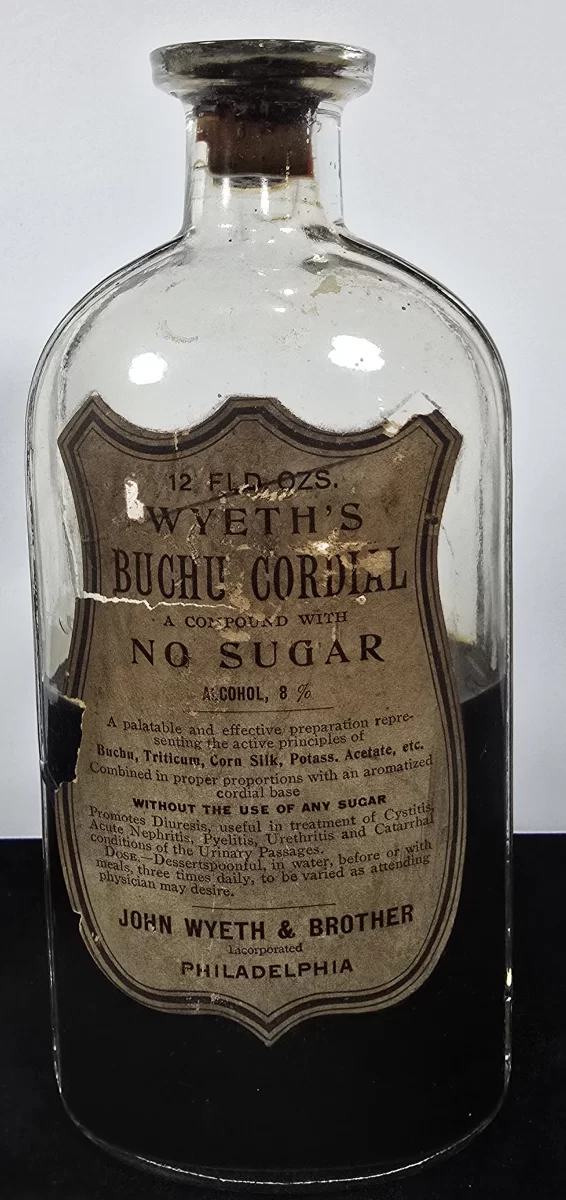
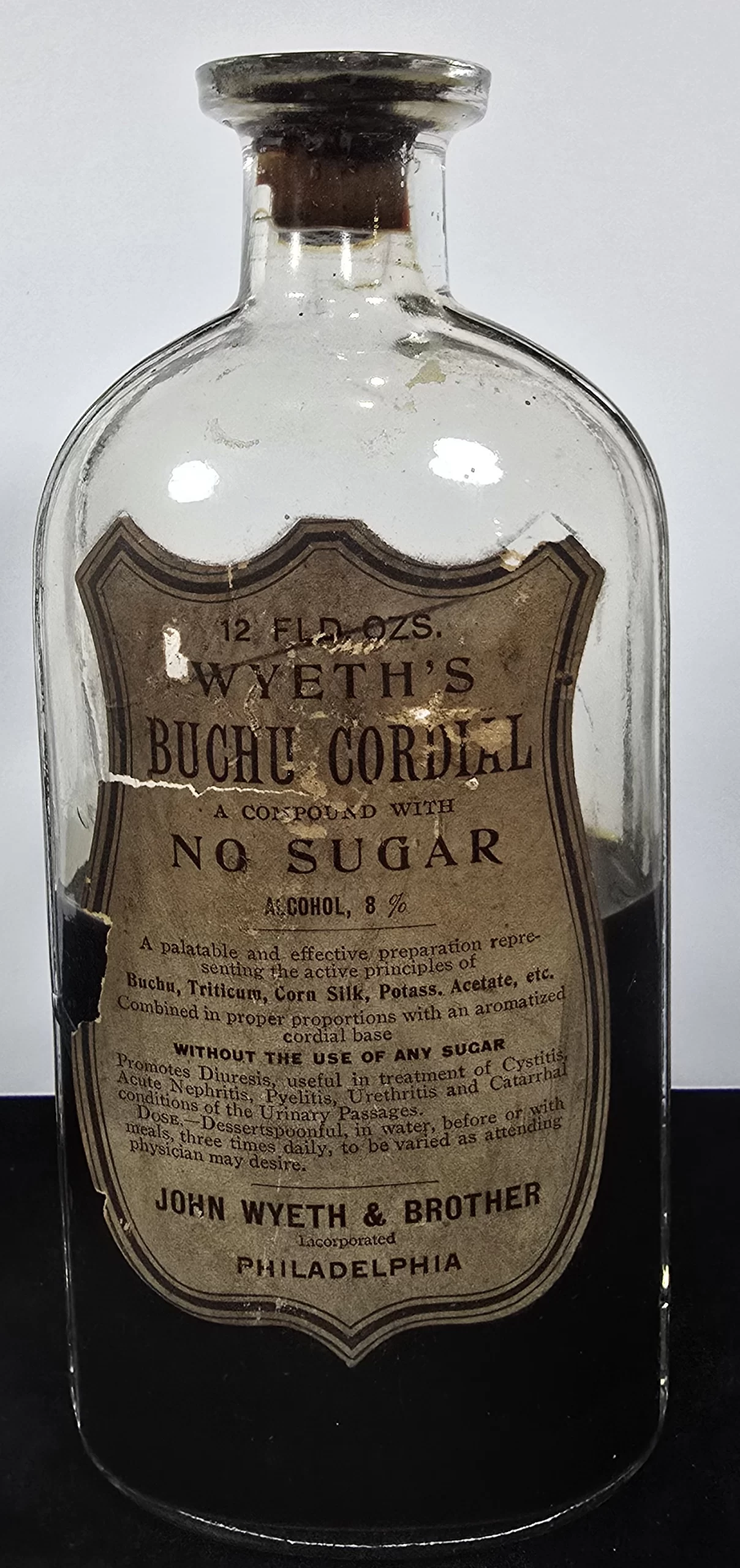
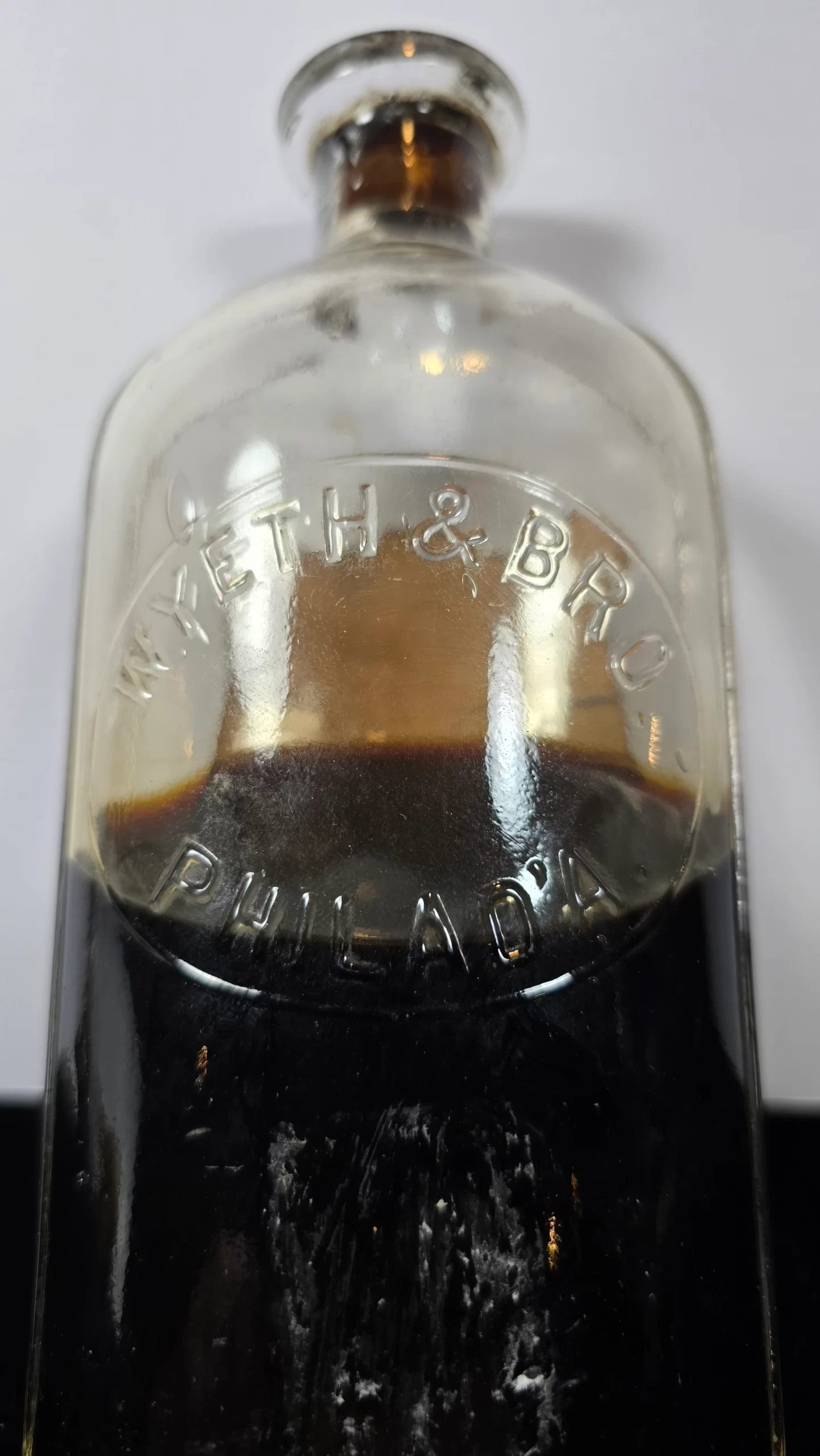
A clear 12-ounce glass bottle of Wyeth’s Buchu Cordial (No Sugar), manufactured by John Wyeth & Brother of Philadelphia during the late 19th to early 20th century. The paper label remains largely intact and details the composition—buchu, triticum, corn silk, potassium acetate, and an aromatized cordial base containing 8% alcohol. It was promoted as a diuretic and urinary remedy for cystitis, nephritis, pyelitis, urethritis, and other catarrhal disorders of the urinary tract. The reverse is embossed “WYETH & BRO / PHILA’D’A.”
Condition
Complete and legible label with moderate staining and minor edge loss; contents approximately one-third full. Glass remains clear with crisp embossing.
Gallery
Historical context
Buchu, derived from Barosma betulina of South Africa, was widely used as a diuretic and urinary antiseptic in the 19th century. Wyeth’s Buchu Cordial illustrates the evolution from patent medicines toward standardized pharmaceuticals after the Pure Food and Drug Act of 1906. The “No Sugar” variant likely targeted diabetic patients decades before insulin therapy became available in 1922. John Wyeth & Brother would later grow into one of America’s largest pharmaceutical firms and ultimately become part of Pfizer.
Curious Facts, Ephemera, and Trivia
The 8% alcohol content gave this preparation mild stimulant properties. Period advertisements assured consumers that it was “palatable and invigorating,” walking a careful line between medical respectability and tonic appeal.
Excerpt
“A palatable and effective preparation representing the active principles of Buchu, Triticum, Corn Silk, Potass. Acetate, etc., combined in proper proportions with an aromatized cordial base… promotes diuresis, useful in the treatment of cystitis, acute nephritis, pyelitis, urethritis and catarrhal conditions of the urinary passages.” — from original label.
Why it is in the Cabinet
This bottle exemplifies the transitional phase between Victorian patent remedies and early regulated pharmaceuticals. Its survival with both label and remaining contents provides a tangible record of Wyeth’s early proprietary line and the marketing of urinary tonics before the advent of modern antibiotics.
Support Dr. Bebout’s Cabinet of Medical Curiosities
If you enjoy the history, the oddities, and the effort, help keep this cabinet open. Every little bit helps preserve and share the strange wonders of medicine's past.
Buy Me a Ko-fi ☕ Buy Me a Coffee ☕ Tip via PayPal 💵