
Title
Ac. Salicyl. Apothecary Jar (Acidum Salicylicum)
Author
Unknown European Manufacturer — circa early 20th century
Image
Description
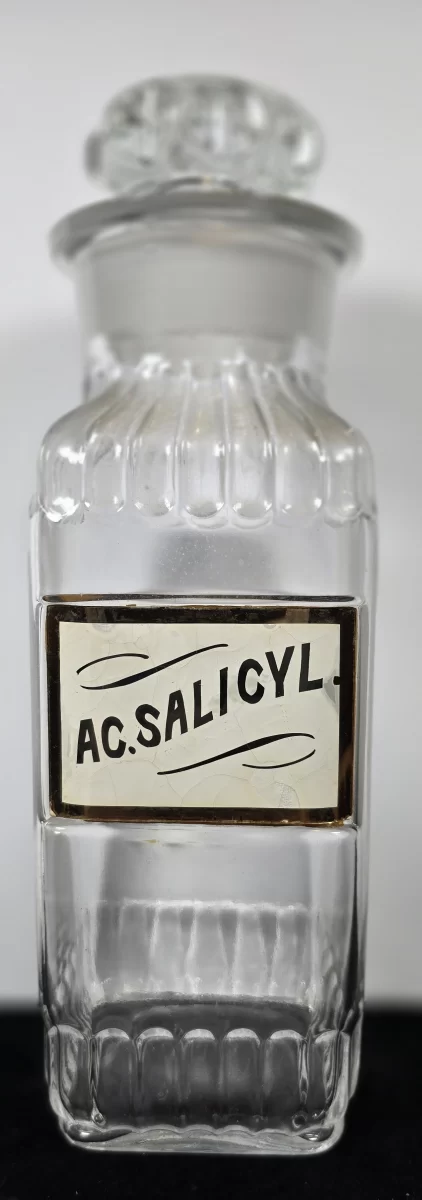
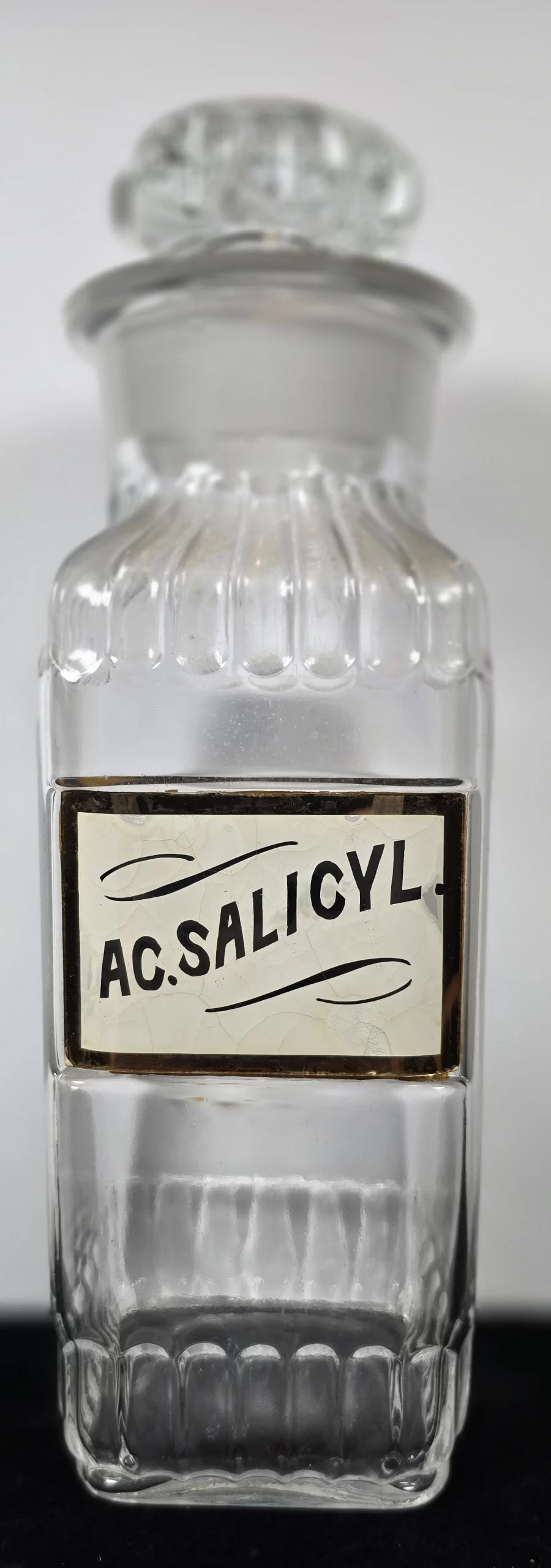
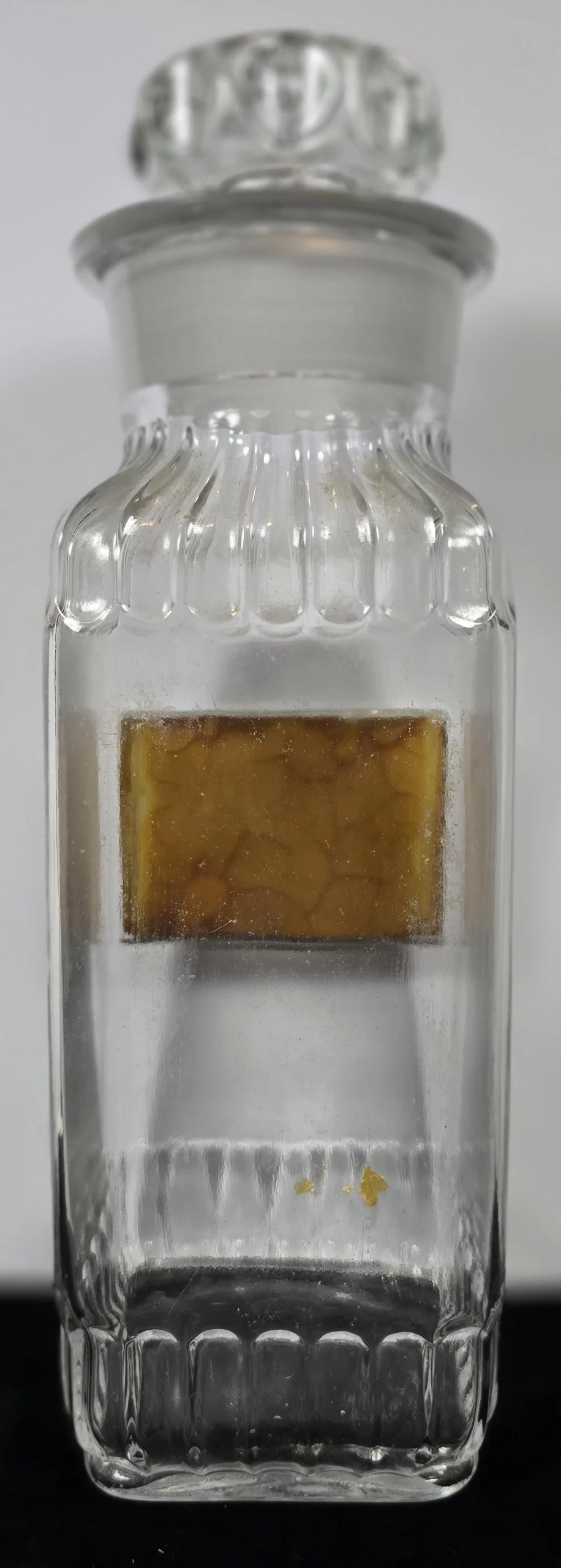
A striking ribbed clear glass apothecary jar labeled “Ac. Salicyl.”, the abbreviation for Acidum Salicylicum — Salicylic Acid.
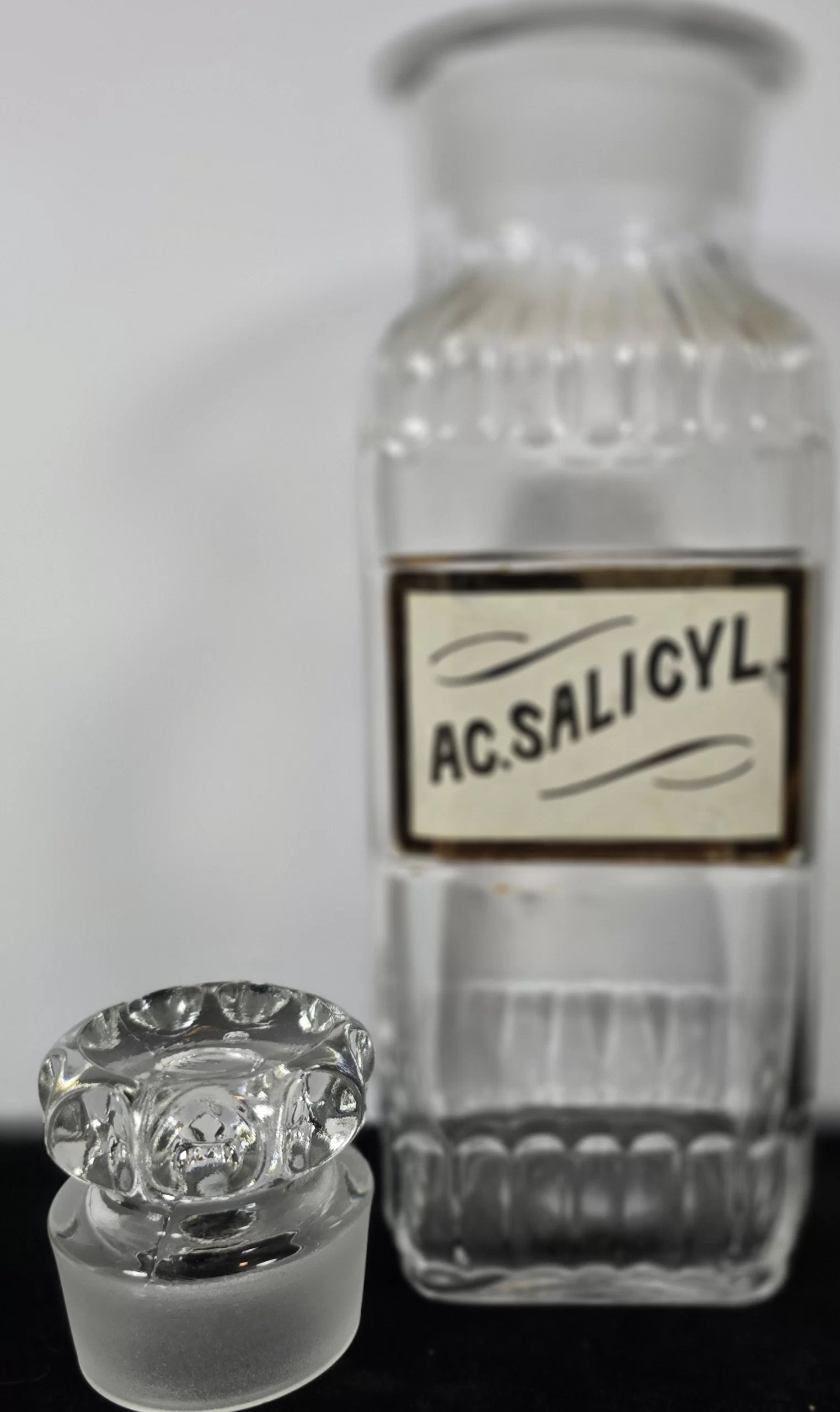
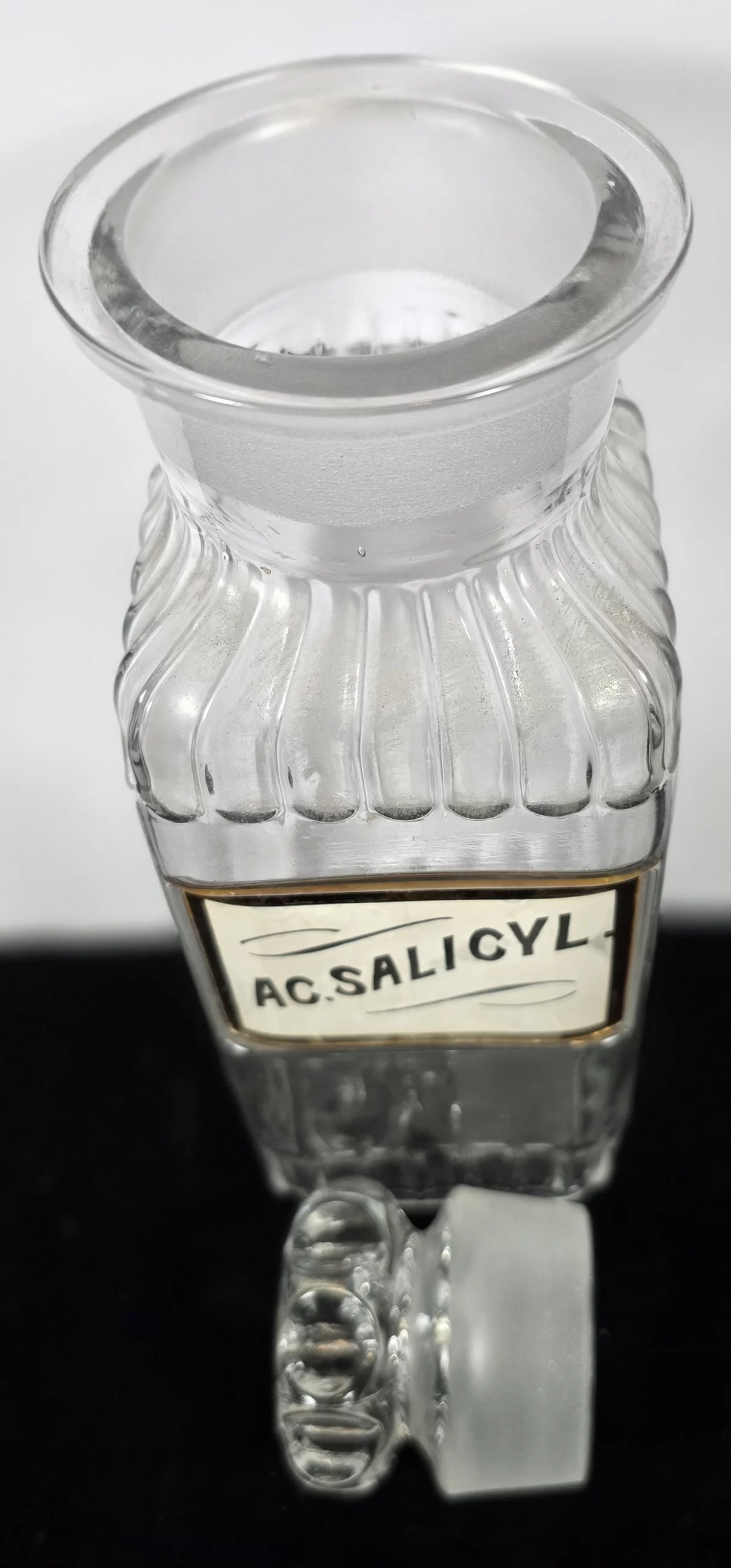
The front bears a white enameled label with black lettering and decorative flourishes framed in gold. The jar features a faceted glass stopper with a ground base, paired with a square body and fluted shoulders typical of continental European pharmacy glassware from the early 1900s.
Salicylic acid was used both as a medicinal antiseptic and a chemical precursor to aspirin (acetylsalicylic acid). Apothecaries stored crystalline salicylic acid for compounding topical solutions, powders, and liniments for skin conditions such as acne, corns, and psoriasis.
Condition
Excellent overall. The glass is clean and clear, stopper fits snugly, and the enameled label shows only minor age cracking (craquelure) with no flaking or loss.
Gallery
Historical context
Acidum Salicylicum was first isolated from willow bark (Salix alba) and meadowsweet (Filipendula ulmaria) in the early 19th century, marking a pivotal moment in pharmaceutical chemistry.
By the 1880s, synthetic salicylic acid had replaced natural extraction, and it became a cornerstone compound in both dermatology and analgesia.
When acetylated, it produced acetylsalicylic acid—better known as aspirin, patented by Bayer in 1899.
Apothecary jars labeled Ac. Salicyl. were common fixtures in early 20th-century pharmacies, symbolizing the shift from herbal materia medica to standardized chemical pharmacology.
Curious Facts, Ephemera, and Trivia
Apothecaries often abbreviated acids with “Ac.” on labels to save space while maintaining the Latin naming standard.
Salicylic acid was one of the earliest widely adopted keratolytic agents, still used today in dermatologic preparations.
Its discovery and later modification into aspirin marked one of the first successes of industrial pharmaceutical chemistry.
Ribbed or fluted bottles like this one helped prevent slippage and were often reserved for stronger or more caustic compounds.
Excerpt
“Acidum Salicylicum—obtained synthetically from phenol; used as an antiseptic and keratolytic, and as a source of acetylsalicylic acid.” — U.S. Dispensatory, 1918 edition
Why it is in the Cabinet
This jar represents the bridge between botanical medicine and synthetic chemistry—a vessel for one of the most transformative discoveries in pharmaceutical history. The elegantly ribbed glasswork and classic Latin label epitomize the early 20th-century apothecary aesthetic and scientific ambition.
Support Dr. Bebout’s Cabinet of Medical Curiosities
If you enjoy the history, the oddities, and the effort, help keep this cabinet open. Every little bit helps preserve and share the strange wonders of medicine's past.
Buy Me a Ko-fi ☕ Buy Me a Coffee ☕ Tip via PayPal 💵