
Title
Tr. Cinnam. Apothecary Bottle (Tinctura Cinnamomi)
Author
Unknown European or American Manufacturer — circa late 19th to early 20th century
Image
Description
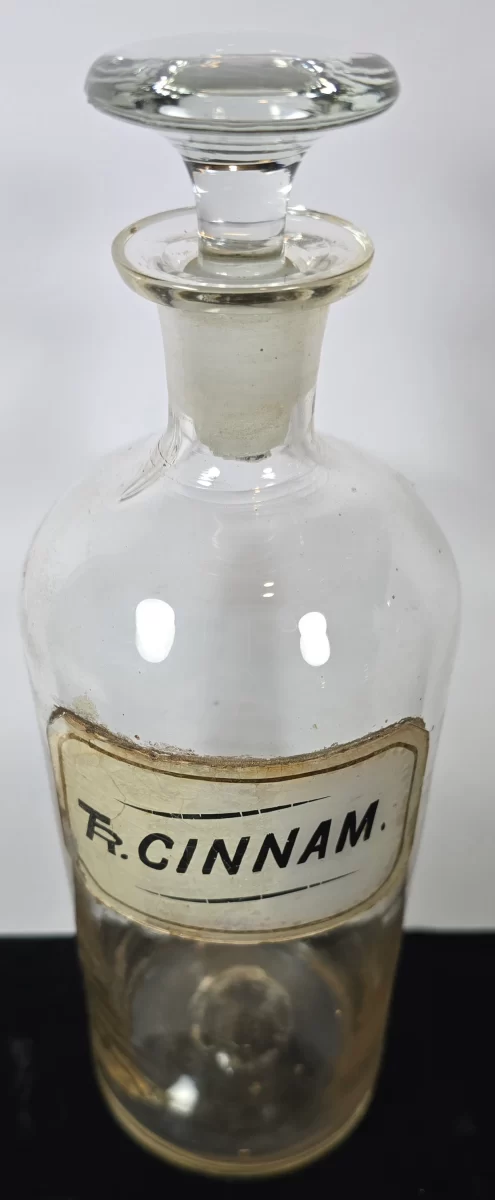
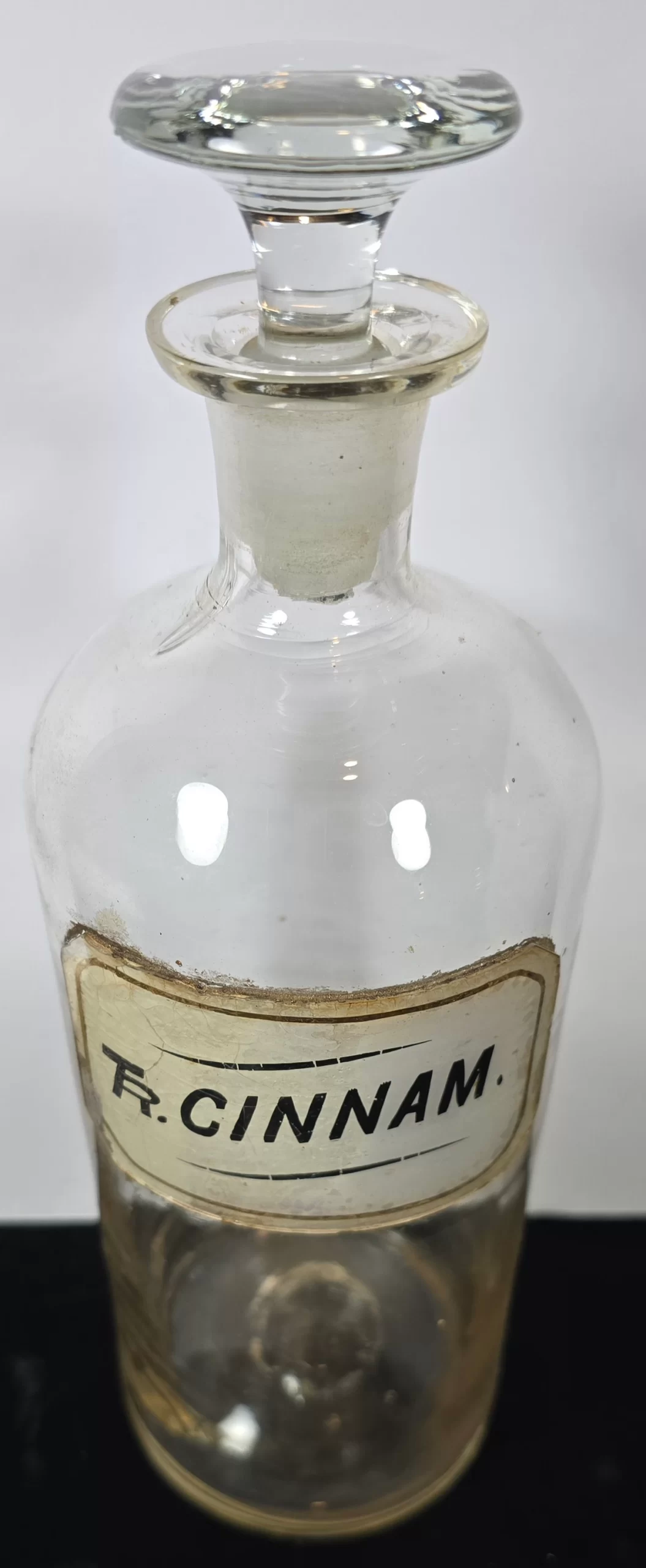
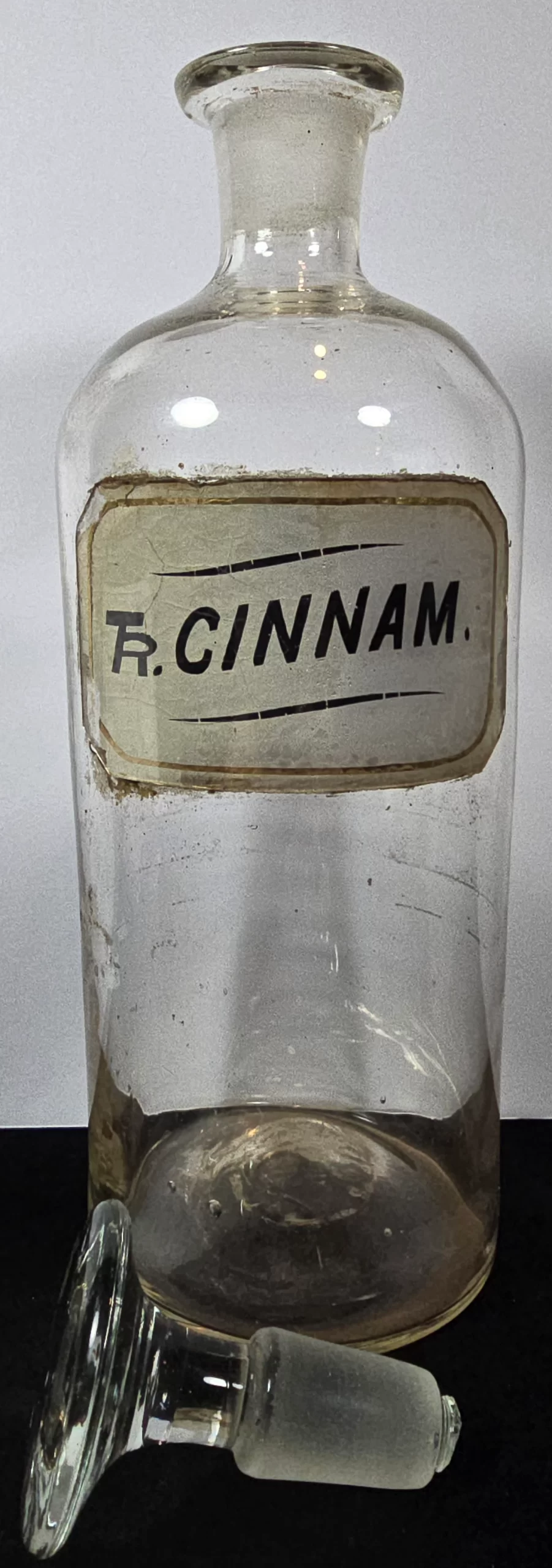
A clear glass apothecary bottle with ground stopper and enameled label reading “Tr. Cinnam.”, an abbreviation for Tinctura Cinnamomi — Tincture of Cinnamon.
The label is white with black serif lettering and a simple double-line border, slightly crazed with age. The bottle’s design features a rolled lip, ground neck and stopper, and a polished pontil base, indicative of professional apothecary ware from the late 19th or early 20th century.
Tincture of Cinnamon was a warming carminative and stimulant, used medicinally to aid digestion, relieve nausea, and mask the unpleasant taste of other compounds in prescriptions. Apothecaries often stocked it as both a flavoring and an additive to stomach tonics or bitters.
Condition
Very good antique condition. Label exhibits mild discoloration and craquelure consistent with age; glass is clear with light internal residue. Stopper is original and well-matched to the bottle.
Gallery
Historical context
Tinctura Cinnamomi (U.S. Pharmacopoeia and British Pharmacopoeia) was prepared by macerating ground cinnamon bark (Cinnamomum zeylanicum or Cinnamomum cassia) in alcohol.
It was widely prescribed through the 1800s and early 1900s as both a digestive aid and flavoring agent.
The “Tr.” abbreviation (from Tinctura) and Latin nomenclature reflect the pharmaceutical Latin still in use in professional pharmacies well into the 20th century.
Cinnamon’s medicinal reputation dates back to ancient Egypt and the Greco-Roman era, when it was prized for its aromatic and antiseptic properties. Apothecaries considered it both a flavoring and therapeutic spice, bridging culinary and medical traditions.
Curious Facts, Ephemera, and Trivia
Apothecary tincture jars like this were arranged alphabetically along dispensary shelves, making Latin abbreviations both efficient and elegant.
Cinnamon tincture was frequently included in compound elixirs and “cordials”, lending a sweet, warming note that masked the bitterness of quinine, camphor, and iron tonics.
Early glass apothecary bottles were often imported from Bohemia or Belgium before American glassmakers perfected uniform mold production.
The abbreviation “Tr.” was eventually replaced by “Tinct.” on mid-century American labels.
Excerpt
“Tinctura Cinnamomi—aromatic, stimulant, and carminative. Used to correct the taste of disagreeable medicines and to promote gastric tone.” — The U.S. Dispensatory, 1918 edition
Why it is in the Cabinet
This bottle illustrates the timeless intersection of pharmacology and spice trade history — a medicinal tincture that also delighted the senses. The elegant Latin label and hand-ground stopper make it an exceptional representative of the apothecary’s art in transition from herbalism to modern chemistry.
Support Dr. Bebout’s Cabinet of Medical Curiosities
If you enjoy the history, the oddities, and the effort, help keep this cabinet open. Every little bit helps preserve and share the strange wonders of medicine's past.
Buy Me a Ko-fi ☕ Buy Me a Coffee ☕ Tip via PayPal 💵