
Title
1911 Antikamnia Tablets Calendar – “Alice”
Author
The Antikamnia Chemical Company, St. Louis, Missouri
Image
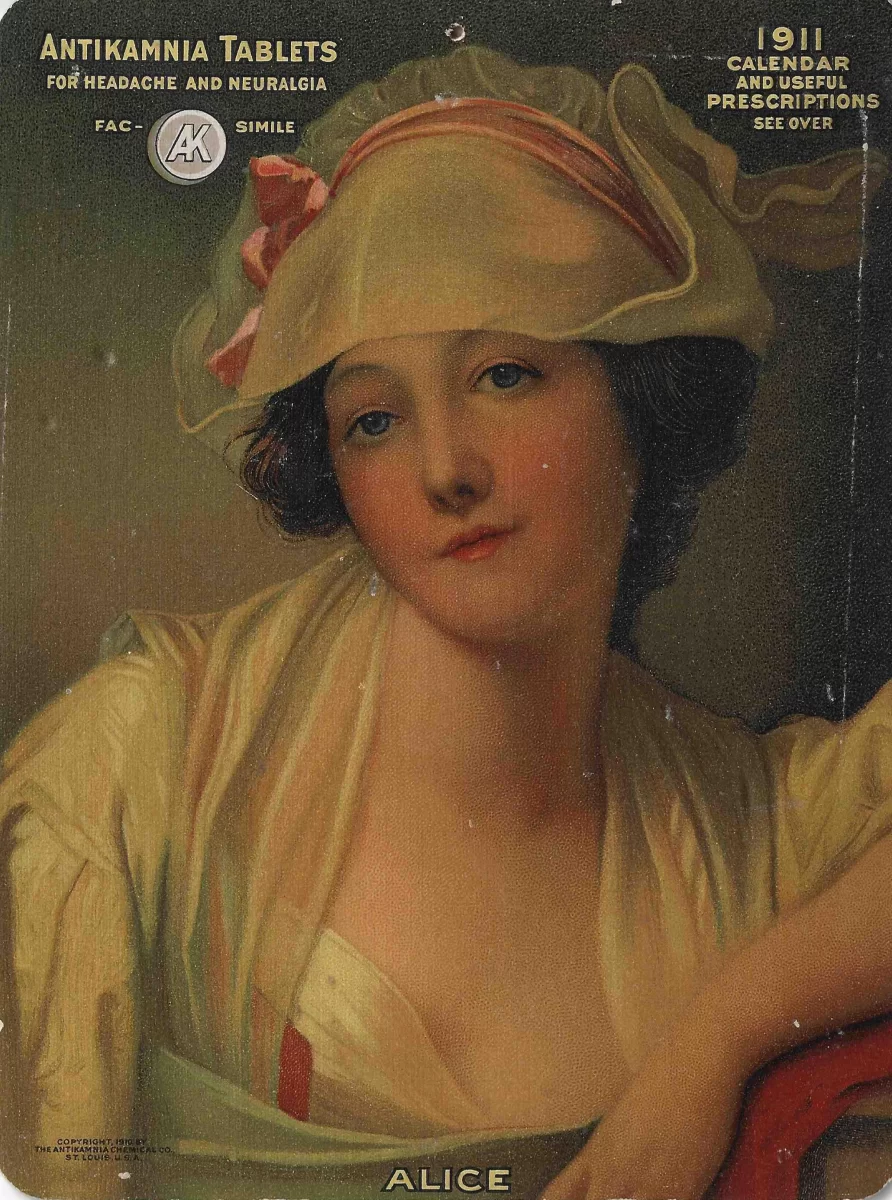
Description
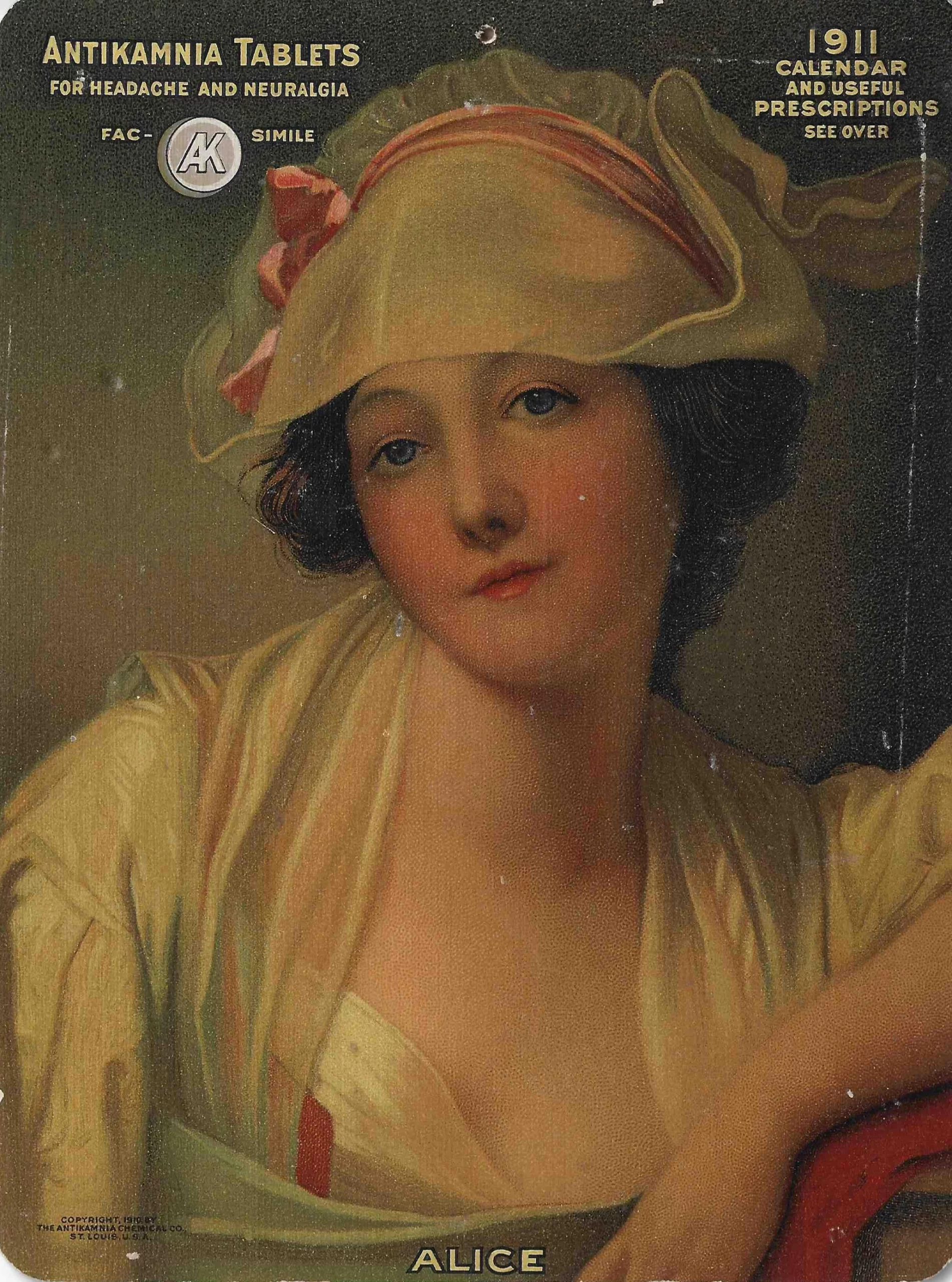
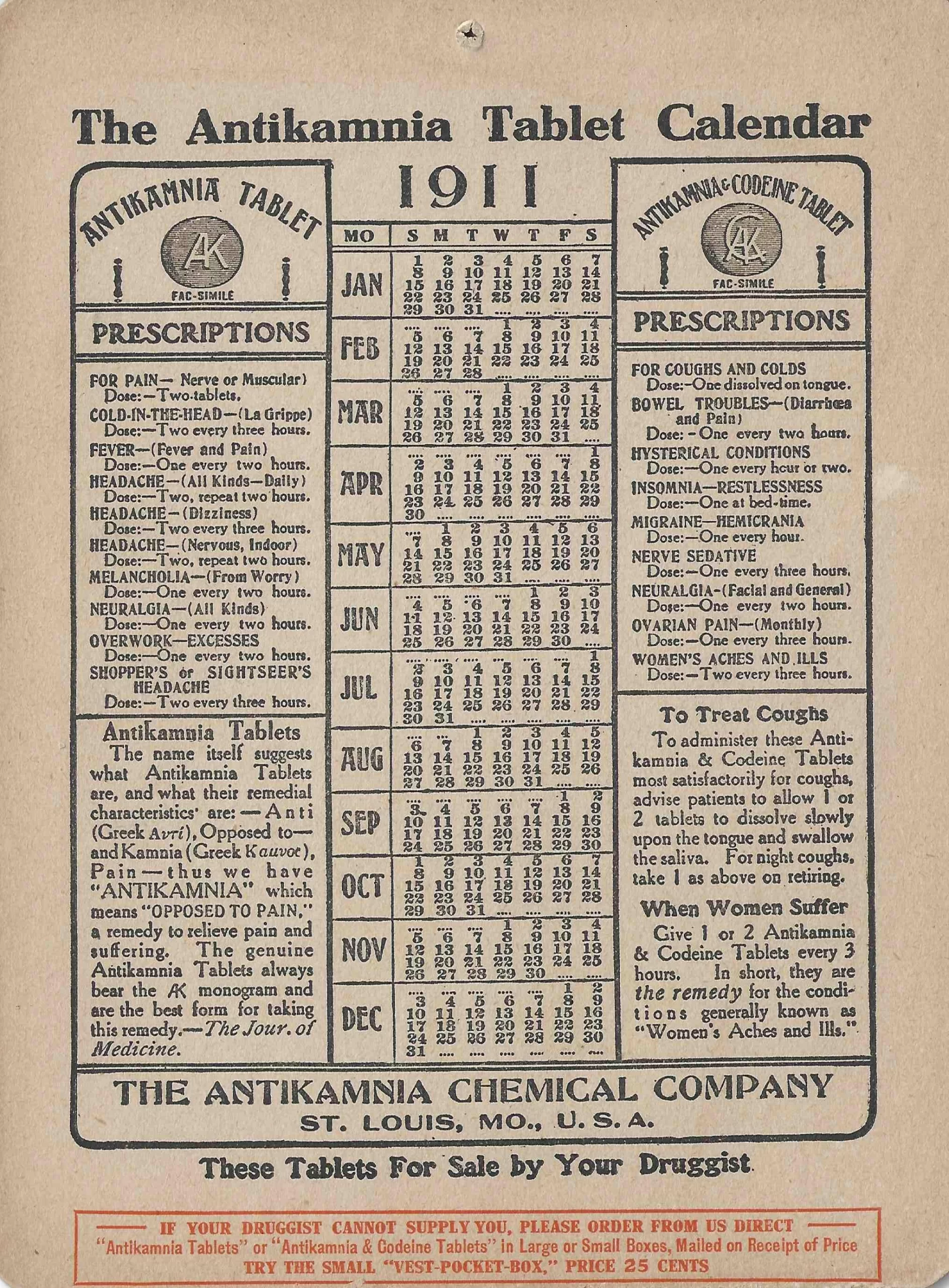
This 1911 advertising calendar card, issued by the Antikamnia Chemical Company of St. Louis, Missouri, features a portrait titled “Alice”. The front presents a romanticized illustration of a young woman in soft tones, with the Antikamnia branding prominently displayed above. The reverse includes a functional calendar for the year 1911 alongside prescription suggestions for Antikamnia Tablets and Antikamnia & Codeine Tablets, recommended for everything from headache, neuralgia, and melancholia to insomnia, ovarian pain, bowel troubles, and “women’s aches and ills.”
Such cards were distributed to physicians and druggists as both advertising and practical desk references. They illustrate not only the aggressive marketing strategies of the time but also the wide—and often troubling—range of medical conditions for which proprietary remedies were promoted.
Condition
Moderate wear consistent with age. Noticeable corner and edge wear, a central hanging hole (original to the piece), and scattered surface spotting. Both front and back remain legible and display well.
Gallery
Historical context
Antikamnia (from the Greek, “opposed to pain”) was a widely sold proprietary analgesic from the late 19th to early 20th century. It contained acetanilide, a coal tar derivative introduced in 1886 as one of the first synthetic fever reducers and pain relievers. While effective, acetanilide was later discovered to cause dangerous side effects, including methemoglobinemia and liver/kidney toxicity. By the 1910s and 1920s, medical opinion turned against the drug, and it was eventually abandoned in favor of safer compounds like acetaminophen (paracetamol).
Antikamnia marketed itself with striking lithographed advertising—often using beautiful women, doctors, and allegorical figures—and with practical ephemera such as calendars, almanacs, and prescription booklets.
Curious Facts, Ephemera, and Trivia
Antikamnia was often combined with codeine or quinine, producing proprietary mixtures for coughs, colds, and influenza.
The back of this card recommends the tablets for conditions we would now recognize as chronic anxiety (“melancholia from worry”) and fatigue from overwork.
Collectors prize Antikamnia advertising ephemera, particularly their artist series calendars (some depicting skeletons in humorous medical scenes).
This card demonstrates how drug companies blurred the line between legitimate prescription guides and aggressive marketing campaigns.
Excerpt
From the 1911 card:
“When women suffer, give 1 or 2 Antikamnia & Codeine Tablets every 3 hours. In short, they are the remedy for the conditions generally known as ‘Women’s Aches and Ills.’”
Why it is in the Cabinet
This advertising calendar is included in the Cabinet for its role as both medical ephemera and an example of early 20th-century pharmaceutical marketing. It highlights how companies used art, pseudo-scientific claims, and wide-ranging therapeutic promises to sell proprietary drugs, many of which were later found unsafe.
Support Dr. Bebout’s Cabinet of Medical Curiosities
If you enjoy the history, the oddities, and the effort, help keep this cabinet open. Every little bit helps preserve and share the strange wonders of medicine's past.
Buy Me a Ko-fi ☕ Buy Me a Coffee ☕ Tip via PayPal 💵